
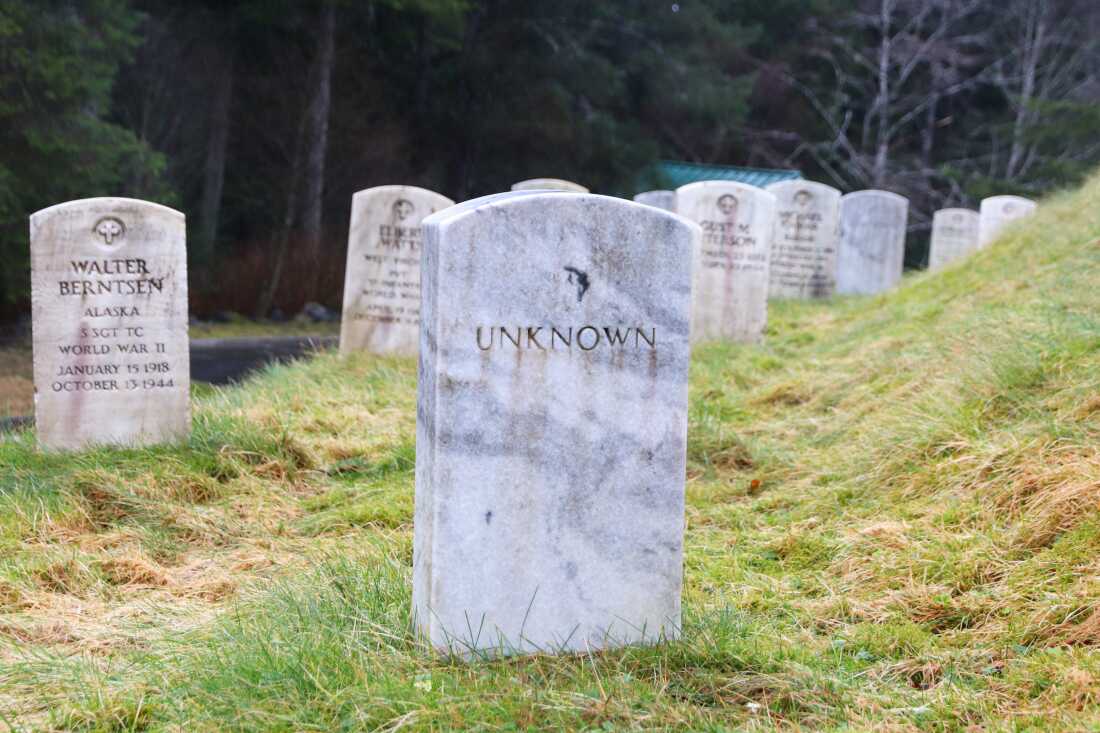
The headstone of an unidentified soldier, known simply as “X-3,” at Sitka National Cemetery in Sitka, Alaska, bears the word “Unknown.” This soldier remains unidentified, but efforts to uncover his identity are ongoing. Over 81,000 U.S. service members are still missing or unidentified, primarily due to past conflicts like World War II, the Korean War, and the Vietnam War.
Around June, officials transported the remains of X-3 to a forensics lab in the Midwest. A solemn ceremony took place, attended by military and community members, to mark the transfer. These remains are part of an ongoing effort by an agency under the Department of Defense (DoD) to identify missing service members.
A Plane Crash in the Aleutian Islands
The story of X-3 is tied to a tragic event that occurred on June 3, 1942. The Japanese attack on Dutch Harbor, in the Aleutian Islands, led to a U.S. response. During this period, a plane carrying 16 soldiers crashed near Cold Bay, Alaska. Six of these soldiers were later found and initially buried by a local trapper. After the war, the military relocated them, but one soldier remained unidentified: X-3.
Efforts by historian Michael Livingston to identify X-3 have persisted for years. Livingston has advocated for the disinterment of X-3 to use modern technology to identify him. This process commenced only recently after many challenges.
Connecting to History
In Texas, Chris Pfeiffer believes X-3 could be his great uncle, 2nd Lt. Eugene Christensen, who was aboard the ill-fated plane. Pfeiffer, deeply invested in solving this mystery, has put together extensive records related to the crash and his uncle’s life. He emphasizes managing expectations but is hopeful the latest efforts might bring closure.
Challenges in Disinterment
A team from the Defense POW/MIA Accounting Agency (DPAA) is working on this task. They face challenges like soil movements affecting old graves. Achieving success with X-3 was a significant step, according to Aaron Cummings, a senior planner with DPAA. The intact remains pave the way for modern identification techniques, such as DNA analysis.
The mission to identify X-3 not only touches on personal histories but also reflects a national commitment to account for those who served. Cummings emphasizes the importance of fulfilling the promise to honor and recover fallen service members.