
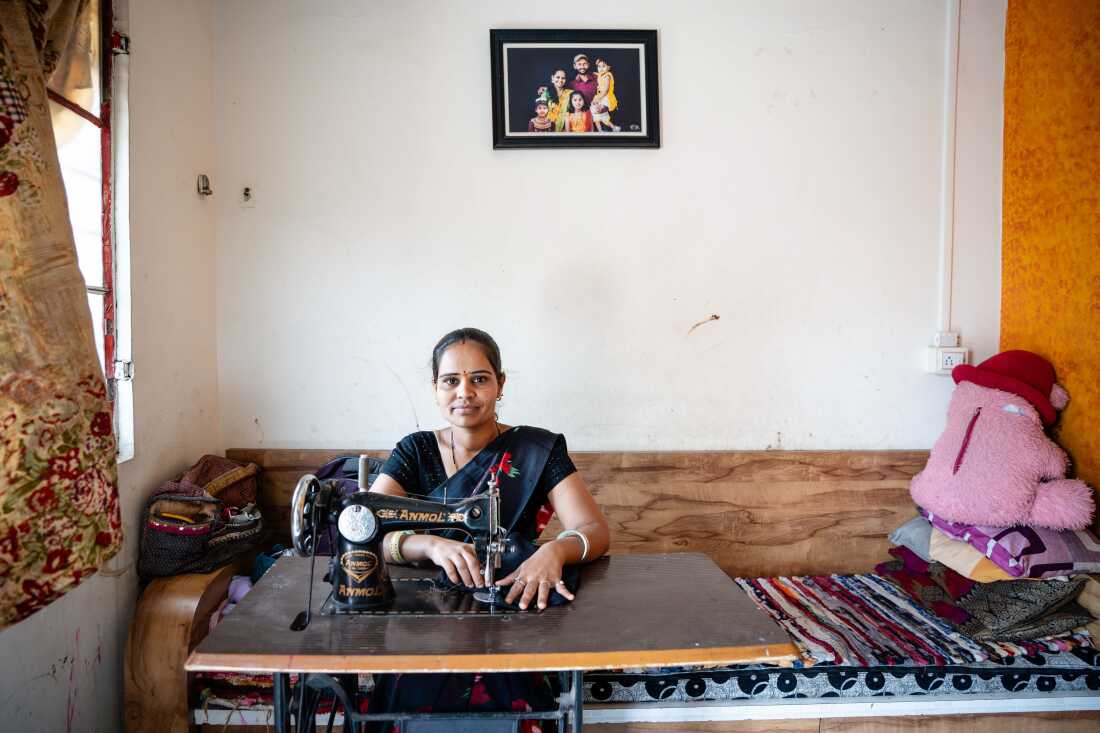
Pooja Gawali and her family left their tin shack for a new apartment building. Gawali, involved in designing their unit, finally enjoys privacy and space for hobbies. Her sewing machine prominently sits in the living room. The construction received an award for innovation.
Previously, Gawali lived in a one-room home without indoor plumbing. The tin-wall and leaky-roof dwelling was shared with her husband, in-laws, and brothers-in-law. Life lacked relaxation and privacy. This situation is typical in Sanjaynagar, a slum in Maharashtra. Around 900 people lived in 206 metal shacks.
In 2022, Gawali moved into an apartment in a new building with 33 units, housing her family and 30 other families. The building, named Swapnapurti, means ‘a dream fulfilled’ in Marathi. Each unit provides a living room, bedroom, kitchen, and bathroom. Bamboo screens offer shade, and the courtyard is lined with plants and benches, creating a cooler environment.
Innovative materials, like bricks from sand and ash residue, insulate the building. The Sanjaynagar Redevelopment Project, in collaboration with local government and various organizations, is transforming the slum. Families pay 10% of construction costs, funded by Rang De, a social lending platform. The government and donors cover the rest.
The project earned a Silver at the World Habitat Awards for sustainability. Francesca Lionetti from UN-Habitat highlights the community involvement in design. Sandhya Janardhan from Community Design Agency emphasizes design details and community bonds. The central courtyard promotes interaction and events.
The project wasn’t guaranteed to succeed. Residents had to trust that they would return to better homes after three years of waiting. Snehalaya, a nonprofit with a longstanding community presence, built trust among residents. They facilitated understanding and preparation for relocation, spurred by educational director Hanif Shaik.
Community involvement was crucial. Younger members acted as mediators, explaining the process and assisting with logistics. Anjali Naydu, a community representative, played a key role in fostering trust for the redesign. Although initially skeptical, residents began supporting the project once they saw potential improvements in their lives.
The project respected existing community networks. It encouraged involvement from slum residents by maintaining their social capital — neighbors who rely on each other for support. Janardhan notes the importance of not disrupting these networks by moving residents to new areas.
For Savitha Yadava, a widow, returning for a new home was life-changing. Better living conditions and city opportunities opened doors for her family. Yadava enjoys decorating her apartment and witnessing the positive impact on her children.
Interest in the project is growing as more families move in. However, governmental changes could delay progress. Yet, the project aims to be more cost-effective and self-sufficient. For waiting families, like Pooja Suryavanshi’s, the project offers hope for a secure future.