
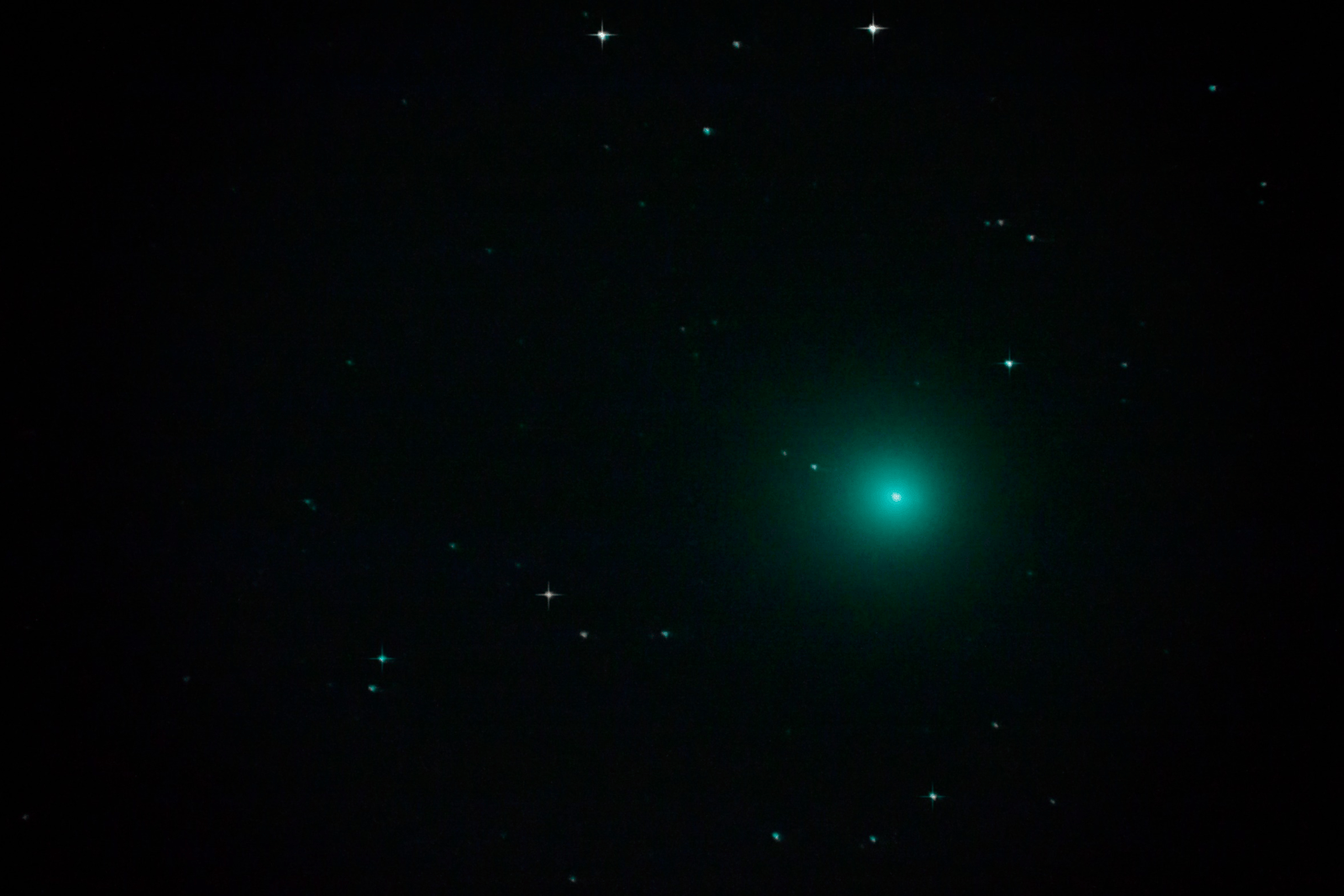
A small object hurtling around the Sun is capturing the attention of scientists, prompting discussions ranging from a fast-spinning asteroid to a “dark comet” and even a lost Soviet spacecraft. Known as 1998 KY26, the object was found by astronomer Tom Gehrels on May 28, 1998, during the University of Arizona’s Spacewatch project at Kitt Peak.
Initial radar and telescope data estimated that the object was about 30 meters in diameter, rotating once every 10.7 minutes. However, recent analyses, led by Toni Santana-Ros from the University of Alicante, suggest that 1998 KY26 is about 11 meters wide, spinning every 5.35 minutes, indicating it is smaller and faster than earlier thought.
Theories on the Identity of 1998 KY26
The object is receiving subtle extra force as it moves through space, without the expected comet-like cloud or tail. This has led researchers to propose several theories about its nature.
Possible Dark Comet
One explanation is that 1998 KY26 might be a “dark comet.” These objects receive an extra push without an evident tail or cloud. A study by Bryce T. Bolin using Hawaii’s Keck I and Gemini North telescopes found the object gains unexpected motion, but no typical comet dust cloud is present. Bolin proposes that its fast spin might cause it to shed small surface materials, propelling it through space.
Suspicion of Soviet Origin
Another possibility is 1998 KY26 is not natural. Abraham Loeb from Harvard University and his team speculated that it could be the lost Soviet Phobos 1 probe. Launched in 1988, Phobos 1 ceased communication post-launch error. Loeb notes that 1998 KY26’s orbit is similar to Phobos 1’s, and its unexplained acceleration might be sunlight reflecting off solar panels from Phobos 1.
Fast-Spinning Asteroid Hypothesis
Toni Santana-Ros’s research suggests 1998 KY26 is a unique asteroid. Its rapid 5.35-minute rotation might mean it’s a sturdy rock rather than a loose collection of debris. Observations show a surface akin to an Xe-type asteroid, possibly explaining its motion through space.
Depleted Comet Theory
Korbin Hansen and Masatoshi Hirabayashi at Georgia Tech explored whether 1998 KY26 could still contain water ice, behaving like a dark comet. Their model shows the Sun’s heat makes it unlikely for such ice to survive, suggesting that escaped water may contribute to its motion.
Current Interest and Future Prospects
Interest in 1998 KY26 has been renewed due to fresh observations and theories. Key findings show it is smaller, faster, and more reflective than previously believed. Theories vary from non-natural origins to dark comet potentials.
Japan’s space agency, JAXA, plans to investigate further. The Hayabusa2 spacecraft is on a mission to 1998 KY26, scheduled for a 2031 rendezvous. This mission follows its successful visit to asteroid Ryugu, where it collected samples and returned them to Earth. Hayabusa2’s visit could finally clarify the true nature of 1998 KY26. While some predictions lean towards intriguing conclusions, scientific consensus currently suggests a peculiar natural object.