
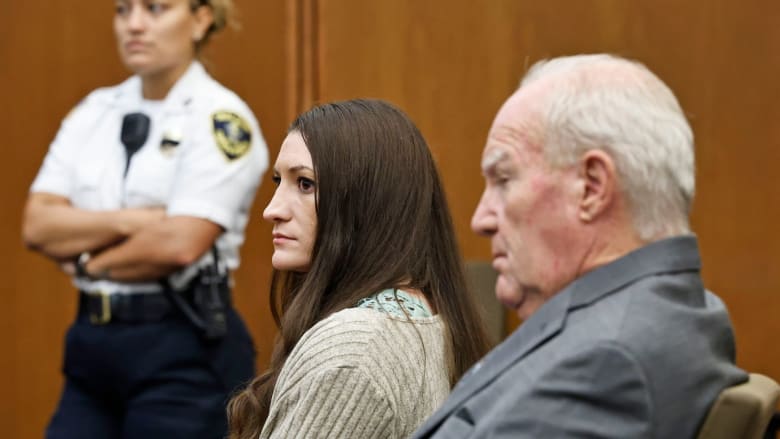
Today, the judge declared a mistrial after the jury in Lindsay Clancy’s murder trial could not reach a unanimous verdict for the third time. Clancy is accused of murdering her three young children, Cora, Dawson, and Callan, at their Massachusetts home before attempting suicide in January 2023.
The jury announced it was hopelessly deadlocked, prompting Clancy’s lawyer to seek an appeal to a higher court. The judge allowed an hour for this, but Massachusetts’ top court declined the appeal.
Jurors were deliberating charges of first-degree murder, considering both deliberate premeditation and extreme atrocity, while also contemplating possible lesser manslaughter charges. Clancy’s mental health emerged as a crucial issue, with defense attorney Kevin Reddington arguing that Clancy was suffering from postpartum psychosis. He claimed she was compelled by hallucinations when she acted, suggesting she is not criminally responsible.
The prosecution countered, with Assistant District Attorney Jennifer Sprague arguing that Clancy was a “functioning mom” who knew right from wrong, indicating intention and planning behind her actions.
The trial, spanning nearly six weeks, captured public attention beyond the courtroom. It sparked wider conversations about maternal healthcare gaps, with Clancy, 36, becoming a symbol in these discussions.
On Friday afternoon, the judge officially declared a mistrial. Defense attorney Reddington made one more attempt to influence proceedings by requesting the jury continue deliberating without a juror perceived as an obstacle. His motion was denied.
Previously, during deliberations, the jury sent multiple deadlock notes. These were followed by instructions from the judge on reasonable doubt before jurors individually confirmed their stance. Despite efforts, the jury was unable to reach a decision.
An emergency hearing with Massachusetts’ top court occurred earlier, featuring defense arguments to dismiss a problematic juror. The prosecution detailed the handling of deadlock notes. Justice Dalila Argaez Wendlandt heard these points but ended without immediate resolution, leaving the timing of further decisions uncertain.