
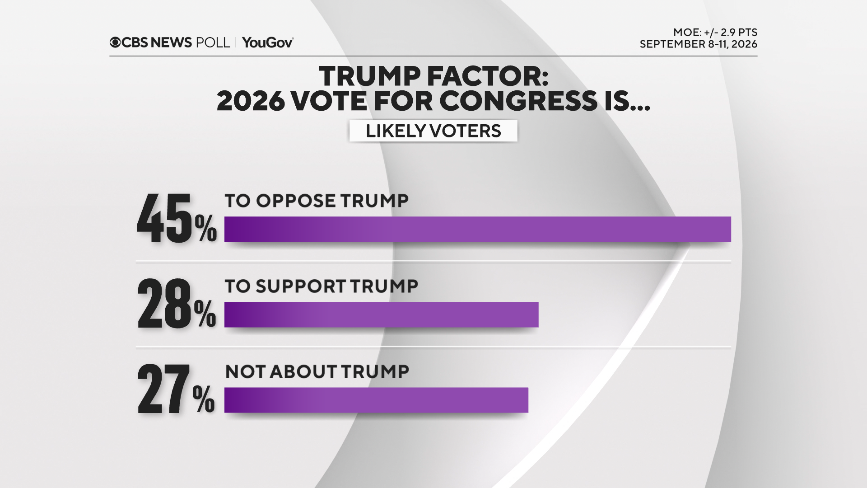
The midterm elections of 2026 are largely influenced by perceptions surrounding President Trump, with both Republicans and Democrats viewing him as a central figure, albeit for distinct reasons. Concerns about economic conditions, such as inflation and foreign conflicts, further add complexity to the electoral landscape.
As voters consider their options, inflation and rising prices continue to shape their attitudes toward the party in power, much as they did two years prior. However, this opposition is not rooted in optimism about alternative financial solutions—most voters doubt either party can improve their financial circumstances.
Many voters prefer candidates who resist new tariffs and oppose involvement in the Iran conflict, which they associate with increased costs. A CBS News model demonstrates how Democrats currently hold a modest lead in Congress, with estimates of 228 seats, surpassing the 218 required for a majority. Yet, this advantage is not insurmountable, with Republicans still holding a potential to secure their narrow majority.
A significant number of MAGA and 2024 Trump supporters remain loyal to the GOP, primarily out of opposition to Democrats. Democrats, conversely, are gaining votes from those affected by higher prices, although a considerable portion of their support hinges on opposing Trump’s policies rather than promoting their own.
Voter turnout reflects varied motivations. More Democrats express strong enthusiasm about voting compared to Republicans, yet Trump continues to inspire turnout among his base. MAGA Republicans remain engaged, akin to their involvement in 2024, despite Trump’s absence from the ballot.
The commitment of non-MAGA Republicans is less certain, with some hesitance on definite voting intentions. Trump’s endorsement increases Republican support for candidates, especially among those who favor his stances on immigration, ICE operations, tariffs, and the Iran conflict.
Key voter factions and dynamics determined Congressional seat allocations. While neither party holds a firm majority for promising better conditions, Democrats retain a slight lead. However, democratic socialism endorsements have mixed reviews, even within the Democratic base. Growth among Hispanic voters is noted, aligned against the administration’s ICE strategies.
Trump’s 2024 victory was partly fueled by perceptions of his economic prowess. Yet, many of his prior supporters continue to experience price-related challenges while harboring negative views of Democrats. The Republican base perceives a Democratic Congress as culturally threatening.
Divisions within the Republican Party arise over Iran-related gas price increases. While MAGA Republicans support paying more, others do not. AI’s impact on job reduction is anticipated by both parties, with Democrats leaning more towards this belief.
Voters generally favor candidates opposed to constructing new data centers locally. This report’s insights stem from a CBS News/YouGov survey conducted with 2,460 U.S. adults between September 8-11, 2026. The sample reflects national demographics and past voting behavior, incorporating a margin of error of ±2.3 points.
Estimates of party seat allocations derive from a CBS News and YouGov statistical model, incorporating historical district-level trends and demographic data. Confidence intervals signify the current leading party, subject to change with additional data closer to the election.