
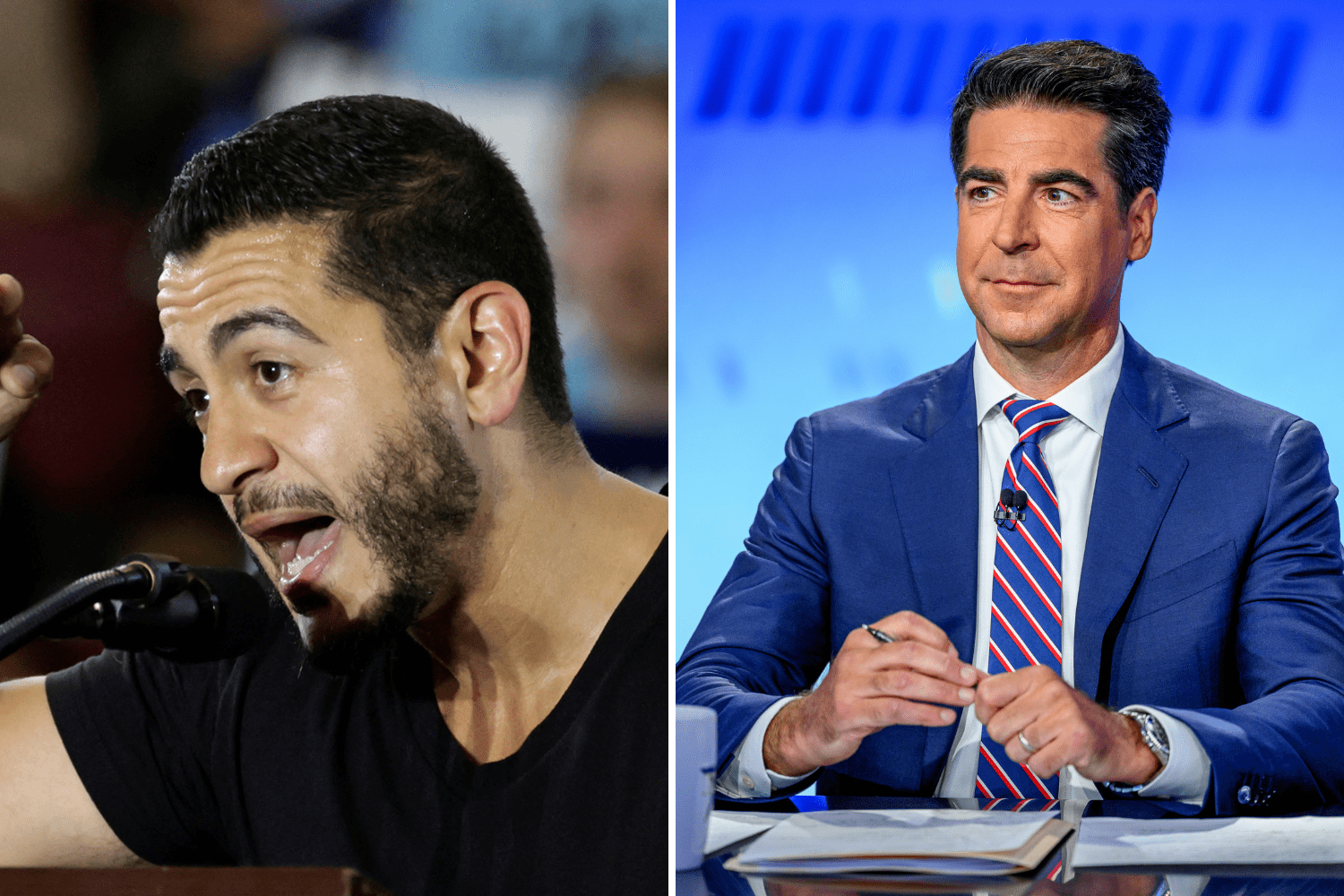
Abdul El-Sayed, the Democrat running for a U.S. Senate seat in Michigan, engaged in a heated interview with Fox News host Jesse Watters. The discussion covered transgender athletes, immigration, healthcare, and the economy, illustrating the ongoing debate on whether Democrats should prioritize economic issues or respond to cultural topics that Republicans emphasize in recent elections.
El-Sayed has gained significant attention in the 2026 midterms after winning the primary unexpectedly. With polls indicating a tight race against Republican Mike Rogers in a key state, El-Sayed’s appearance on Jesse Watters Primetime sheds light on the debates that may define the campaign’s final months.
El-Sayed Challenges Focus on Culture-War Topics
El-Sayed criticized Watters for concentrating on cultural matters instead of economic concerns that affect Michigan residents. “You have not asked me one time about the issues that people actually care about in Michigan,” El-Sayed stated, referencing healthcare costs, fuel prices, and groceries as primary voter concerns. He consistently tried to steer the conversation towards economic issues and healthcare policies.
Transgender Athletes Debate
Watters repeatedly questioned El-Sayed about transgender women competing in women’s sports. El-Sayed refrained from a direct answer, noting that such decisions should be made by athletic governing bodies, not politicians. “I’m running for U.S. Senate, Jesse,” he added, emphasizing his focus on healthcare challenges and pharmaceutical industries rather than sports participation.
Rejecting the ‘Culture War’
El-Sayed accused Watters of using familiar conservative narratives instead of discussing policy proposals. “You’re doing the greatest hits, Jesse,” he remarked, noting that he was “not here to fight a culture war.” El-Sayed has maintained that Democrats should concentrate on economic issues rather than debates that dominate media coverage.
Comparing Gender-Care Decisions to Circumcision
During the interview, Watters questioned El-Sayed about gender-related medical decisions involving minors. As a physician, El-Sayed compared these choices to circumcision, arguing they should be made by families and doctors without political interference. “It’s a problem that you think that you get to decide what happens between a parent, a doctor and a patient,” he responded. El-Sayed stressed that such decisions should only involve parents, doctors, and patients, aligning with his view that elected officials should address healthcare costs and economic issues rather than personal medical choices.
Religion, Government, and Sharia Law
Another notable exchange occurred when Watters pressed El-Sayed about attempts to prevent courts from considering Sharia law in some states. El-Sayed, a Muslim, argued that the U.S. Constitution governs the legal system and highlighted the Muslim population’s small percentage in the U.S. He asserted that the debate distracts from critical concerns such as healthcare costs and the economy. “When people preemptively go out there and start preemptively passing laws to ban something that’s not happening, what you’re trying to do is target a very small community because they’re different,” El-Sayed said.
Status of Michigan’s Senate Race
Recent polls show Michigan’s Senate race remains highly competitive. An AARP Michigan survey among likely voters found El-Sayed narrowly leading Rogers, 48 to 47 percent, with 5 percent undecided. The survey revealed that younger voters favored El-Sayed, while Rogers had more support among older voters. Affordability, Social Security, and healthcare ranked among voters’ primary concerns.
Other polls have shown varying results. A Susquehanna Polling and Research survey conducted in mid-August found El-Sayed leading 46 to 39 percent among likely voters, with inflation and the economy as significant issues. Meanwhile, a Fox News poll indicated Rogers leading El-Sayed 51 to 47 percent among registered voters, highlighting the race’s closeness.
Collectively, the polls suggest a tight contest with no candidate having a definitive advantage. The outcome could play a crucial role in determining control of the Senate.
For further information, contact Newsweek editors John Fitzpatrick and Shakeema Edwards.