
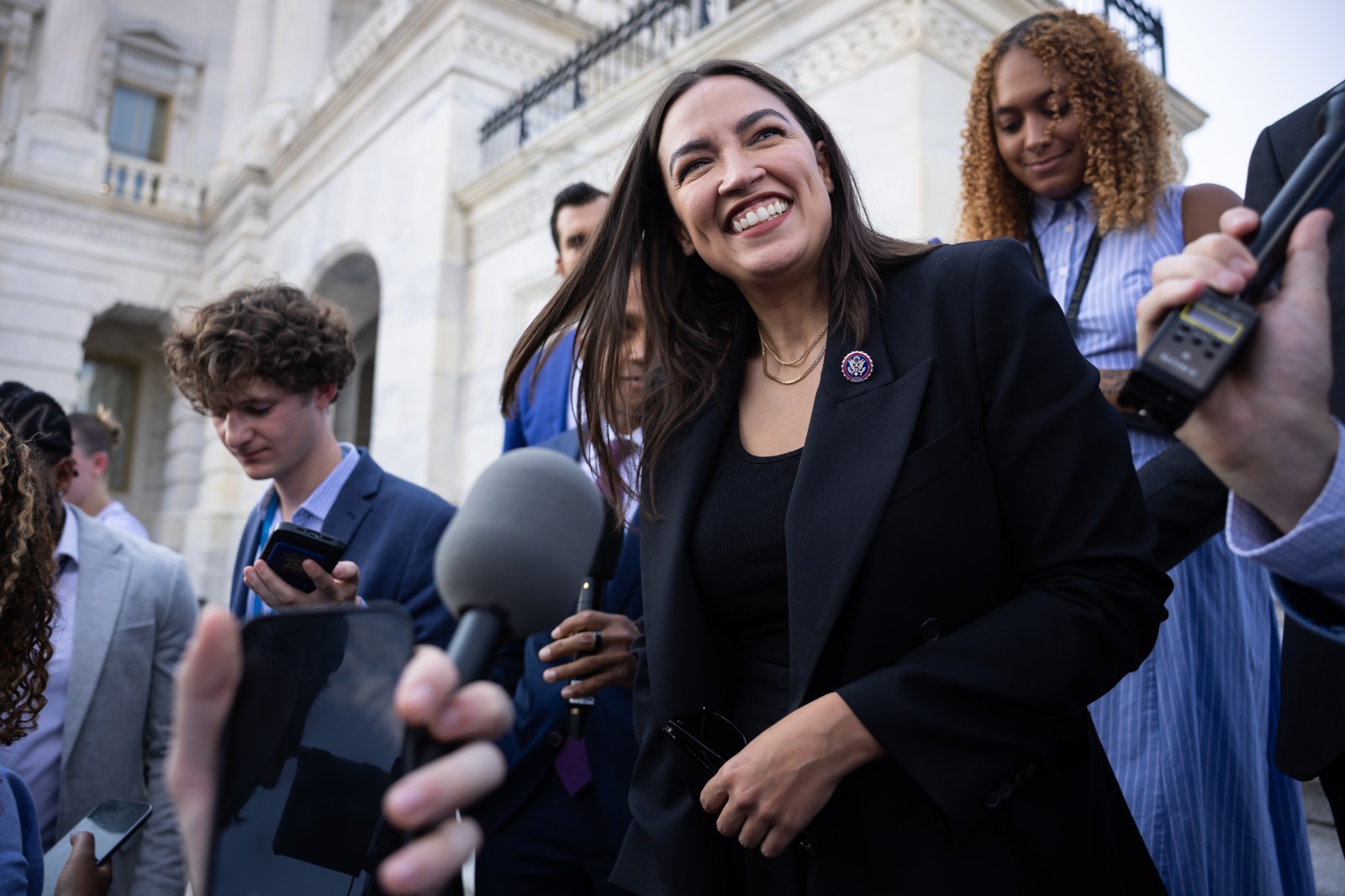
Representative Alexandria Ocasio-Cortez surpassed California Governor Gavin Newsom in prediction market odds for the 2028 Democratic presidential nomination. This development comes according to Polymarket data highlighted by InteractivePolls. The figures show Ocasio-Cortez at 18 percent, with Newsom following closely at 17 percent. Georgia Senator Jon Ossoff holds the third spot with 16 percent, and former Vice President Kamala Harris is at 8 percent. Former Transportation Secretary Pete Buttigieg and Pennsylvania Governor Josh Shapiro both stand at 5 percent.
This shift in forecasts is significant as it marks a change in the early landscape of the Democratic race for 2028. Although neither Ocasio-Cortez nor Newsom has announced presidential campaigns, both are seen as potential contenders. Ocasio-Cortez represents the progressive wing of the Democratic Party, while Newsom is viewed as an establishment figure.
It’s important to note that prediction markets, unlike opinion polls, do not directly measure voter support. They reflect traders’ bets on future political outcomes. These movements often align with news events and speculation about potential candidacies. Ocasio-Cortez’s rise in the odds suggests her increasing perceived viability as a nominee.
Kalshi, another prediction market, still ranks Newsom as the favorite, placing Ocasio-Cortez second. This divergence highlights that different platforms offer varied insights into political sentiments.
Implications for the Democratic Party
Ocasio-Cortez’s increased odds may fuel discussions around the Democratic Party’s ideological future. Known for her strong progressive stance, she supports policies like Medicare for All and aggressive climate action. Newsom, in contrast, is considered a mainstream Democrat with tangible executive experience.
The presence of Ocasio-Cortez, Newsom, and Ossoff as top contenders in prediction markets could signal a race between different wings of the party. The early odds do not point to a definitive frontrunner, reflecting a party torn between various ideologies and generations.
The Role of Political Prediction Markets
Political prediction markets attract attention as they update with real-time reactions to evolving developments. Unlike surveys, markets such as Polymarket provide insight into where participants are willing to stake their money. Analysts advise against viewing these markets as outright predictions, as rapid changes in market prices can occur due to media focus or emerging narratives.
Ocasio-Cortez’s current lead on Polymarket, compared to Newsom’s edge on Kalshi, underscores how different platforms offer varying political landscape snapshots. This divergence stresses the complexity and fluidity of the political environment ahead of the 2028 elections.