
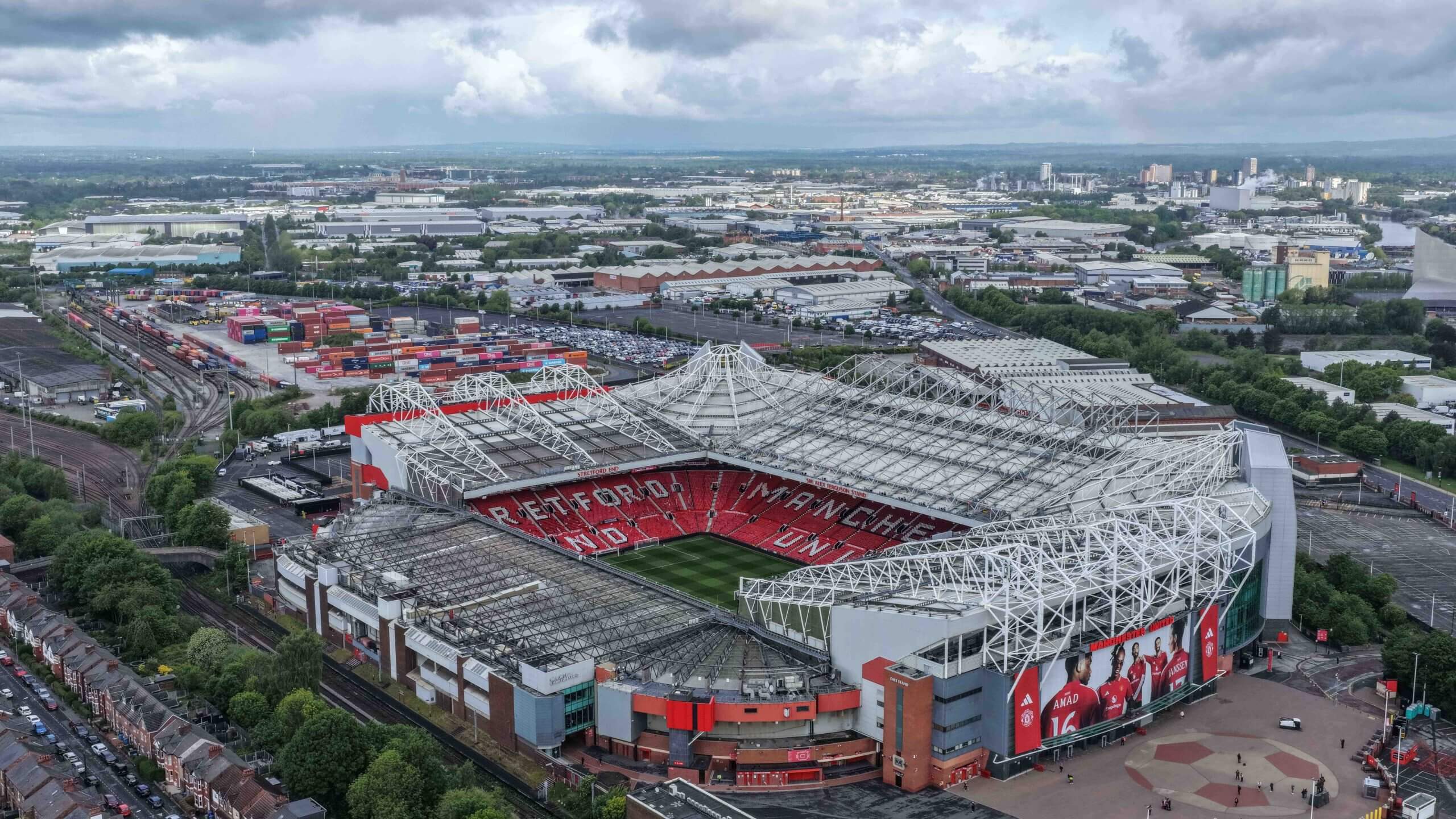
The 199th derby between Manchester United and Manchester City takes place at Old Trafford, capturing global attention. This Premier League match occurs in a city whose influence on the UK’s politics, culture, and economy in 2026 rivals its impact during the Industrial Revolution two centuries ago. Recently, Andy Burnham transitioned from Greater Manchester’s mayor to the UK’s Prime Minister. He introduced ‘Manchesterism,’ a political philosophy emphasizing decentralization, by establishing a No. 10 North office in Manchester.
This summer, during the men’s World Cup in North America, Oasis’s Wonderwall became England’s unofficial anthem, promoting Manchester’s cultural impact. On a visit to Ukraine, Burnham performed a Smiths song, further showcasing Manchester’s musical influence.
Manchester is at the forefront of a potential bid for the northern English region to host an Olympic Games in the 2040s. It challenges the idea that only London is fit for such events. Moreover, the city plays a central role in Burnham’s efforts to bring a men’s World Cup to Britain for the first time since 1966.
The development of sports infrastructure mirrors Manchester’s ambitions. The Etihad Stadium plans to expand to over 60,000 seats. Meanwhile, Manchester United has acquired land to build a 100,000-seat stadium, dubbed the ‘Wembley of the North’ by co-owner Sir Jim Ratcliffe. The Etihad will host matches during the 2028 men’s European Championship and is part of the bidding for the 2035 Women’s World Cup, with United eyeing their new venue to host the finals.
Both clubs, Manchester United and Manchester City, regularly participate in the men’s Champions League, highlighting their success in European football. Recently, City secured a 2-0 win against Porto, and United defeated Sabah of Azerbaijan 4-0.
Football is deeply intertwined with ‘Manchesterism.’ The city’s global recognition is often associated with its football clubs, whether Manchester United or Manchester City. Nonetheless, the city’s story evolves beyond football, presenting itself as a place of optimism and opportunity.
Jonathan Reynolds, Business, Innovation, Science, and Trade Secretary, remarks, “There are many parts in this country where people feel uncertain or look back to better days. Manchester, however, is forward-looking, embodying a spirit of ‘We’re doing things’.”
Manchester’s economy has consistently outperformed the UK’s, with a 3.1% annual growth over the last decade. The city’s center, once sparsely populated in the 1990s, now boasts over 100,000 residents. Forecasts for 2030 predict Manchester as Europe’s fourth-tallest city, earning it the nickname ‘Manc-hattan.’ A 76-story tower, largely comprised of luxury homes and a hotel, recently received approval.
Internal migration data shows more people relocating from London to Manchester. It is also a vibrant university city where students choose to settle post-graduation.
Bev Craig, Greater Manchester’s current mayor, says, “Manchester is attracting global events, from Chanel’s fashion shows in the Northern Quarter to the NBA hosting regular-season games alongside Paris and Berlin.”
Manchesterism emphasizes decentralizing power from London to regional cities. It asserts that local governance better understands and addresses the area’s needs and desires, a sentiment echoed in cities nationwide. This involves advocating for an integrated transportation system, akin to London’s.
Dan Jones, a football finance analyst, notes, “Manchester, once a global powerhouse during the Industrial Revolution, experienced decline in the late 20th century. But now, a resurgence defined by dynamism and self-reliance is evident.”
Manchester’s growth is also characterized by significant investment, most notably in sports-led regeneration, spearheaded by Sheikh Mansour’s acquisition of Manchester City in 2008. This investment helped transform Manchester, showing the city’s commitment to leveraging sport as a development tool.
City’s Etihad Stadium is evolving beyond a sports venue. It plans to function year-round with multiple entertainment and business ventures, such as restaurants, markets, and office spaces. These expansions aim to draw visitors even outside matchdays, enhancing the local economy.
Despite its achievements, Manchester still contends with challenges, such as increasing homelessness, which remains a priority for Burnham, and controversies involving the ownership of Manchester City. The team’s financial dealings face ongoing implications, with investigations into their Premier League compliance.
While some criticize Manchester’s connections to Abu Dhabi’s human-rights record, local leaders highlight the economic benefits these ties bring. Investment projects, such as City Football Group’s developments, have rejuvenated eastern Manchester and provided world-class facilities for various sports activities.
United has similar aspirations, having acquired land for a new stadium. With the backing of billionaire Sir Jim Ratcliffe and local government support, plans to create facilities incorporating housing and entertainment set out a long-term vision for community impact.
In summary, Manchester is a city transformed. Once an industrial center, now an example of successful modernization and growth. It uses its cultural, economic, and sports legacy to bolster its standing on the global stage. The term ‘Manchesterism’ underscores a broader movement towards self-determination, ambition, and regional empowerment within the UK.