
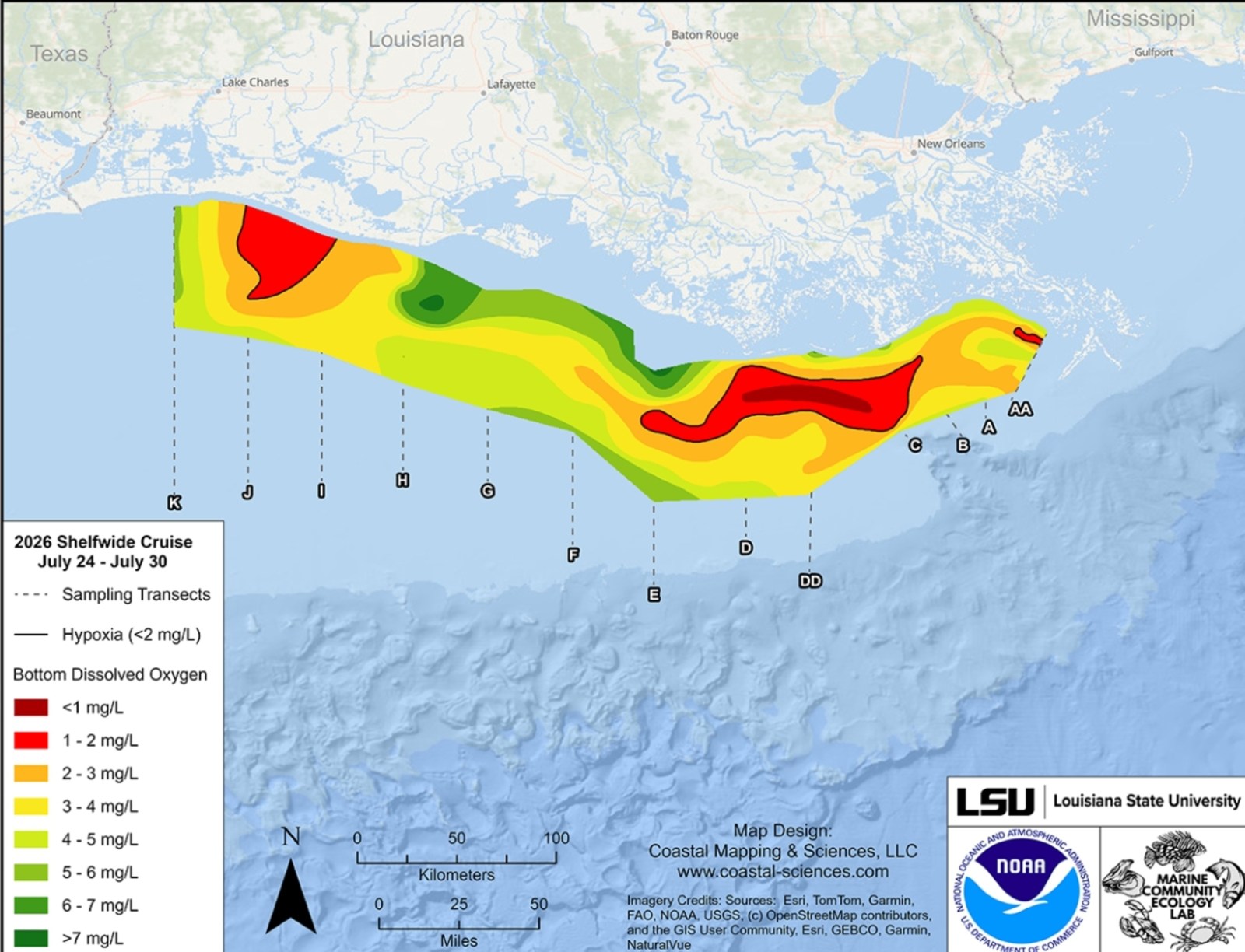
The National Oceanic and Atmospheric Administration (NOAA) reported the formation of a large low-oxygen dead zone in the Gulf of Mexico along the U.S. coast. However, the affected area was smaller than expected due to a tropical storm that temporarily disrupted conditions. The annual hypoxic zone, an area with insufficient oxygen levels to support many marine life forms, was measured at approximately 1,332 square miles during a survey conducted in July. This makes it the second smallest dead zone recorded in four decades.
Hypoxic zones form primarily due to excess nutrients like nitrogen and phosphorus entering rivers and coastal waters. These nutrients fuel algal blooms, which, when decomposed by bacteria, consume oxygen, leaving bottom waters with dangerously low oxygen levels. NOAA monitors hypoxic zones due to their ecological and economic effects, such as altering migration patterns and affecting fisheries. Understanding these impacts is vital for industries dependent on healthy ecosystems in the Gulf.
Marine species close to the seafloor face significant risks in hypoxic zones. Fish, shellfish, coral, and aquatic plants become vulnerable when oxygen levels fall below survivable thresholds. Mobile animals like fish and shrimp can escape, but their movement can disrupt feeding and breeding. Ocean-dwelling mammals, such as whales and dolphins, face indirect effects due to changes in prey abundance. The repeated occurrence of dead zones can impact the broader food web. NOAA continues to conduct surveys and improve models to understand these effects.
This year’s smaller hypoxic zone does not indicate an escape from severe hypoxia. Tropical Storm Bertha temporarily mixed the water column, reducing low-oxygen conditions during the survey. Earlier forecasts predicted a much larger dead zone. NOAA notes that weather events can significantly impact hypoxia formation.
Hypoxic zones are not exclusive to the Gulf. Recurring low-oxygen events occur in waterways like Chesapeake Bay, Long Island Sound, and Lake Erie. Excess nutrients and oceanographic conditions contribute to hypoxia, threatening marine life across the U.S.
Federal agencies aim to reduce the Gulf’s dead zone to 1,900 square miles by 2035 through actions to lower nutrient runoff in the Mississippi River watershed. This year’s smaller measurement was influenced by the storm, underscoring the challenge of solving the underlying nutrient issues.