
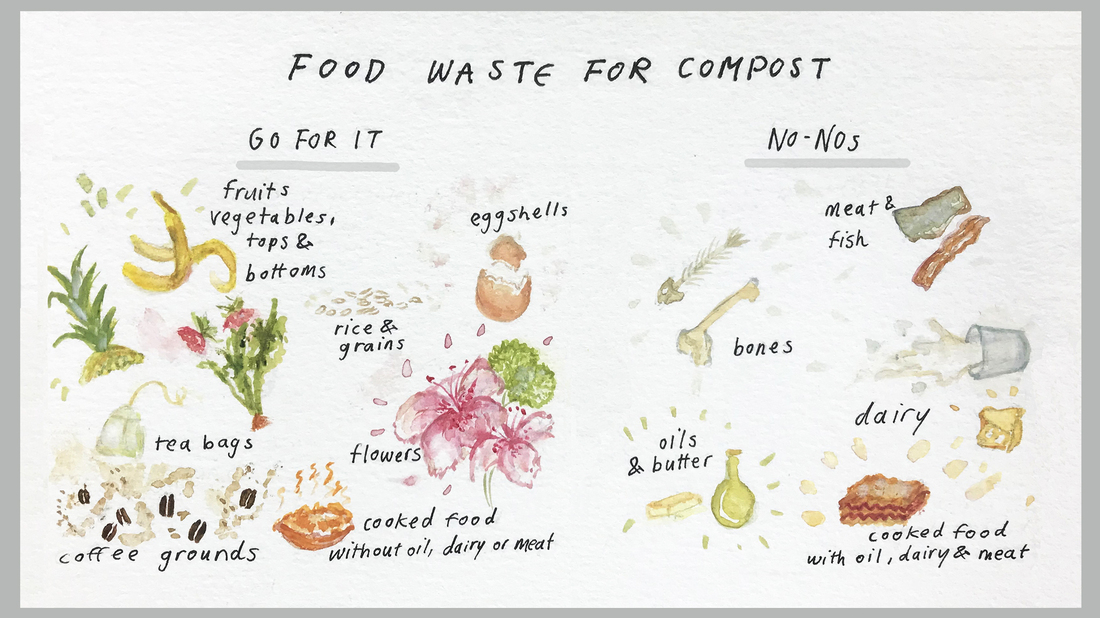
Climate change impacts our food, and our food impacts the climate. NPR dedicates a week to exploring solutions to this issue. Approximately 8% of global emissions come from food waste. In the United States, about 30% to 40% of food is wasted. By reducing food waste and composting, you can aid in climate change mitigation.
Here’s a simple guide to create compost from your home food waste in five steps.
1. Select Your Food Scraps
Begin with fruits and vegetables, such as sweet potato skins or strawberry tops. Include tea bags, coffee grounds, eggshells, old flowers, and human hair. Avoid meat and dairy to prevent attracting rodents. Be wary of cooked, oily, or buttery foods. Items labeled “compostable,” like certain bags and wipes, often require industrial facilities.
2. Store Those Food Scraps
Store scraps in a container to add in layers. Use simple containers, like a milk carton. Alternatively, keep scraps in the freezer or fridge to prevent odors.
3. Choose a Place to Make Your Compost
For those without backyards, consider community gardens or shared compost piles. In small spaces, use worms for vermicomposting. A 5-gallon box is sufficient. Bokashi fermentation is also effective, requiring only a sealable container. Municipal food scrap collection might also be available.
If using outdoor space, your bin can be simple. Reuse an old bin or create an open pile, but avoid walls to prevent stains.
4. Make the Compost Mix
Learn about greens and browns. Greens, like fruit peelings and coffee grounds, add nitrogen for microbes. Browns, such as egg cartons and newspapers, supply carbon. Keep materials in specific layers: browns then greens. Add a little brown on top to deter pests. Maintain an ideal ratio of more browns than greens.
5. Wait and Aerate
Decomposition varies with temperature — two months in hot conditions, possibly a year in cold. Turn the pile regularly for aeration. High-quality compost feels fluffy and earthy. Use it in gardens or donate to a community plot.
Composting takes time; challenges may arise. Explore resources from Texas A&M AgriLife, Oregon State, and Cornell University for further guidance.
We welcome your tips. Leave a voicemail at 202-216-9823 or email [email protected]. For more, subscribe to our newsletter.