
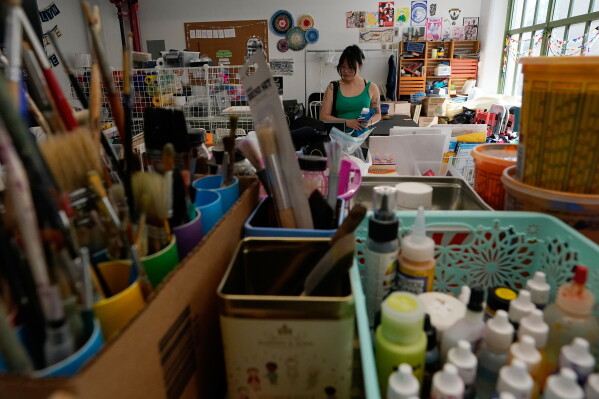
Charlene Catalano searched for green-and-white yarn to crochet a winter scarf. Instead of visiting a large retail store, she found her supplies at Brooklyn Creative Reuse, paying only $6 for yarn along with crochet kits, hooks, and labels. ‘Nowadays, art is popping off, so things are more expensive,’ Catalano said. ‘It has the perfect amount of what I need.’
Brooklyn Creative Reuse is part of a network of creative reuse centers nationwide. They aim to divert art supplies from landfills and sell donated materials at discounted rates. This is similar to thrift stores but focused on crafting.
Art supplies often come in bulk, like packs of markers or reams of paper, and frequently exceed project needs. When discarded, they degrade, potentially releasing harmful chemicals and microplastics. Reusing supplies is a step to prevent landfill waste, with some centers saving thousands of pounds monthly.
‘Reducing waste is the first benefit. But also, you can be more creative when you’re in a large warehouse and looking at things that you could not source yourself,’ said Julian Silverman, a materials scientist at New York’s Fashion Institute of Technology.
The Impact of Reusing Art Supplies
Art can be an expensive hobby. Shopping secondhand helps lower costs. At reuse centers, crafters can choose a few ribbons or fabric scraps instead of buying full spools. Brooklyn Creative Reuse prices items at $3 per pound. Art supplies need water and energy for production, packaging, and shipping. Reusing reduces the demand for new production.
For instance, making one gallon of paint requires about 13 gallons of water, Silverman stated. Supplies also involve extensive packaging, such as markers in plastic casing with cardboard backing. Paint requires additional packaging to protect it from light.
Scraplanta Creative Reuse in Atlanta operates two centers and a pop-up shop. They collect nearly 7,000 pounds of supplies monthly, selling to diverse groups, including teachers and college professors. ‘We see the value in that half bottle of paint or glue because if it’s still usable, there’s someone who just needs that for their project,’ said Jonelle Dawkins, Executive Director of Scraplanta.
In landfills, synthetic paintbrush bristles take centuries to degrade, and plastic handles may take up to a thousand years. When paints break down, microplastics and heavy metals like cadmium and cobalt can release.
‘Basically, our paint is plastic,’ said Zoie Diana, Environmental Scientist at Barnard College. Artists should focus on manageable environmental factors and not feel guilty about their work. Art-related pollution is a minor source compared to roads, buildings, and boats.
Sustainable Crafting Practices
Practices for sustainable art include buying only necessary supplies and donating unused items instead of discarding them. Paintbrush cleaning can also impact sustainability. Use a rag to wipe brushes and remove old paint rather than washing them in sinks. This prevents microplastics from reaching wastewater facilities and possibly lakes and rivers.
Artists may also consider drop-off programs for paint recycling. Creative minds can upcycle household materials for projects. Silverman uses boiled onion skins and beets for colorful inks in tie-dye. Upcycling old makeup into paints and inks is another suggestion.
‘You don’t need to spend any money to get walnut shells, for example, and play with those,’ Silverman remarked.
The initiative at Brooklyn Creative Reuse spurred artist Rosina Morelli to revisit her own collection. ‘What I’m most happy for is my chance to donate stuff, not buy stuff,’ Morelli stated. Instead of discarding items, she can offer them to interested individuals.
The Associated Press Health and Science Department gains support from Howard Hughes Medical Institute’s Department of Science Education and Robert Wood Johnson Foundation. The AP Climate and Environmental coverage receives funding from several private foundations. AP is solely responsible for all content. For standards, philanthropy details, and funded areas, visit AP.org.