
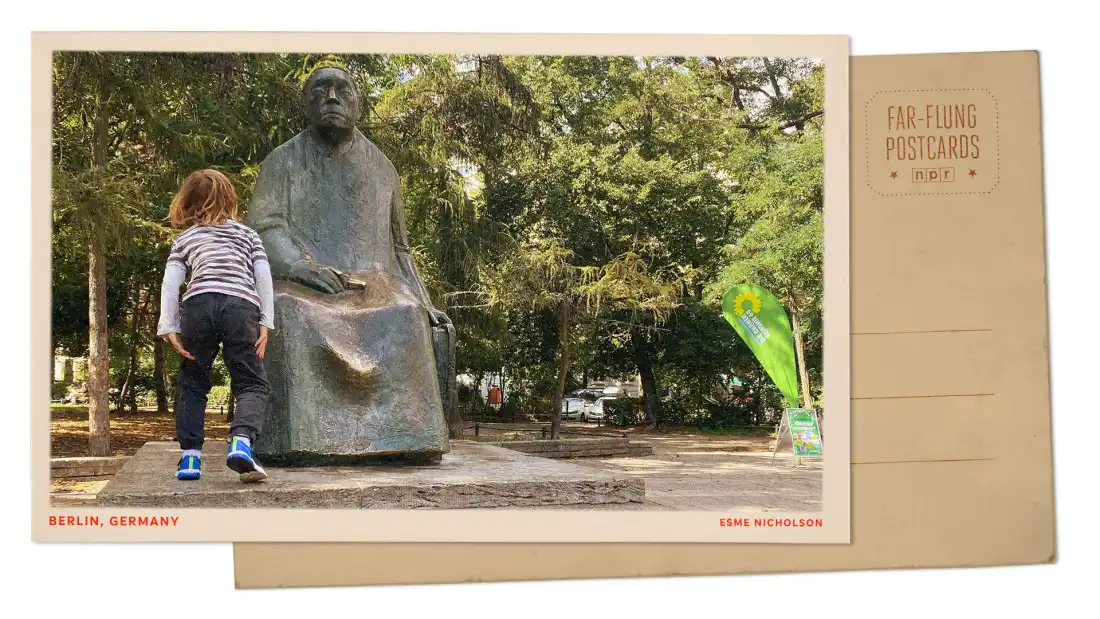
The bronze statue of famed German artist Käthe Kollwitz marks a vibrant setting where children play. Situated in a square named Kollwitzplatz, after her, the legacy of Kollwitz comes alive through her art and history.
The sounds of children on swings and slides echo around the statue. The setting bridges the past and present; the artist lived near this square in the early 20th century. Her children likely played in the same area.
Kollwitz’s artwork, including lithographs and sculptures, often portrayed the sorrow of war. After World War I, her pieces captured the pain and suffering experienced by families. Her sculpture, The Grieving Parents, stands in Belgium, a tribute to her son, Peter, who died in battle at 18.
The scene near the statue is one of joy and innocence. Two boys playfully hide and chase each other around the plinth, unknowingly echoing the tender themes Kollwitz depicted in her lithographs.
The statue exudes a serene presence. Kollwitz holds charcoal, symbolizing her art, as she watches over a safe city where children grow without fear. Yet, with Germany reinstating military service amid global conflicts, the urge to protect one’s own children intensifies, conveying Kollwitz’s timeless message.