
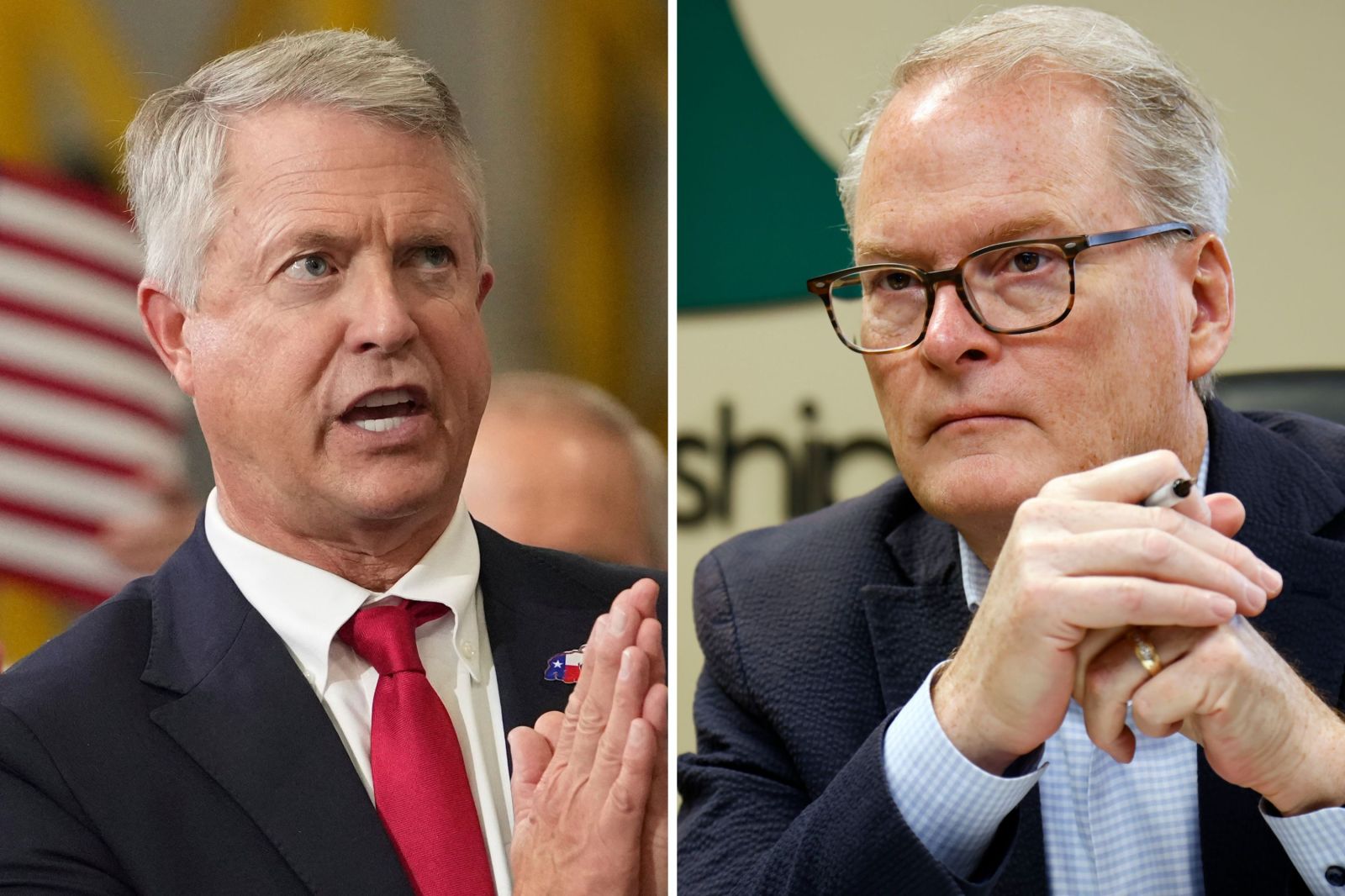
The Senate race in Kansas is becoming unexpectedly competitive. It’s a significant development in a state where Democrats haven’t won a Senate seat in almost a century. A recent Emerson College Polling/Nexstar Media survey shows Democrat Adam Hamilton leading Republican Senator Roger Marshall by 45 percent to 43 percent. Libertarian David Graham has 4 percent support.
This poll, conducted on September 15-16, is the first independent survey this cycle with Hamilton leading. Marshall, seeking his second term, faces Hamilton, who is aiming to be the first Democratic Senator from Kansas since 1932. Vice President JD Vance plans a visit to Olathe, Kansas, to support Marshall.
Polls and Predictions
Despite indications of a close race, Marshall is still favored. The Emerson College poll highlights Democrats’ best chance to win a Senate seat since 1932, driven by Hamilton’s appeal to independent voters, where he leads by 15 points, according to Spencer Kimball, executive director of Emerson College Polling. An earlier co/efficient poll from September 8-10 showed Marshall leading with 49 percent to Hamilton’s 44 percent, with a 3.22 percentage point margin of error. Other surveys also reflect a tight race.
A Global Strategy Group poll from August 12-16 indicated Hamilton leading by a narrow 44 percent to 43 percent margin. Another poll from Public Policy Polling on August 7-8 showed Marshall ahead, 46 percent to 45 percent. Election forecasters note the increased competitiveness since Hamilton’s nomination, yet Marshall maintains favorability. The Cook Political Report moved the contest from ‘solid Republican’ to ‘likely Republican’ after Hamilton’s primary win.
Prediction markets still show favorable odds for Marshall. As of Friday, Kalshi gives him a 74 percent chance of winning, while Polymarket assigns 71 percent.
The Influence of Independents
Independents are a key factor in this close race. The Emerson poll reports Hamilton leading independents 42 percent to 27 percent. Meanwhile, in the governor’s race, independents lean towards Republican Ty Masterson by two points. Favorability ratings are close. Marshall holds a 41 percent favorable to 48 percent unfavorable rating. Hamilton appears better with 41 percent favorable to 30 percent unfavorable, though 13 percent lack an opinion of him, indicating room for change before November.
Trump’s approval in Kansas stands at 40 percent, with 53 percent disapproving. Governor Laura Kelly’s approval rating is higher at 46 percent. Economic concerns top the list of issues for Kansas voters at 48 percent, followed by healthcare, threats to democracy, housing, education, and immigration.
Political History of Kansas
Kansas has long supported Republicans in the Senate, and Marshall has never lost an election by more than single digits. However, the state’s political dynamics are complex beyond the Senate. Democratic Governor Laura Kelly has won two terms, and a 2022 measure to remove abortion protections was rejected by voters.
Marshall focuses on consolidating the Republican base, particularly rural voters, to prevent a potential shift in Senate control. Hamilton presents a moderate image, citing his diverse congregation as a model for unity across party lines.
About Adam Hamilton
Adam Hamilton is a newcomer to politics and founded the Church of the Resurrection in Leawood, the largest United Methodist Church in the U.S. He started with a small group in 1990, expanding to a congregation of 25,000 across nine Kansas City locations. An author of over 30 books on Christian theology, Hamilton secured the Democratic nomination in August by campaigning as a faith-based moderate, raising $3.6 million early in his campaign.
Marshall’s campaign labels Hamilton as ‘too woke for Kansas.’ Hamilton, however, identifies as a centrist aiming to bridge divides.
Marshall’s Legal Challenges
Marshall has faced criticism for suing over 700 patients for unpaid bills through his medical career. The New York Times reported cases involving debts from $101 to several thousand dollars, with around 81 patients arrested after missing court dates. About half the lawsuits were under Marshall’s name, the rest by Heartland Regional OBGYN, which he owned from 1998 to 2012, and then co-owned until 2019.
The patients mainly resided in Barton County, noted for higher uninsured rates and poverty levels. Interest rates of 18 percent annually were applied, and some bank accounts were garnished. Steven Johnson, Marshall’s attorney in these cases, defended the use of warrants and arrests to ensure court attendance.
The Marshall campaign asserts he treated patients regardless of their financial situations and that standard billing and collection practices were in place, similar to other Kansas hospitals.