
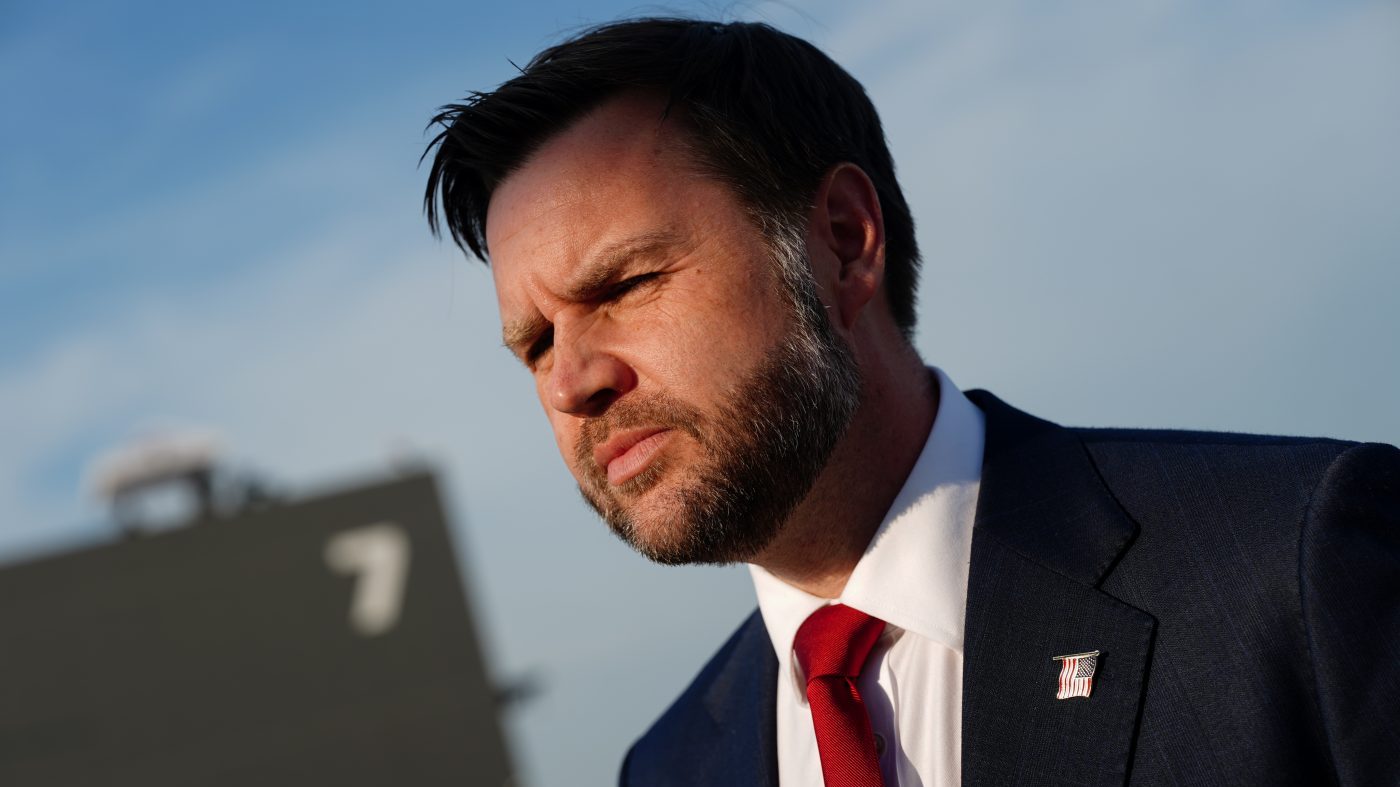
On June 22, 2026, Vice President JD Vance was seen prior to boarding Air Force Two at Emmen Air Base in Switzerland following the U.S. and Iran’s high-level discussions at the Lake Lucerne Summit. Vance’s book from 2016, Hillbilly Elegy, argued in favor of free enterprise and personal responsibility as means to revitalize impoverished communities in the Rust Belt. He highlighted Japanese investment in a steel mill as vital to his hometown of Middletown, Ohio.
A decade later, as vice president, Vance’s perspective has shifted. On “The Michael Knowles Show,” he spoke in favor of Hamiltonian economics replacing laissez-faire principles within the American right. Vance stated, “The economy is a tool to service the dignity of the human person.”
However, the interventionist policies Vance now supports aim to encourage family formation, a living wage, and community involvement. Yet, these policies do not necessarily improve the lives of everyday Americans. Vance suggested that Milton Friedman’s laissez-faire economics suited a past era with a robust Christian cultural framework, but he believes such economics are now less suitable in a globalized liberal context.
This view echoes sentiments from the New Right, as seen in Patrick Deneen’s writings, particularly Why Liberalism Failed. Deneen and others argue for federal intervention to counter American civil society’s decline due to progressive norms, suggesting tariffs and pro-family initiatives are necessary. Vance aligns with Deneen’s “postliberal right,” promoting New Right economics at the White House.
Nonetheless, the deterioration of American family structures began prior to recent trade developments like NAFTA. Populist economic strategies alone are insufficient to reverse social fragmentation stemming from cultural changes such as no-fault divorce laws introduced since the 1960s.
Economic boosts in struggling towns, such as fracking booms, increased blue-collar wages, but did little to alter family life trends. Financial gains do not spontaneously revive traditional norms that support marriage and stable households.
Vance’s economic agenda, which includes defending tariffs from the Trump era, has not spurred a manufacturing revival. Statistics indicate about 100,000 fewer manufacturing jobs a year after these tariffs were enacted.
Despite Supreme Court limitations on tariff powers, American families are projected to face over $2,500 in tariff-related costs in 2026, marking a 43% increase. Under protectionist policies, influential industries typically prosper, while small businesses and consumers bear the brunt.
Tariff-driven economic strategies, as endorsed by Vance, do not enhance individual dignity. Instead, they hinder Americans’ ability to support families and communities. While conservatives lament the loss of family values, solutions won’t emerge from tariff schedules.
True progress involves empowering innovation and competition in a free market. If JD Vance leads future conservatism, revisiting principles from his own Hillbilly Elegy might offer invaluable insights.
Aidan Grogan is an associate editor at the Manhattan Institute’s City Journal, a senior contributor with Young Voices, and a history Ph.D. candidate at Liberty University.
Copyright 2026 Nexstar Media Inc. All rights reserved. This material may not be published, broadcast, rewritten, or redistributed.