
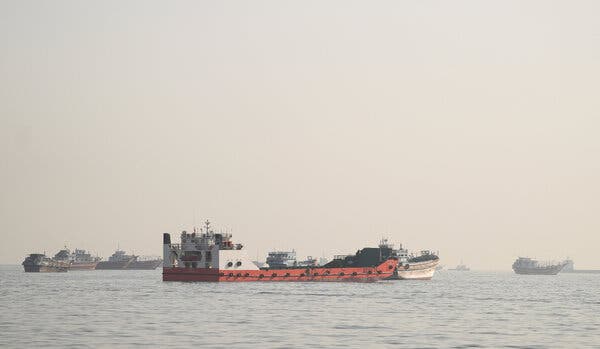
The Strait of Hormuz holds crucial importance for global energy supplies. However, recent developments could impose new costs on vessels traversing this waterway. On Sunday, President Trump stated that the strait would be reopened without tolls. Despite this, on Monday, Iran expressed its intention to levy fees for unspecified services offered in the area.
The introduction of fees, although potentially legal under international law for specific services, raises concerns. Previously, passage through the Strait of Hormuz was toll-free. This change follows events earlier this year involving conflict in the region. In February, the United States and Israel attacked Iran, prompting Iran’s retaliatory actions against commercial ships nearby.
While tolls for passage are not permissible, charging fees for services might be. Iran’s spokesman Esmaeil Baghaei clarified that transit tolls would not be imposed, but fees would be assessed for services provided. Yet, the exact nature of these services remains unclear. Discussions have mentioned environmental charges as a possibility.
After the conflict, Iran announced plans to charge ships traveling through the strait. By May, the nation established the Persian Gulf Strait Authority to manage ‘safe passage permits.’ Alongside Oman, Iran explored a ship payment system based on service-rendered fees.
These developments could complicate commercial shipping logistics and set a global precedent for maritime navigation. Careful monitoring will be essential as the situation evolves.