
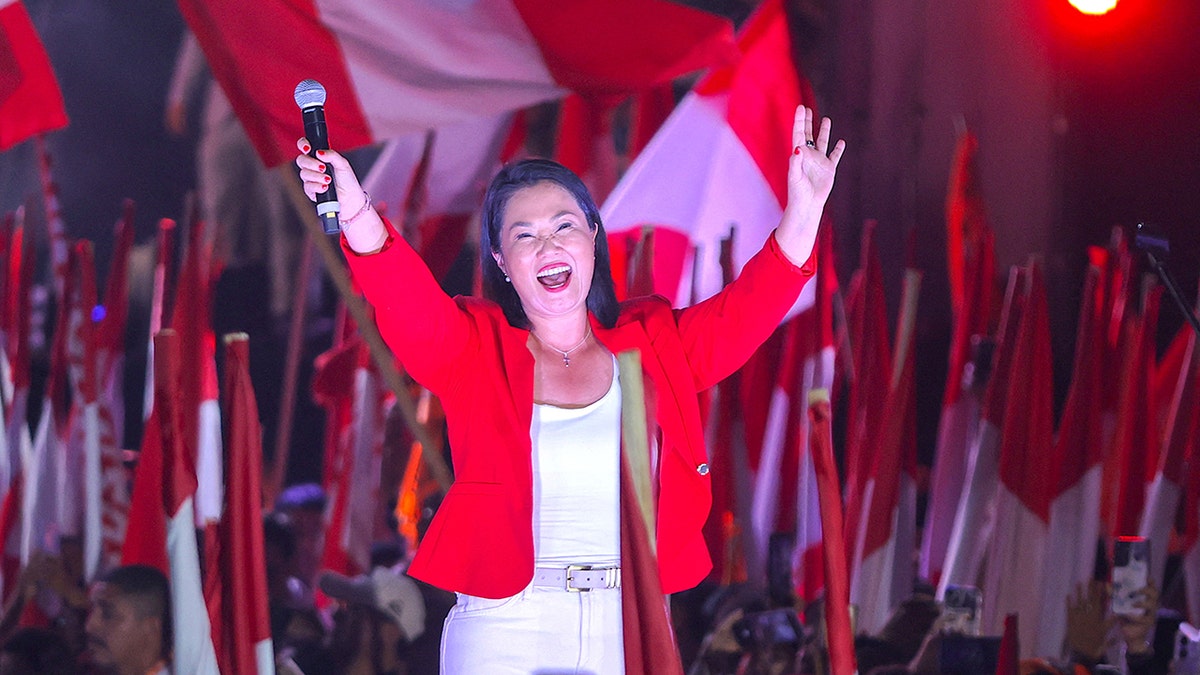
The State Department congratulated conservative candidate Keiko Fujimori on Tuesday following her victory in Peru’s presidential runoff election. She was declared the winner by a narrow margin.
This event marks a crucial point in Latin American relations. The United States plans to collaborate closely with Fujimori’s administration on mutual goals. The department stated, The United States congratulates President-Elect Keiko Fujimori of Peru on her important electoral victory. The Trump Administration looks forward to deepening collaboration with the Fujimori Administration to advance security cooperation and to strengthen bilateral cooperation on investment and trade in our region.
Fujimori’s victory occurs as Washington aims to reinforce ties with pro-market allies in Latin America. This effort gains urgency due to increasing Chinese economic influence, highlighted by China’s recent completion of the Chancay deepwater port in Peru. This $1.3 billion project serves as a significant logistics hub on the Pacific coast.
Her strong position on organized crime complements U.S. initiatives to enhance regional security and combat trafficking.
Fujimori was declared the winner by Peru’s National Office of Electoral Processes (ONPE) on Monday. This authority reported that she secured 50.1% of the vote, winning by fewer than 50,000 ballots out of approximately 18 million cast. However, the National Jury of Elections (JNE), the final authority on electoral matters in Peru, has not yet issued its official proclamation.
This victory over leftist opponent Roberto Sánchez marks Fujimori’s fourth presidential attempt and distinguishes her as Peru’s first female president-elect. The election concluded a divisive campaign in a country that has seen nine presidents over the past decade.
Keiko Fujimori is the daughter of former President Alberto Fujimori, who led the country in the 1990s. Her rise represents the return of her family’s political brand to Peru’s highest office. While the U.S. initially supported her father for his stance against communist guerrillas and economic reforms, it later criticized his administration over the erosion of democratic institutions and human rights concerns.
Keiko Fujimori has dedicated over two decades to transforming Fujimorismo into a contemporary conservative, law-and-order political movement. Her platform, advocating stringent security measures and economic protection, gained favor amid rising violent crime and political instability in Peru.
Fujimori’s campaign emphasized a strong-handed approach to security and pledged to safeguard Peru’s free-market economy. In contrast, her opponent addressed rural economic discontent.