
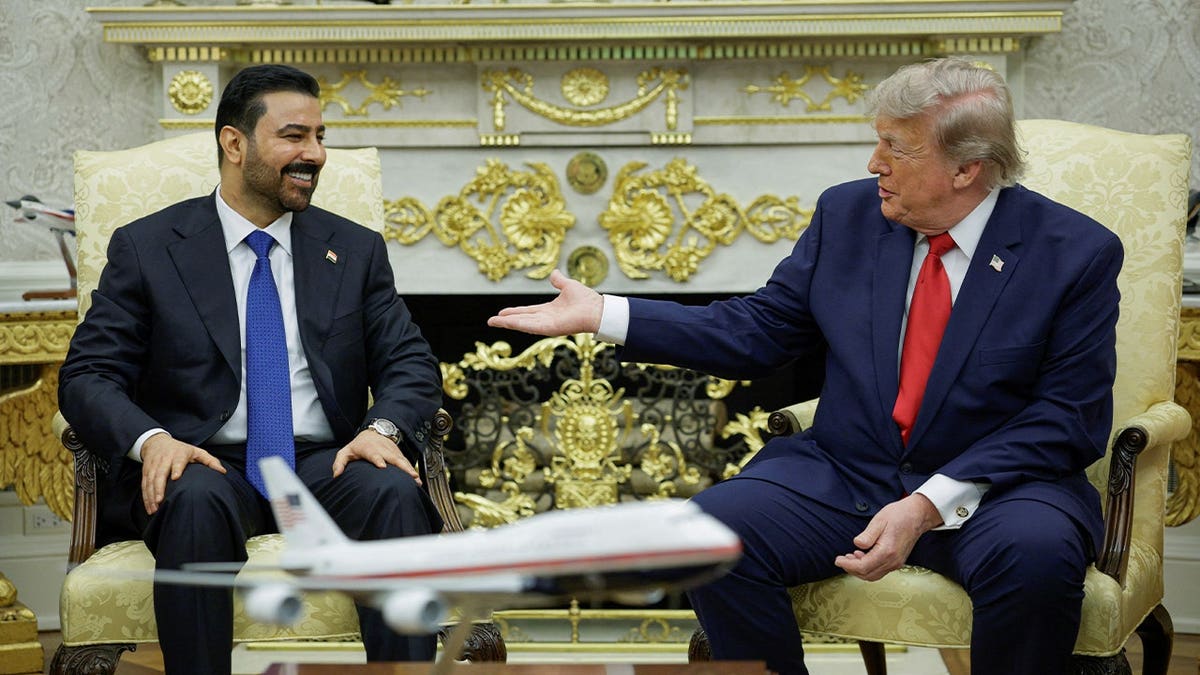
President Donald Trump announced the United States considers its military presence in Iraq unnecessary as the country prepares to end its role in the coalition mission. Trump stated that Iran’s weakened state enables Baghdad to manage security independently. The mission’s conclusion is planned for September 30.
Iraqi Prime Minister Ali al-Zaidi supported this stance, indicating that armed factions operating outside state jurisdiction will lose legitimacy once the coalition mission ends. He emphasized that controlling weapon use by the state is a decisive mandate.
Trump outlined a shift from military cooperation to investment and energy development. Al-Zaidi added, “The 30th of September, the U.S. forces would be out of Iraq. While U.S. companies will be inside Iraq.”
The U.S. administration suggests that the security situation in Iraq has substantially improved. Iran’s destabilization has reduced its influence, according to Trump. This improvement is seen as an opportunity to pivot from military roles to economic partnerships.
Historically, Iran held sway over Iraq via political entities and militias like the Popular Mobilization Forces. The U.S. consistently urged Iraq to integrate these groups under state control.
Under a 2024 agreement, the U.S. and Iraq planned the coalition’s military exit starting in September 2025. Despite reduction at several bases, American troops maintained advisory and counter-ISIS support roles, with about 2,500 U.S. soldiers present in Iraq as the drawdown began.
Al-Zaidi, a political newcomer and a business figure, assumed office this year after prolonged political stalemate. Trump endorsed him, opposing previous Prime Minister Nouri al-Maliki due to perceived close ties with Iran.
During a meeting in the Oval Office, Trump praised al-Zaidi prominently, terming him “a great leader” and forecasting his broader Middle Eastern influence. Trump also noted his contribution to al-Zaidi’s political rise, claiming his endorsement was crucial for the leader’s election success.