
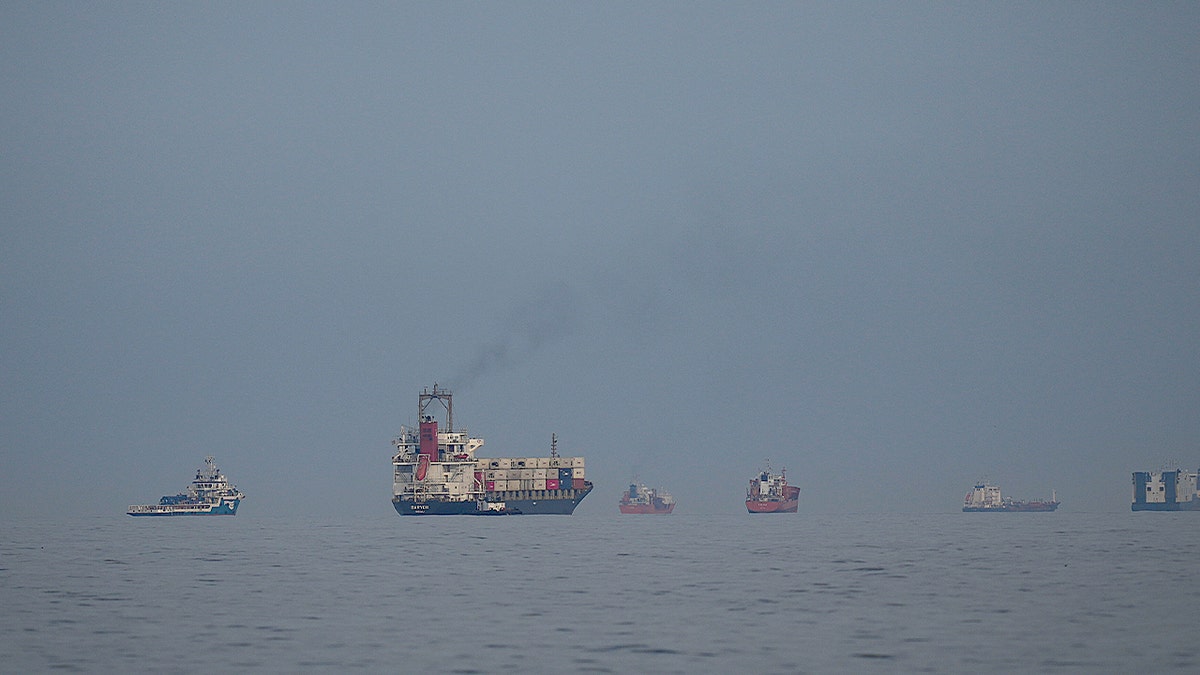
Iran faces a challenging situation with its oil exports due to a US-imposed blockade. Fox Business correspondent Lauren Simonetti highlights why Kharg Island’s seizure would be a massive strategic move, describing it as a ‘nuclear option.’ Currently, Iran’s oil storage tanks are 77% full, and 46 Iranian oil ships are trapped by the blockade.
Simonetti explains how Iran uses ship-to-ship transfer tactics to bypass sanctions. Nearly 40 million barrels of Iranian crude are stored in tankers near Malaysia, a location out of reach of US warships enforcing the blockade at the Persian Gulf’s mouth. This floating stockpile represents about 20 very large crude carriers’ worth of oil, providing Tehran a way to monetize crude already beyond the blockade zone.
The blockade significantly hampers Iran’s fresh exports. Chinese imports of Iranian crude have dipped to around 534,000 barrels per day in September, compared to 823,000 barrels per day in July. However, millions of barrels remain potentially sellable, with Iran holding roughly 80 million barrels of floating storage, half of which are near Malaysia.
Washington faces the challenge of preventing Tehran from cashing in on oil already outside the blockade. If Iran can sell this crude, it might use the proceeds for imports and military rebuilding, despite restrictions on fresh exports. The tankers near Malaysia test the US administration’s commitment to isolating Iran financially.
Max Meizlish, a former Treasury official, notes that while the blockade impacts fresh oil exports, Iranian crude already past the blockade line continues to flow. Iran employs ship-to-ship transfers to obscure oil origins before reaching buyers, mainly independent Chinese refineries. This method requires Iran to deliver oil, secure payment, and navigate financial channels evasive of sanctions.
Iran often settles oil transactions in Chinese yuan, converting funds into usable currencies through exchange houses and front companies. Proceeds from these sales have links to the Iranian government, the Islamic Revolutionary Guard Corps, weapons development, and Tehran’s regional proxies.
Meizlish reveals ongoing sanctions against Chinese and Hong Kong trading houses, maritime service providers, and other entities aiding Iranian sanctions evasion. However, the US has hesitated to designate a Chinese financial institution, a step which might pressure China National Petroleum Corporation.
The administration has already sanctioned the Malaysia route, targeting vessels like Lynn, a Hong Kong-flagged tanker conducting ship-to-ship transfers of Iranian crude off Malaysia. Expanding pressure on shadow-fleet vessels in Asia might prevent this oil from reaching Chinese buyers.
The decline in Chinese purchases suggests effective pressure, but shadow-fleet tankers remain potential revenue sources for Tehran. Meizlish argues for more aggressive action. Seizing ships poses challenges, with US Navy operations stretched thin, and legal disputes arising over cargo ownership and custody.
“Under Operation Economic Outcast, any entity continuing business with Iran risks losing access to the global financial system,” a Treasury spokesperson warns.
Washington aims to disrupt illicit networks and sanctioned vessels supporting Iran globally. Congress might ease cargo seizure processes, while expanding capacity to pursue shadow-fleet vessels could help.
Bessent’s campaign targets various resources beyond oil, including digital assets, technology, gold, aviation, and shipping, threatening broader secondary sanctions against Tehran. Despite reduced new oil market access, Tehran’s ability to sell existing oil and US willingness to intercept near Malaysia will gauge ‘zero leakage’s’ true extent.