
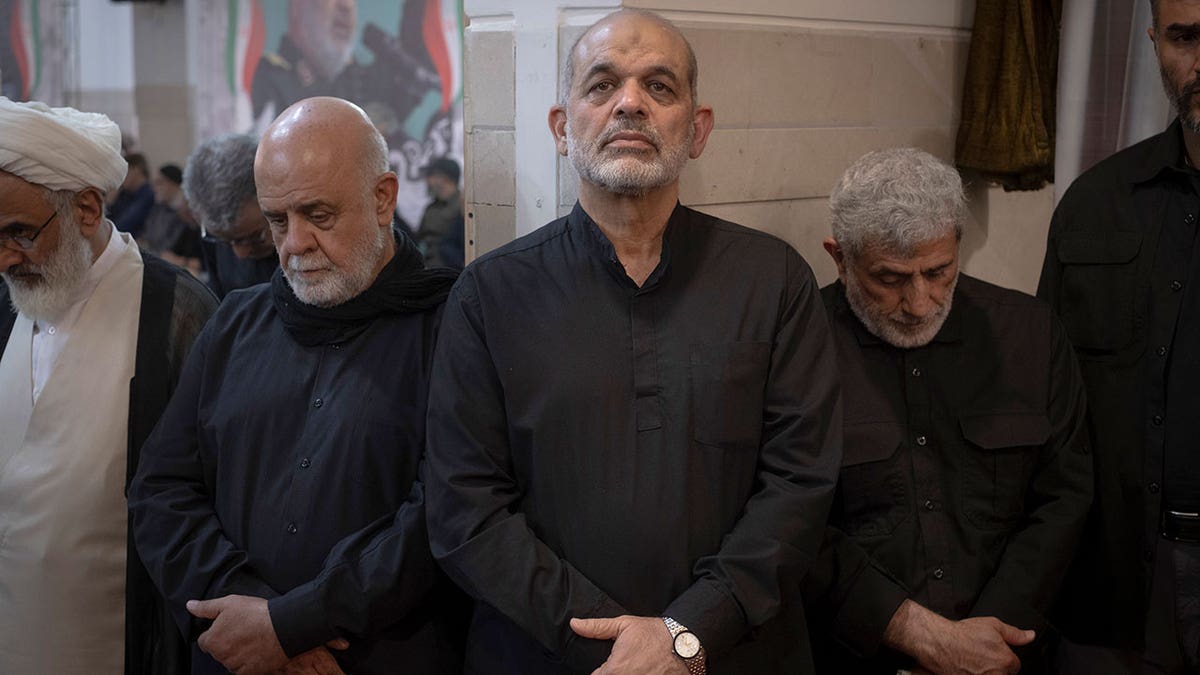
Military appointments in authoritarian states, especially during conflicts, often highlight priorities, threat perceptions, and leadership fears. In Iran, the reshaped military and security hierarchy under Supreme Leader Mojtaba Khamenei is more than a simple reorganization. It is a strategy designed to address challenges posed by the United States and Israel, while maintaining stability within the Islamic Republic. Those promoted are seasoned veterans rooted in the revolutionary-security establishment, with experience in war, intelligence, and ideological conflict.
When assessing claims that leadership changes in Tehran signal regime transformation, caution is warranted. Leadership replacements do not equate to regime change, which requires a shift in institutions, ideology, objectives, and relationships. Tehran remains guided by individuals whose careers were built through interactions with Washington and Jerusalem, alongside efforts to safeguard the regime internally.
The appointment of Ali Abdollahi as chief of the General Staff indicates continuity in institutional leadership. Emerging from the revolutionary-security generation, his career began post-1979, reflecting ongoing priorities rather than generational shifts. Similarly, statements from Kiumars Heydari, deputy chief of the General Staff, underscore a hardline stance, demonstrating the blurred lines between national defense and the protection of the Islamic Republic.
Ahmad Vahidi’s elevation to command the IRGC is significant for the U.S. and Israel. Vahidi’s past within the intelligence and external-operations sectors, now the Quds Force, includes controversy linked to the 1994 AMIA bombing in Argentina. The strategic culture formed by decades of operations against external adversaries informs Tehran’s current strategy.
For American defense strategists, Vahidi’s appointment should be evaluated with focus on the institution rather than the individual. The IRGC’s approach, using proxies, missiles, drones, and covert networks, continues Tehran’s indirect confrontations with opposing powers.
Hossein Taeb’s return to lead the Basij highlights domestic security concerns. The Basij reaches into various societal segments, enforcing ideological conformity and quelling unrest. His leadership reflects the regime’s emphasis on internal security, alongside external challenges.
The shift in Iran’s military hierarchy emphasizes enduring confrontations. Strategic adjustments reflect expectations of continued conflicts with the United States and Israel, involving asymmetric tactics and intelligence operations. Tehran views foreign threats and domestic unrest as interconnected, posing existential risks.
The resilience observed within Tehran’s regime points to a strategic commitment rather than vitality. While retaining seasoned commanders, the leadership pool has narrowed, suggesting reliance on past experiences. For observers in Washington and Jerusalem, understanding Iran’s unchanged ideological commitments is crucial. Personnel changes do not signify a shift in strategic imperatives.
The question for U.S. strategy is not solely about leadership in Iran’s military forces, but the regime’s preservation structures. Tehran remains poised to engage with adversaries through ideology and military power, integrated within its national security framework.
This restructuring suggests a regime establishing itself for long-term struggles both externally and domestically. The new hierarchy prepares Iran for potential confrontations, viewing itself as engaged in a survival struggle.
Erfan Fard is a counterterrorism analyst based in Washington, D.C., focusing on Iranian intelligence and security structures. His expertise includes the Islamic Revolutionary Guard Corps and he has been featured in various media outlets.