
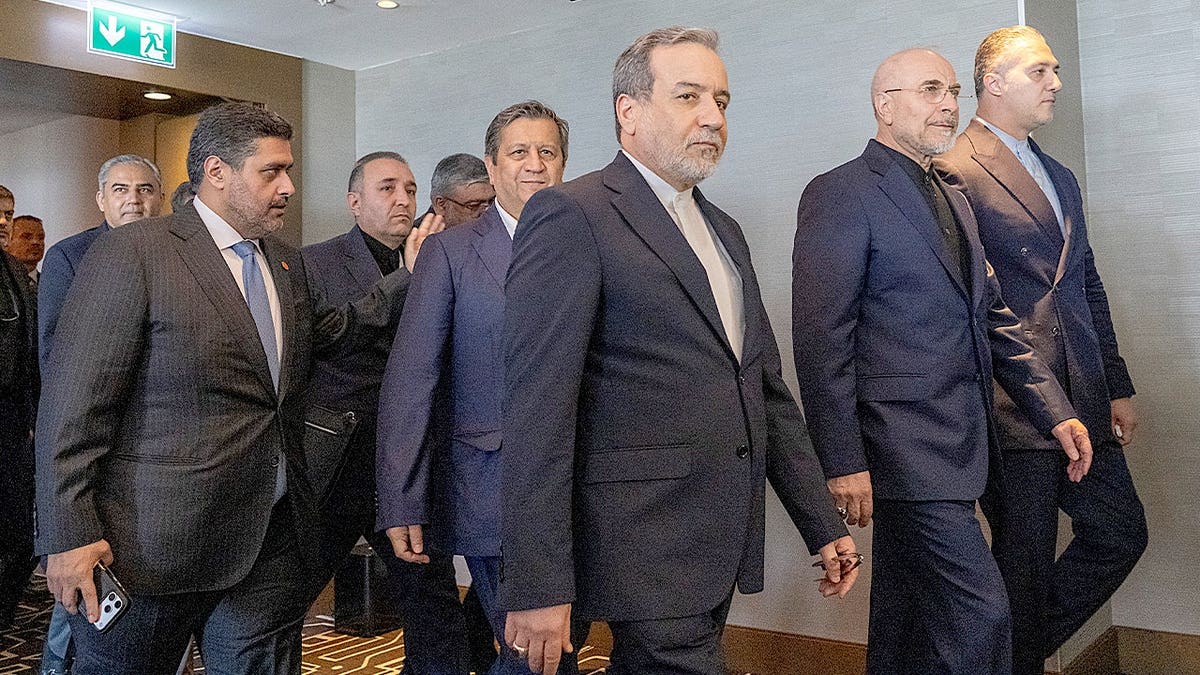
The Iranian delegation’s participation in the technical talks with the United States in Switzerland emphasized Tehran’s immediate financial demands. An analyst suggests Iran seeks significant financial concessions to address its pressing needs.
These talks followed a memorandum of understanding signed by U.S. President Donald Trump and Iranian President Masoud Pezeshkian. However, subsequent discussions were postponed, generating uncertainty in the region. Dr. Omar Mohammed, a counterterrorism expert, stated, “These negotiations are crucial for America in the Middle East. Iran is negotiating strategically.”
Iran sent an unprecedented ‘whole-regime’ team to the U.S. deal talks, indicating a primary focus on financial objectives.
Iran’s state media confirmed the delegation included top figures like Foreign Minister Abbas Araghchi, Chief Negotiator Mohammad Baqer Qalibaf, and Abdolnaser Hemmati from the Central Bank of Iran. With influential security, legal, and financial figures involved, Iran bypassed a traditional diplomatic team, showcasing a focus on domestic leverage.
Mohammed highlighted Iran’s comprehensive team approach, encompassing diplomats, the foreign ministry, the central bank, legal affairs, and oil experts. The presence of these officials signals Iran’s emphasis on cash flow and energy leverage. Energy officials in the Iranian team suggest a focus on controlling maritime operations.
The U.S. delegation, consisting of Vice President JD Vance and U.S. Special Envoy Steve Witkoff, aims to address both nuclear and regional security issues. Vance expressed optimism for resolving issues, emphasizing the U.S.’s intent to transform relations with Iran.
Contrasting approaches reflect the disparate strategies of the two nations. According to Iranian state TV, hardline lawmaker Mahmoud Nabavian cited Supreme Leader Mojtaba Khamenei’s opposition to nuclear talks and demands for compensation and control over strategic regions.
Mohammed warned, “Iran negotiates not just for substance, but conditions to avoid future pressure. If financial gains precede compromises, Tehran sees triumph, not negotiation.” He cautioned that financial assistance without addressing underlying issues could empower Iran’s future ambitions.
The talks between Iran and the U.S. paused but remain ongoing, underscoring the complexity and high stakes of the diplomatic engagement.