
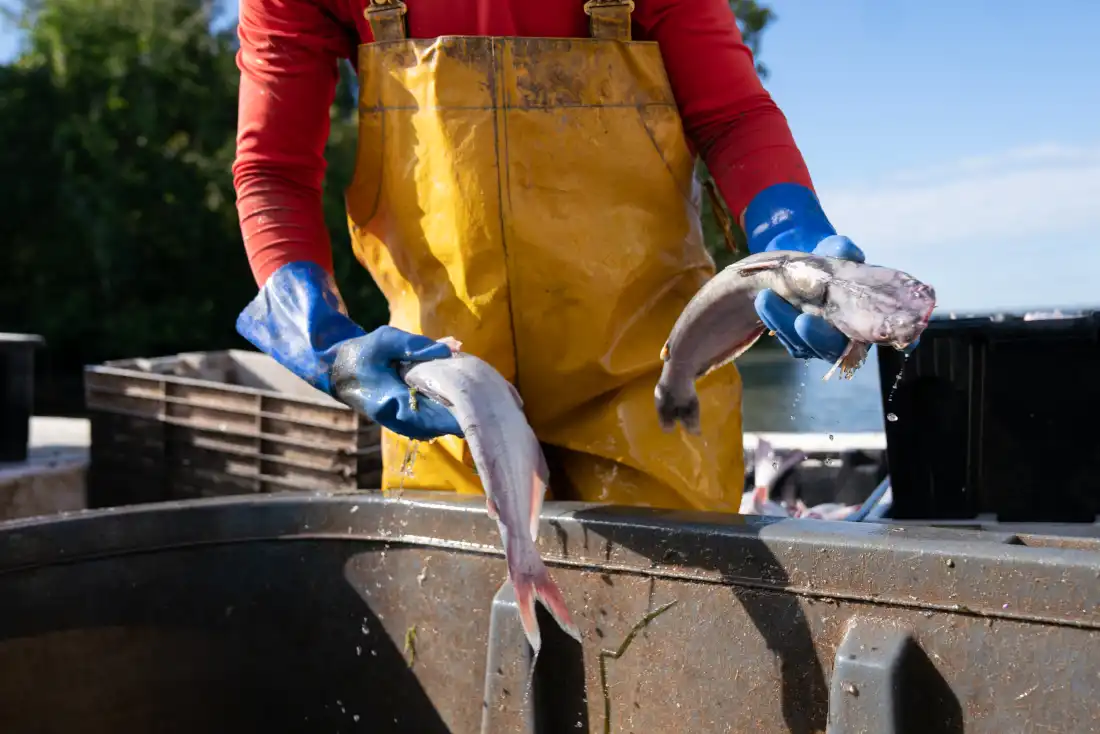
The invasive blue catfish has become a pressing issue in the Chesapeake Bay and its tributaries. These fish prey on native species, including the blue crab. One innovative way to control their population involves local schoolchildren consuming catfish as part of their lunch programs.
School Lunch Initiatives
At Preston Elementary School in Maryland, students encounter blue catfish on the menu. The fish is served in a catfish cake, endearingly named the “catty patty.” Second-grader Ben Rochon enjoys his catfish sandwich, expressing, “It’s yummy.” His classmate, Teagan Donovan, prefers to eat it plain, appreciating its flavor without condiments.
Some children opt for pizza instead, yet as catfish appears on the menu a few times a month, more students are willing to give it a try. Beth Brewster, overseeing food services for Caroline County Public Schools, emphasizes both the taste and nutritional benefits of these meals.
Efforts to Curb the Invasion
Local officials have taken steps to address the blue catfish invasion, spearheaded by figures like Beth Brewster. The Maryland Department of Agriculture sought Brewster’s assistance in incorporating blue catfish into school meals. Brewster collaborated with chefs to develop a dish that resembles a crabcake, but uses blue catfish. Despite initial setbacks due to the pandemic, the program has expanded, with other schools in Maryland and Virginia participating.
Fifth-grader Raelynn Truitt describes the taste as similar to crabs, remarking on its flavor. The blue catfish, introduced in the 1970s for sport fishing, has since spread throughout the Chesapeake Bay, adapting to various environments beyond initial expectations.
Economic and Ecological Impact
Blue catfish have had significant impacts on local ecosystems and economies. They consume a large variety of native species, posing a threat to the traditional seafood industry. Officials have encouraged fishing to manage their population, similar to efforts in other states tackling invasive species like the Asian carp in Kentucky and the green crabs in Maine and Washington.
Maryland watermen, such as Rocky Rice, have shifted focus from crabs to catfish. Rice consistently catches large quantities, providing a dependable source of income despite the lower market price. The lack of fishing restrictions on blue catfish aids this shift.
From Bay to Table
After catching, blue catfish are sent to processors, though limited facilities exist due to USDA inspection requirements. Nonetheless, the fish reaches grocery stores, restaurants, schools, and food banks, presenting an affordable protein source. Programs like Bay2Tray work to create new markets for invasive species by connecting them to educational institutions and charitable organizations.
Ultimately, controlling blue catfish in the Chesapeake Bay requires continuous efforts in harvesting and consumption. Advocates encourage individuals to look for blue catfish in markets and eateries. As expressed by proponents, “Eat the problem and save the bay.” Newly harvested catfish are quickly processed, contributing to the ongoing initiative to control this invasive species.