
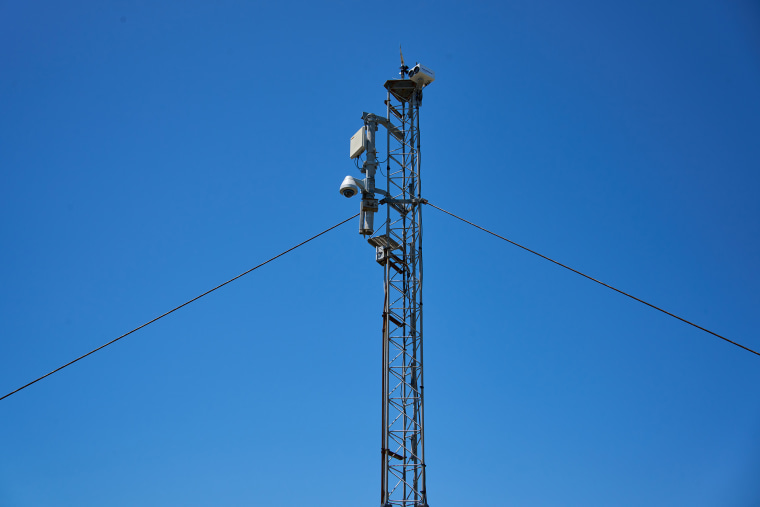
In the busy waters of San Francisco Bay, AI technology is now helping to spot whales and prevent collisions. Ships, including ferries and cargo vessels, are guided by a new detection system called WhaleSpotter. It tracks whale movements day and night, alerting ships to slow down or change course when whales are near. This advanced network uses thermal cameras to detect up to 2 nautical miles away, providing crucial data to mariners.
Thomas Hall, director of operations for San Francisco Bay Ferry, emphasized the importance of this system. “It will allow us to track data and adjust our routes during whale season to avoid areas where whales are camping out.”
Whale deaths in the Bay Area have risen alarmingly. Last year, the Marine Mammal Center reported 21 dead gray whales, the highest in 25 years, with many deaths caused by ship strikes. Scientists believe actual numbers are higher since many carcasses sink or drift out to sea unnoticed.
Gray whales migrate along the California coast on a 12,000-mile journey between Mexico and the Arctic. However, many now divert into San Francisco Bay, lingering due to disruptions in their food sources linked to climate change.
“It’s the worst place possible in terms of all the ship traffic,” said Rachel Rhodes, a project scientist at the Benioff Ocean Science Laboratory.
The Eastern North Pacific gray whale population has decreased by half in the past decade, according to the National Oceanic and Atmospheric Administration. Only 13,000 remain. Rhodes noted, “They may not be getting the quality or quantity of food in the Arctic.”
WhaleSpotter’s thermal camera system provides real-time alerts. AI flags potential sightings, verified by marine observers, and sends alerts to mariners via radio and the Whale Safe website. The system, used in various regions like Canada and Australia, integrates land-based and vessel data for near-real-time information.
Douglas McCauley from the Benioff lab stated, “Suddenly to have a full sense of how much whale activity is in this space honestly put me a little bit on edge.” Cameras operate even at night and in fog, which is essential for continuous monitoring.
Marine Heat Waves and Threats to Humpbacks
Off the California coast, marine heat waves are shrinking habitats for krill, anchovies, and sardines, pushing humpback whales closer to shore. Here, they risk entanglement in fishing gear, particularly in the Dungeness crab fishery.
Regulators have closed parts of the fishery to protect whales. Humpbacks are especially vulnerable since they sometimes scratch against gear, leading to life-threatening entanglements.
California recently approved ropeless pop-up crab fishing gear, reducing entanglement risks while allowing fishing activities to continue. The system keeps ropes and buoys stored on the seafloor until fishermen trigger a retrieval.
Caitlynn Birch from Oceana highlights, “We will have to continue to be adaptive and science-driven in our management to reduce wildlife risk.” She noted California’s leadership in whale-safe technologies and hopes this model could guide other fisheries.