
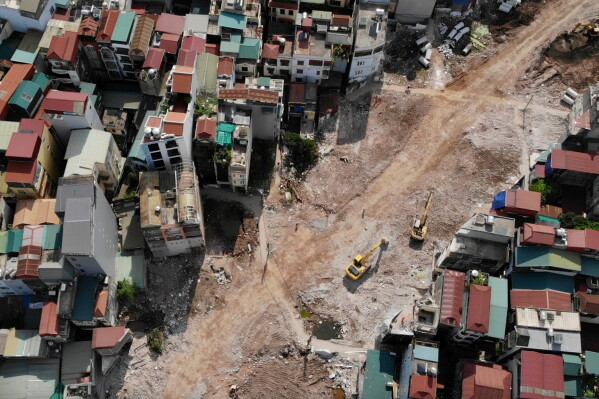
Hanoi, Vietnam’s bustling capital, is undergoing significant changes. The city is advancing toward a modern vision, investing $2.4 billion in the first half of 2026 alone to clear land for nearly 1,500 projects. This transformation aims to support double-digit economic growth and provide flood controls and measures to mitigate air pollution.
Despite the promise of modernization, these developments come at a cost. Many residents are losing their homes and livelihoods. Nguyen Thi Nhan, who lost her fruit-selling business due to demolition, has yet to receive compensation. She and others face uncertainty about relocation.
“We just have to wait. I don’t know where they will relocate us.” – Nguyen Thi Nhan
Big plans for the future include a $28 billion redevelopment along the Red River, covering over 11,400 hectares. This project aims to enhance transport, build new roads, parks, and develop urban districts with essential drainage systems to manage chronic flooding.
Another major project is the $35.2 billion Olympic sports area spearheaded by Vingroup. This will feature one of the world’s largest soccer stadiums. Additionally, authorities plan an extensive transport overhaul to ease pressure on the historic city center and attract foreign investment.
However, risks accompany these opportunities. Nguyen Khac Giang, from the ISEAS–Yusof Ishak Institute, warns that this construction boom might redirect resources from high-tech industries. Rising property prices could also risk bad loans if the market weakens, with developers already heavily indebted.
As Hanoi remodels, displacement worries locals. Residents in Bac Cau display banners urging authorities to let them remain, fearing proposed roads will erase their community.
Street vendors face challenges too. A crackdown on illegal parking and commercial encroachments affects their businesses. Thuy, a noodle shop owner, struggles without space for additional customers on the sidewalk.
Concerns linger over compensation and resettlement processes. While rules exist, some residents await compensation, unsure about future living arrangements.
Nguyen Khac Giang emphasizes the need for preserving the city’s history while modernizing. Rapid changes and limited consultations worry experts, recalling China’s redevelopment examples where historic neighborhoods were lost. The challenge lies in executing land acquisition and coordinating among agencies while respecting residents’ rights.
Unlike past expansion focused on new urban areas, Hanoi’s current project reshapes existing neighborhoods. This includes relocating institutions, a complex task involving property rights and compensation. Adjustments in urban development require careful management in an increasingly centralized state.