
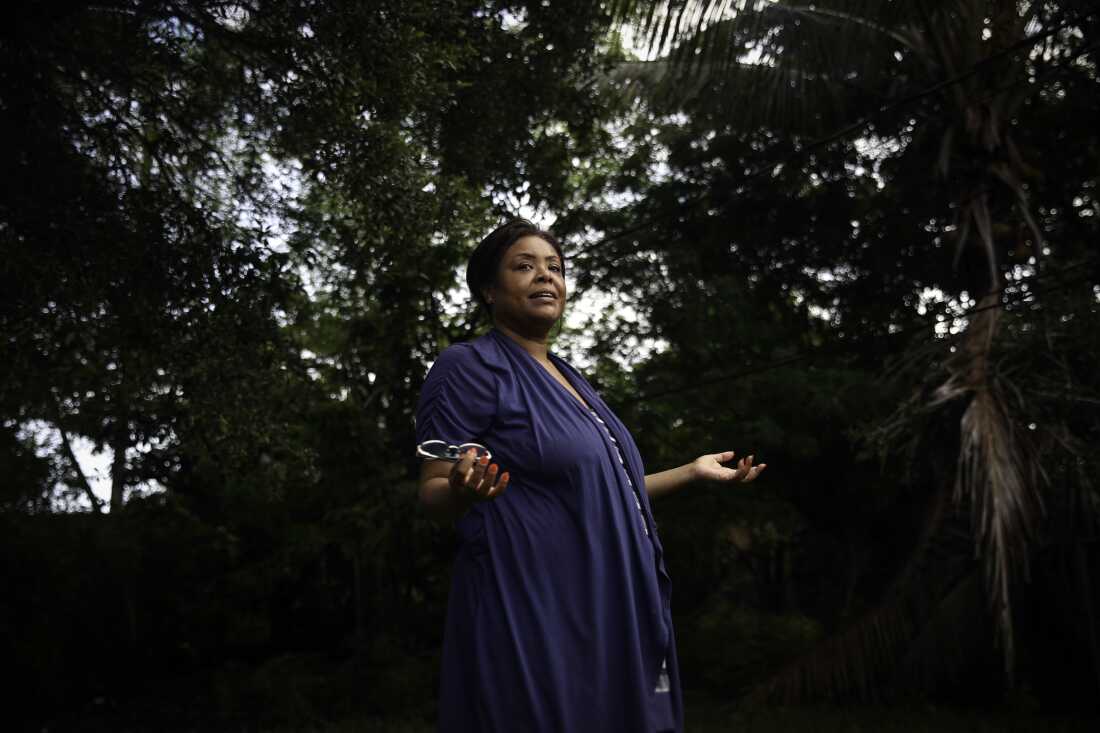
 The sun had not yet risen when Farah Larrieux returned to her home in South Florida at 6 a.m. Her eyes were marked by dark circles as she moved large trash and recycling bins to the curb. A headache throbbed on the left side of her head. Larrieux, a Haitian immigrant, had completed her overnight shift at a hotel that Monday morning.
She is among the 300,000 Haitians in the United States losing the legal status that allowed them to live and work there. Temporary Protected Status (TPS) was first granted to Haitians following the 2010 earthquake in Haiti. Conditions in the country were considered too hazardous for their return. However, the Supreme Court recently permitted the Trump administration to end these protections.
This decision has created uncertainty among TPS holders and has disturbed the Haitian community in South Florida. Many Haitian immigrants in the area work in various sectors, including healthcare, hospitality, construction, and service industries.
The Department of Homeland Security defended its decision, stating that conditions in Haiti have improved sufficiently for the return of Haitian nationals. TPS, they said, was never intended to be an asylum program.
Larrieux, who has lived in the U.S. for about two decades, expressed her anxiety. She has trouble sleeping. Her living room is filled with plaques and awards recognizing her community service. Lack of wall space forced her to arrange them on a table.
“I can tell you that I feel empty,” she said. “Like I’m living a nightmare.” Afraid of arrest by Immigration and Customs Enforcement (ICE), she has stocked up on food. She covers the small glass panel in her front door with paper to conceal her home from ICE. Her lawyer’s phone number is memorized in case of detention.
Larrieux manages two jobs, including a communications business. She has put both on hold, planning to live off her savings while applying for asylum. She believes returning to Haiti could be life-threatening due to her criticisms of the Haitian government.
If I don’t get mistreated by ICE at the detention center, I may be killed in Haiti. My blood will be on Trump’s hands.
Her fears are common among Haitians in Florida, which is home to many people of Haitian descent. There are about 158,000 Haitian TPS holders in South Florida, according to FWD.us, UndocuBlack Network, and the Haitian Bridge Alliance.
Miami-Dade County Mayor Daniella Levine Cava warned that ending TPS will have far-reaching effects. Haitian TPS holders significantly contribute to South Florida’s businesses and communities.
This decision will separate families, hurt our workforce, and weaken our economy,” she told NPR.
Paul Christian Namphy, the political director for Family Action Network Movement, noted the essential labor that Haitians provide, especially in the healthcare sector. He estimated that Haitian TPS holders contribute billions to metro economies, including Miami’s.
Father Reginald Jean-Mary, pastor of Notre Dame D’Haiti Catholic Mission in Miami, described the uncertainty among his congregation. Attendance at church has declined sharply. He criticized the federal government’s decision to end TPS while still advising against travel to Haiti.
A Department of Homeland Security spokesperson stated that the agency conducts daily law enforcement activities but does not discuss operations. DHS General Counsel James Percival commented, “It’s closing time, which means you don’t have to go home, but you can’t stay here.”
Larrieux, after arriving home from her last shift, stepped into her backyard. The scent of rain lingered. Mangoes weighed down a nearby tree while roosters crowed. The scene briefly made her smile, reminding her of Haiti, a country she still loves.
But she knows the risks awaiting her in Haiti. Armed gangs control much of the country, kidnappings are common, and more than a million people are displaced by violence.
“For many Haitians,” she said, “returning to Haiti is simply not a safe option.”