
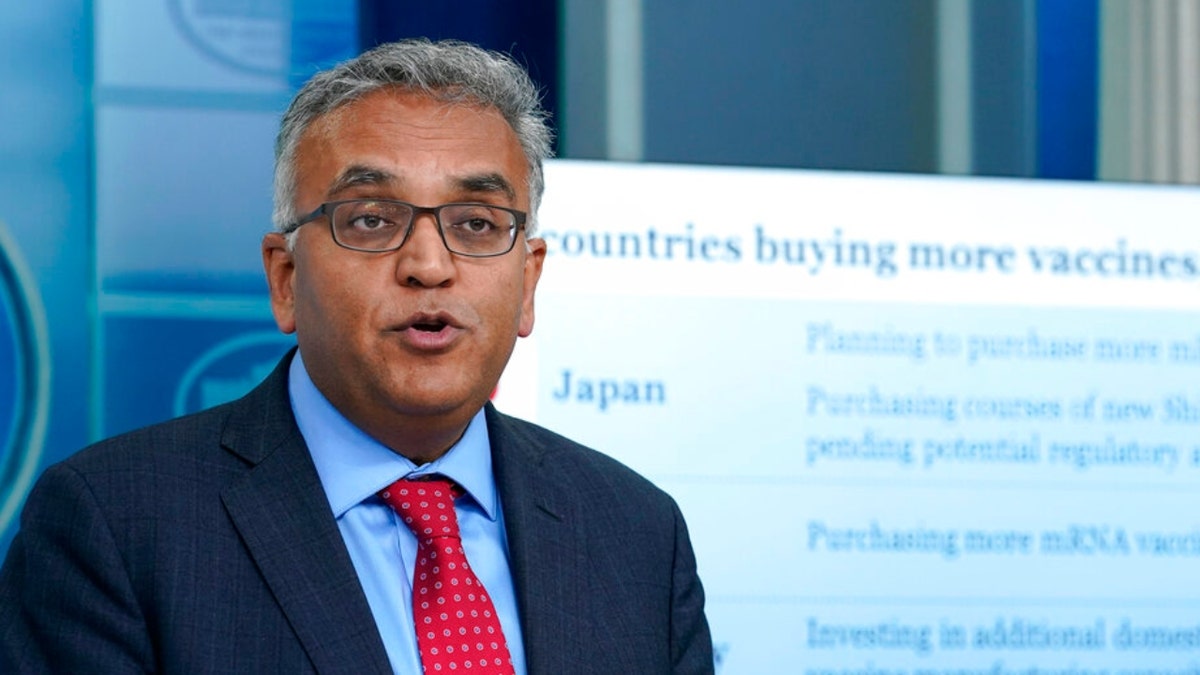
Dr. Ashish Jha, the former Biden White House COVID-19 Response Coordinator, shared his belief in an interview with CNN that the COVID-19 virus likely originated from a lab leak. This assertion was made during a conversation with CNN’s Dana Bash, where she pointed out Jha’s retweet of a post by commentator Jamie Metzl. The post expressed a belief that the virus emerged from a lab leak at the Wuhan Institute of Virology.
The lab leak theory faced widespread skepticism at the pandemic’s start. Some social media platforms restricted claims about it under their COVID-19 misinformation policies. However, Jha stated in 2026, “I pretty much agree with everything here,” referring to Metzl’s post.
Bash highlighted this during the interview, confirming Jha’s agreement and noting the shift from his initial view when he joined the Biden administration. Initially, Jha believed the outbreak was likely natural, possibly a lab leak. He now considers a lab leak more probable based on new information.
“Here’s the bottom line. No one in the United States knows for sure. The only people who know for sure are people — officials in China — and we still need transparency and accountability on that. So that is my best assessment. I‘m not suggesting I know for sure, but I‘m saying my best assessment is that it probably was a lab leak,” he said.
Bash acknowledged the significance of Jha’s statement, remarking on the ongoing need for new information and understanding. Jha later posted this on his social media, emphasizing his consistent view since his White House tenure. He expressed his belief in the likelihood of an accidental lab leak based on strong circumstantial evidence.
The COVID-19 pandemic challenged the credibility of public institutions and the media. Initially, organizations like CNN and The New York Times dismissed the lab leak theory as a “debunked” conspiracy. This stance later faced criticism as more information emerged, suggesting the theory’s plausibility.
Noteworthy is the case of taxpayer-funded NPR. In April 2020, NPR published stories that dismissed the lab leak notion, branding it a politically motivated conspiracy. These reports misled some readers into thinking the theory was disproven.
CNN faced criticism for reports, including some that appeared to praise China’s strict pandemic measures. A report highlighted how China’s centralized government facilitated quick pandemic response and vaccination efforts.
Further complications arose from social media censorship. The Biden administration faced a First Amendment lawsuit for pressuring social media companies to suppress speech questioning pandemic narratives. Under a settlement, several government agencies are barred for a decade from influencing content moderation on social platforms.
A media rift was evident when Jon Stewart and Stephen Colbert debated the lab leak theory. Stewart mocked the reluctance to accept the theory, while Colbert approached it cautiously.
In closing, the COVID-19 pandemic continues to have a long-lasting impact, contributing to ongoing debates and challenges regarding transparency, information dissemination, and media credibility.