
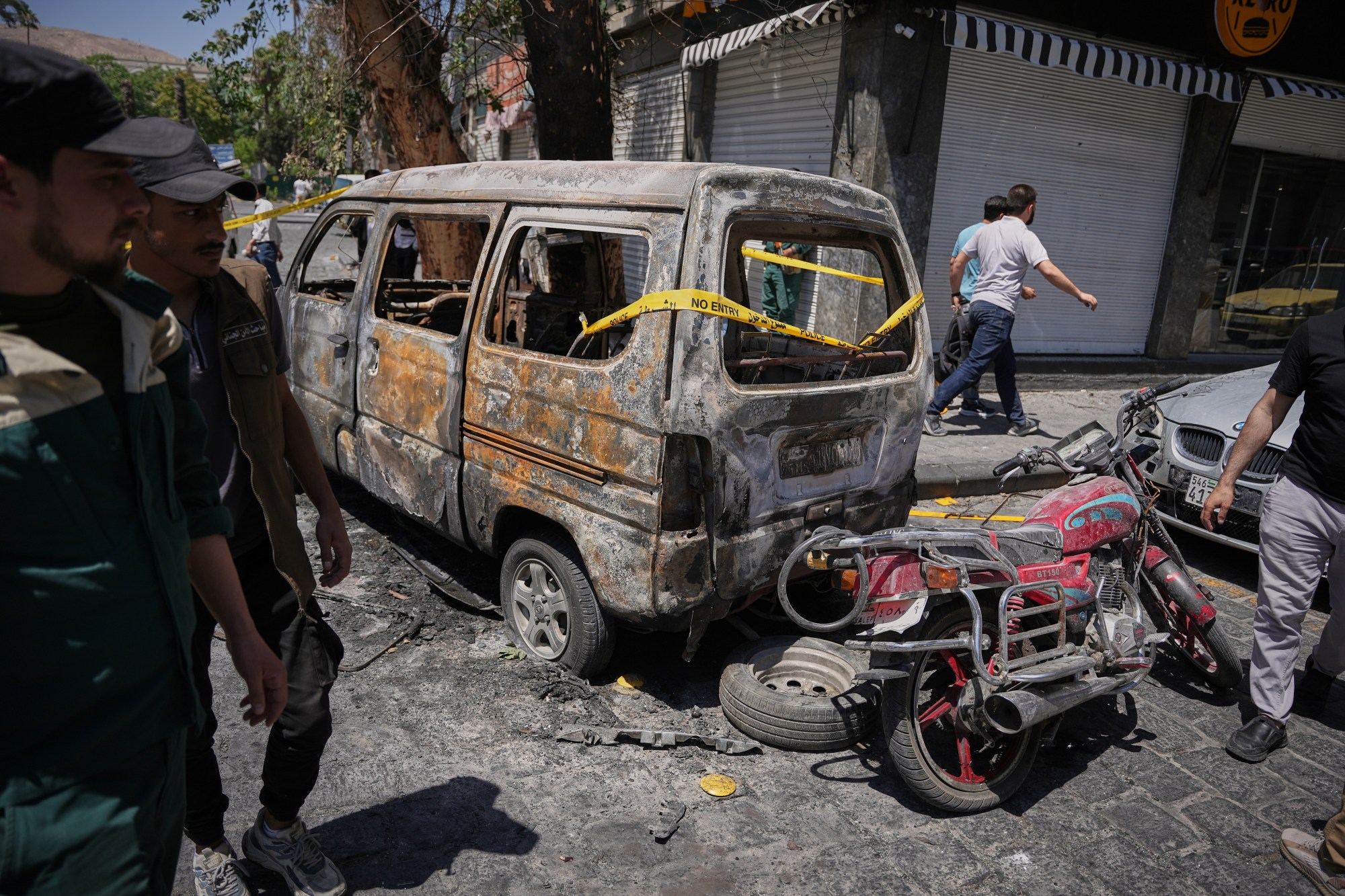
In Damascus, Syria, two explosions caused widespread disruption on Tuesday, injuring at least 18 people. The blasts occurred as French President Emmanuel Macron met with Syria’s President Ahmad al-Sharaa. This visit marked a significant step for Syria as it rebuilds after years of civil war. The country’s Interior Ministry revealed this incident was the second attack in the capital within a week.
The explosions pose a challenge to President al-Sharaa. It is a setback during a pivotal visit where he hosts the first major Western leader since Bashar Assad’s ouster in 2024. Although Syria’s new administration faces bouts of violence, Damascus has largely remained peaceful. French President Macron was present in the presidential palace during the incident, staying unharmed. The meeting with al-Sharaa persisted. An anonymous official from the Elysee Palace confirmed his safety and continued schedule.
“Nothing can smother the aspiration of Syrian women and men to live in a fully sovereign, safe, pluralistic, and united Syria,”
Macron stated on social media following the events. He further highlighted seeing dignity and determination in the Syrian people. Macron has been influential in reducing sanctions imposed on Syria under Assad. His visit included plans for a joint press conference with al-Sharaa before continuing to Ankara, Turkey, for a NATO summit.
Reports indicated smoke near the Four Seasons Hotel, Macron’s accommodation. Social media videos depicted a van and motorcycle consumed by flames and blood on a bustling street nearby. These incidents occurred close to the Tourism Ministry and Damascus National Museum. The Interior Ministry explained that one bomb was placed in a garbage bin, another in a parked car, resulting in police injuries, though immediate fatalities were not reported.
Previously, a device exploded in a cafe near the Justice Palace, claiming at least 10 lives and injuring over 20. Macron’s visit and agreements forged with Paris and French firms bolster Syria’s new authorities. A key agreement involved retrieving 51 million euros in illicit assets from Rifaat Assad, a relative of Bashar Assad. Other collaborations focus on restoring Homs’ water and electricity infrastructure, assisting financial reforms in Syria’s Central Bank, and enhancing cargo facilities at Damascus airport.
A Syrian foreign ministry official expressed optimism about the visit’s outcomes, stating that Syria is progressing toward international partnerships based on mutual interests. He reassured that those behind the attacks would face justice. The official requested anonymity due to regulations.
The blasts highlight challenges for al-Sharaa, striving to solidify control over Syria, gain support from minority groups wary of his Islamist leadership, and secure backing from Western governments concerned about his prior affiliation with the formerly al-Qaida-linked Hayat Tahrir al-Sham group. His administration promises political and economic change after long-term autocratic governance.
Syria’s conflict resulted in nearly half a million deaths and displaced millions. Extensive infrastructure remains devastated. Despite significant investment commitments, Syria needs vast financial resources to recover and alleviate widespread poverty. Ahead of the palace meeting, Macron engaged with Syrian civil society members, though details were undisclosed by his office.