
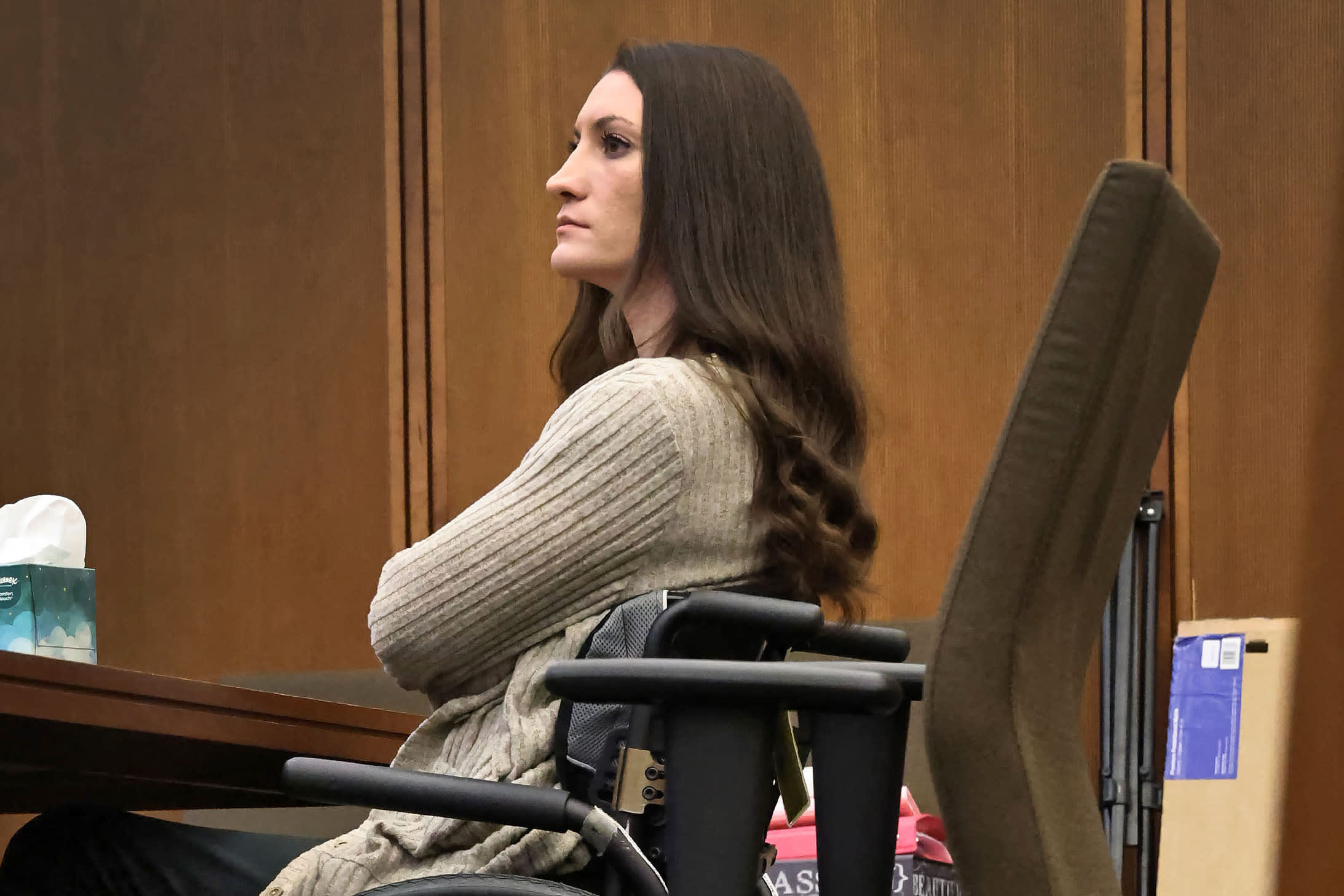
The presentation of evidence in the murder trial of Lindsay Clancy is expected to conclude today. Clancy, accused of killing her three young children, Cora, 5, Dawson, 3, and Callan, 8 months, in January 2023, faces a complex trial centered around her mental health. Prosecutors contend Clancy deliberately killed her children, while her defense argues she suffered from postpartum psychosis and did not understand the wrongfulness of her actions.
During the trial, witnesses for the prosecution attempted to challenge the idea that Clancy had postpartum psychosis and acted under auditory hallucinations. In contrast, the defense focused on showing Clancy as a caring mother, highlighting testimonies from friends and family, including her husband, Patrick Clancy.
“An incredible mother taking care of her kids,” Patrick Clancy described her.
The trial has sparked widespread attention, with discussions permeating podcasts and social media. Clancy, 36, has come to symbolize the challenges in maternal healthcare. Closing arguments could begin as soon as tomorrow, a judge informed the court.
Kevin Reddington, Clancy’s defense attorney, completed the cross-examination of the prosecution’s final witness, Gregory Saathoff. Saathoff, a forensic psychiatrist, faced questions over his statement that Clancy sought quick fixes and manipulated her healthcare providers. Reddington argued this minimized her experiences.
The defense also contested the notion that Clancy crushed pills for a suicide attempt, underlying a lack of police investigation into any mysterious residue or a pill crusher tool, according to their cross-exam. When asked, Saathoff confirmed there had been no police inquiry about the powder.
Inside the courtroom, fewer spectators were present than usual, but jurors remained focused and engaged as testimony continued. Notably, a woman’s arrival with a dog drew some attention, though it didn’t have a visible service animal badge.
Reddington questioned Saathoff’s experience with postpartum psychosis, underscoring the psychiatrist’s historical cases from decades past. Saathoff has treated approximately six women with the condition and published an early paper on its medication-induced variation.
Prosecutors and defense debated Clancy’s awareness on the day of the tragedy, analyzing whether she comprehended her actions. Saathoff suggested Clancy understood right from wrong, evidenced by her behavior and specific instructions given before the killings. Her ability to act without further direction or plan, Saathoff argued, indicated she retained control.
The day resumed with Reddington pushing Saathoff on his compensation and his familiarity with auditory hallucinations, noting the latter’s lack of published papers in peer-reviewed journals. Jurors took notes as Saathoff reiterated Clancy understood the implications of her actions.
In the broader context, Clancy’s trial emphasizes gaps in maternal mental healthcare. Commentators like Nichelle Milford Cook, attending the trial to address these gaps, advocate for improvements in postpartum treatment and mental health awareness.
The trial aims to discern Clancy’s criminal responsibility, with closing arguments expected to start Thursday. Jury deliberations might begin Friday, indicating the trial’s imminent conclusion.