
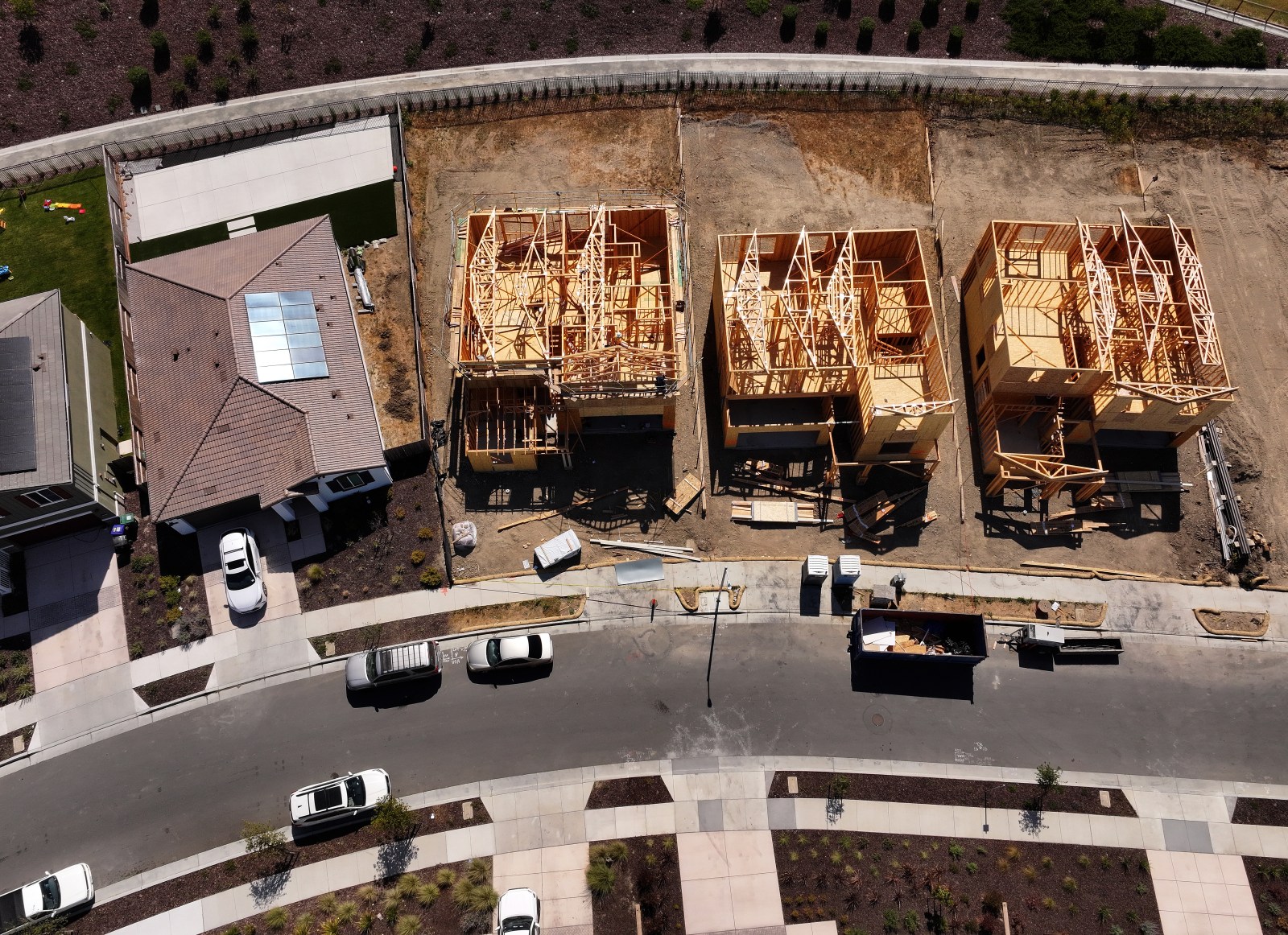
New homes have reached their lowest price point since the pandemic. Persistently low demand is compelling homebuilders to offer significant discounts to entice cautious buyers. Last month, the median sales price for a new home dipped to $393,800. This marks a 2.3% decline from June, when prices stood at $403,100. Compared to a year earlier, the decrease is 0.9%, from $397,300, according to data from the U.S. Census Bureau and the Department of Housing and Urban Development. Realtor.com confirms this is the lowest price for new homes since July 2021.
Home prices have increased by approximately 30% nationwide since 2019, offering promising news for potential homebuyers. Currently, new homes cost about the same as they did during the pandemic buying surge but are cheaper than most existing homes. The median price for existing homes was $434,100 in July, notably higher than new homes. This reversal from historical norms offers an advantage: new homes typically come without the necessity for costly repairs that existing homes may require.
Despite favorable prices, new home sales are dropping because Americans aren’t purchasing them, leaving supply much higher than demand.
Reasons Behind Low New Home Purchases
Lower prices typically urge buyers to re-enter the market. However, this hasn’t been happening due to high borrowing costs and soaring home prices since the pandemic. Sales of new single-family homes stood at an annual rate of 607,000 in July. This is a decline of 10.5% from June (678,000) and 6.3% compared to a year earlier (648,000).
Reluctance to buy new homes results in increasing inventory levels. The estimated number of new homes for sale at the end of July was 488,000, up 1.9% from June (479,000) while being 1.6% lower than July 2025 (496,000). The sales decline is similar for existing homes due to affordability issues driven by rising home prices and mortgage rates, along with concerns about living costs.
Freddie Mac reports the national average for a 30-year fixed-rate mortgage at 6.65% as of the week ending August 20, higher than experts anticipated that averages would be below 6% by 2026.
The median sale price of existing homes continued to rise year-over-year through last month, increasing from $425,700 in July 2025 to $434,100 in July 2026 according to the National Association of Realtors (NAR). Although existing-home sales fell 1.7% in July month-to-month, regional changes are evident, with increases in the Northeast (+2.0%) contrasted with declines in the Midwest (-2.0%) and South (-3.1%). Sales remained flat in the West (+0.2%).
Regional Variations in New Home Sales
Regional differences echo those seen in existing-home sales. In the Northeast, the annual rate of new home sales was at its highest in the year so far, up 30.3% from June and 95.5% from July 2025. Conversely, the South witnessed a 13% month-over-month decline and a 5.2% year-over-year drop. The Midwest experienced a drastic reduction of 42.7% from June and 50.6% from July 2025. In the West, sales increased by 6.2% from June and 2.2% from a year earlier.
The South faced excess inventory, as states like Florida and Texas saw numerous new homes constructed during the pandemic to accommodate new residents. Many homes entered the market under decreasing demand due to rising borrowing costs and workplace return orders in the West Coast and Northeast, reducing their appeal and value.
Excess inventory provides more options for buyers, thus slowing price growth. However, it increases competition among builders for fewer qualified buyers, decreasing incentives to construct more homes.
In contrast, demand in the Northeast remains high due to a continued housing shortage, while the South grapples with weakened price growth.
Future Housing Market Outlook
The ongoing conflict in Iran generates uncertainty surrounding the U.S. economy’s trajectory and personal financial impacts. Affordability constraints and mortgage rates are expected to keep demand low, preventing significant national price increases seen during the pandemic boom. According to Realtor.com, home prices are projected to grow between 1% and 3% nationally. The regional divide in the U.S. housing market appears likely to persist, maintaining strength in Northeast and Midwest markets while some areas in the South, particularly those with abundant inventory like Florida and Texas, face weaker price growth or declines.
Contact Newsweek editors for further insights: Matthew Robinson and James Debens.