
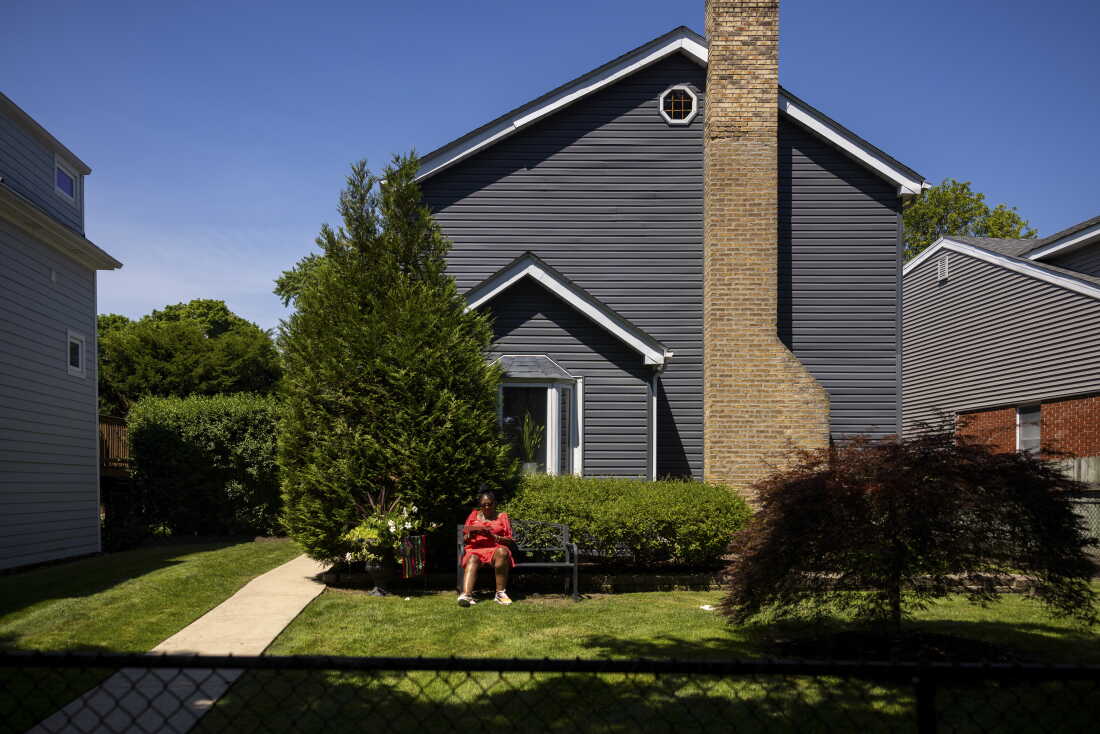
Kimberly Holmes-Ross, born in Evanston, Illinois’ historically Black 5th Ward, represents the first generation of her family to move out, choosing to reside in the nearby 2nd Ward. Her family utilizes reparations funds to convert her basement into an apartment for her son. This highlights a significant aspect of Evanston’s first-of-its-kind reparations program designed to address past racial segregation.
Allie Zemtseff’s childhood memories from the 1960s paint a vivid picture of racial discrimination. Her mother, a Black woman, faced rejection from landlords in predominantly white areas. This personal history offers contrast to the Trump administration’s recent accusation against Evanston, alleging racial discrimination in the city’s reparations program. Evanston’s initiative, the first in the U.S., provides $25,000 grants to acknowledge and compensate Black residents affected by historical housing segregation. Zemtseff used her grant to renovate her kitchen, viewing it as recognition of past injustices.
The reparations program, approved in 2021, has supported over 300 individuals by addressing historical discrimination. However, the Trump administration, aiming to dismantle racial equity programs, challenges Evanston’s initiative. The Justice Department argues the program discriminates racially by limiting eligibility to Black residents. Legal experts, like Alvin Tillery from Northwestern University, emphasize the program’s importance, contrasting the administration’s critique with the notion of righting historical wrongs.
“What’s happening in Evanston is the most important civil rights story that no one has heard of,” Alvin Tillery says.
The Justice Department suggests Evanston violates the Constitution’s equal protection clause. Civil rights chief Harmeet Dhillon states, “simply handing out money based on race is not the answer—it is race discrimination, pure and simple.” This stance poses a potential threat to the city’s reparations framework, driven by the legacy of discriminatory policies.
In 2019, Robin Rue Simmons, then a councilmember from Evanston’s 5th Ward, initiated the reparations program by researching the decline in Black populations possibly linked to discriminatory zoning laws dating back to 1921. The council acknowledged its historical role, committing $20 million from cannabis and real estate taxes toward reparations. To qualify, applicants had to prove residency in Evanston during the segregation era from 1919 to 1969.
Laurice Bell, from the Shorefront Legacy Center, observes how residents sought documentary evidence of their historical residence to qualify for reparations. This highlights the program’s challenge: ensuring reparations target those truly affected by discrimination. Judicial Watch’s lawsuit claims the program fails to require proof of direct discrimination, challenging eligibility based solely on residence and race.
Evanston Mayor Daniel Biss defends the program, asserting it’s a corrective measure against historical racial wealth gaps. Reparations experts warn of broader implications if the legal challenge succeeds, potentially undermining the reparations movement nationwide. Justin Hansford, founder of the Ogletree Reparative Bar Association, stresses detailed documentation of discrimination is vital for legal viability.
Kimberly Holmes-Ross’ deep roots in Evanston showcase the reparations program’s personal impact. Her family used the grant to improve housing conditions, evidencing how reparations can create tangible benefits for descendants of those historically discriminated against. Her mother insisted the program was more about acknowledging historical harm than financial compensation.
Despite legal challenges, Evanston remains committed to its reparations initiative. Rue Simmons, now overseeing FirstRepair, a nonprofit advisory group for reparations efforts nationally, encourages other cities to continue similar endeavors cautiously. This sentiment underscores the strengthening resolve to rectify racial discrepancies through targeted reparations.