
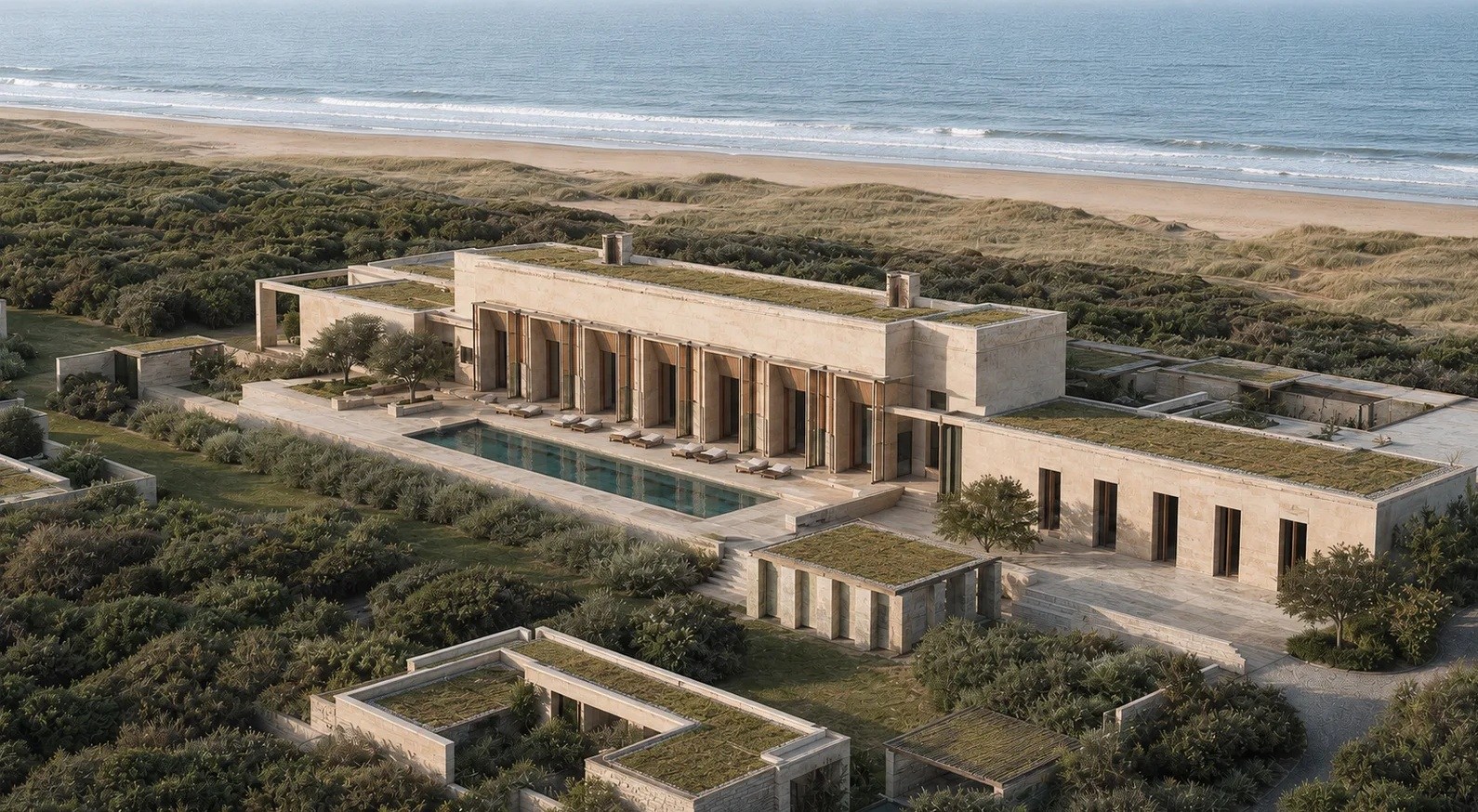
A new billion-dollar waterfront community in South America is set to emerge, promising a future built on sustainability, technology, and economic innovation. Praxis, the company spearheading the project, recently announced Uruguay as the development location for its favorable landscape, stability, and availability of space. Dubbed ‘+Colonia,’ this city is poised to rise next to Colonia del Sacramento, with plans to welcome residents by mid-2027.
Praxis plans to channel $1 billion into this initiative over the next three years, aiming to establish ‘the world’s first digital nation.’ This community will focus on residences, hospitality, culture, and an AI-driven future. Supporters highlight the quality of life +Colonia could offer, while critics question the feasibility of an AI-based community and the realism of investment targets.
Global Visions of Future Cities
From Saudi Arabia to California, new city developments are aiming to redefine urban living.
California Forever: A New Urban Vision in the U.S.
Backed by Silicon Valley investors, California Forever aspires to be ‘America’s next great city.’ This ambitious project aims to create a medium-density, walkable city with integrated parks and public spaces, designed from the ground up to be climate-resilient. Set in Solano County, it promises 530,000 new jobs, 170,000 homes, and new clean energy sources.
The project focuses on expanding Suisun City, near San Francisco. Developers are working with local officials on annexation plans, pending the publication of Suisun City’s Draft Environmental Impact Report. Challenges include controversy over land acquisitions and environmental impact concerns.
Woven City: A Japanese Experiment in Mobility
Toyota’s Woven City in Japan is among the most advanced purpose-built cities, focused on new mobility and enhancing well-being. Located in Susono, near Mount Fuji, it serves as a ‘living laboratory’ for experimenting with mobility technologies, robotics, and AI systems. Since last September, residents have been moving in, with Phase 2 construction scheduled for completion by November 2028. Woven City addresses scalability beyond its current research-centric operations.
Telosa: An Equitable Urban Experiment in the U.S.
Telosa was unveiled by billionaire entrepreneur Marc Lore, aiming to embody ‘equitism’ with shared land ownership, sustainability, and social equality. The first residents may move in by 2030, although the final location remains undecided. Urban planners have praised its vision, yet concerns persist about feasibility and financing.
Rio AI City: A Brazilian Tech Hub
Rio AI City aspires to be a technologically advanced community, featuring renewable energy-powered data centers and green skin architecture. Located in Rio de Janeiro’s Olympic Park, it’s one of the largest digital infrastructure initiatives globally. Critics point to potential high energy demands and environmental impact.
Oceanix Busan: Floating Urbanism in South Korea
Plans for Oceanix Busan propose a floating city in Busan, South Korea. This prototype city employs flood-proof infrastructure and self-sustained systems for food, energy, and water. While the idea has intrigued climate experts, concerns about cost and long-term viability remain.
The Line: A Linear City in Saudi Arabia
The Line, part of Saudi Arabia’s NEOM project, is designed as a linear city stretching 170 kilometers. Powered by renewable energy, it aims to house 9 million people. However, construction is delayed until at least 2030, focusing instead on infrastructure investments.
Global city development projects reflect bold ideas to blend technology and sustainability with urban living. Each project presents unique challenges, balancing innovation with practicality.