
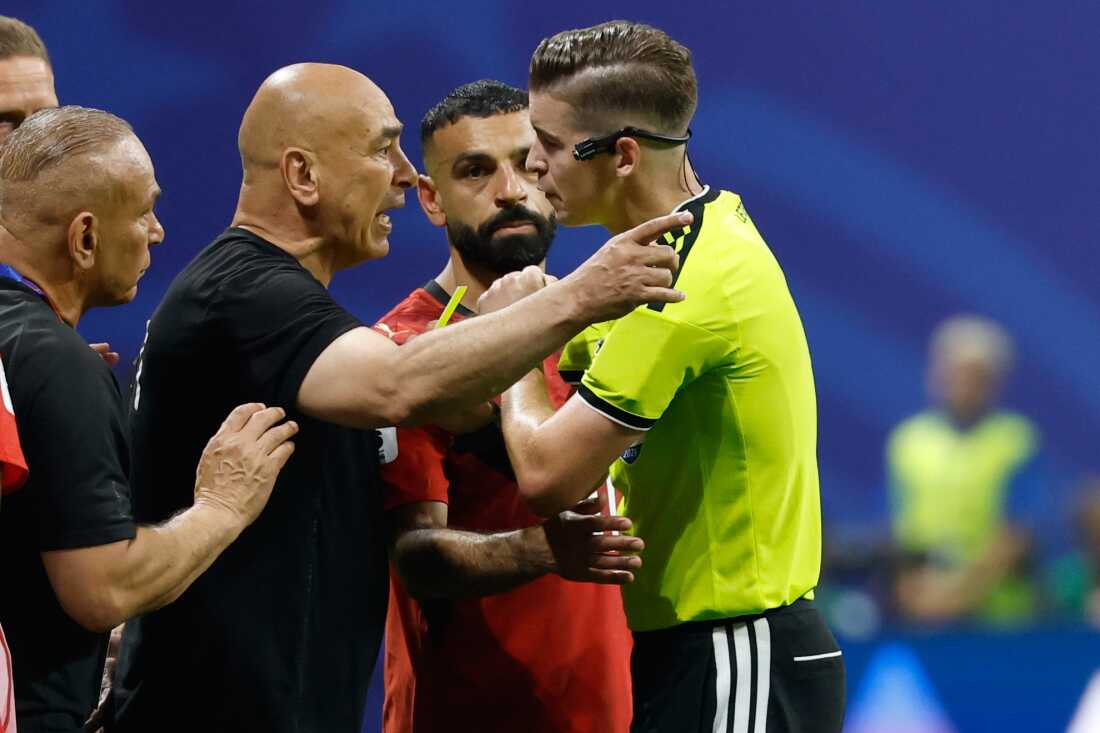
Allegations of Unfair Officiating
The Egyptian Football Association (EFA) has publicly criticized the officiating following Egypt’s 3-2 defeat against Argentina in the World Cup round of 16. The match, held in Atlanta on July 7, 2026, saw Egypt’s coach Hossam Hassan and several players express discontent with the refereeing.
The EFA issued a statement asserting their belief of biased officiating which allowed Argentina to score three consecutive goals within 13 minutes. ‘Defending the rights and interests of the Egyptian national team is a responsibility that we carry with full conviction and determination,’ the statement emphasized.
Responses from FIFA
Pierluigi Collina, FIFA’s chief of refereeing, responded to the EFA’s claims, advocating for constructive discussions while denouncing unfounded allegations. He highlighted how questioning the integrity of FIFA match officials could lead to threats against them and their families.
Collina defended the refereeing decisions, specifically addressing the controversial usage of the Video Assistant Referee (VAR) system. He illustrated the process whereby a foul detected in the build-up can prompt a VAR intervention, regardless of its distance from the goal.
Key Incidents and VAR Controversy
The match featured key incidents that fueled Egypt’s frustration, notably when a goal was disallowed after a VAR review indicated Marwan Attia had fouled Argentina’s Lisandro Martínez. ‘Several key incidents raised serious concerns and left profound questions about the consistency and fairness of decisions that directly influenced the course of the game,’ noted the EFA’s statement.
Collina stated, ‘If a foul is identified in the build-up and is deemed to have had an impact on the goal, the VAR will recommend an on-field review.’ Furthermore, he affirmed that in Attia’s case, ‘clearly treads on the foot of Argentina No. 6 Lisandro Martínez.’ The standards guiding foul recognition apply regardless of the apparent obviousness of the foul.
Game Dynamics and Reactions
Initially, Egypt led with goals from Mostafa Ziko, but the game dynamics changed after Lionel Messi assisted Cristian Romero, sparking Argentina’s comeback. The climatic moments included racist abuse allegations from Hassan after Argentina’s winning goal in stoppage time.
Subsequent to the match, Egypt’s goalkeeping coach Saafan Elsaghir received a red card accompanied by several yellow cards issued to Egyptian players. Hassan attributed these issues to favoritism towards Messi and Argentina.
Calls for Fairness
The EFA statement concluded by highlighting concerns of players, staff, and supporters, appealing for integrity, fairness, and transparency in officiating at the world stage. ‘Every player who wears the Egyptian shirt, and every supporter who stands behind the team, deserves fairness, respect, and equal application of the laws of the game,’ the statement declared.