
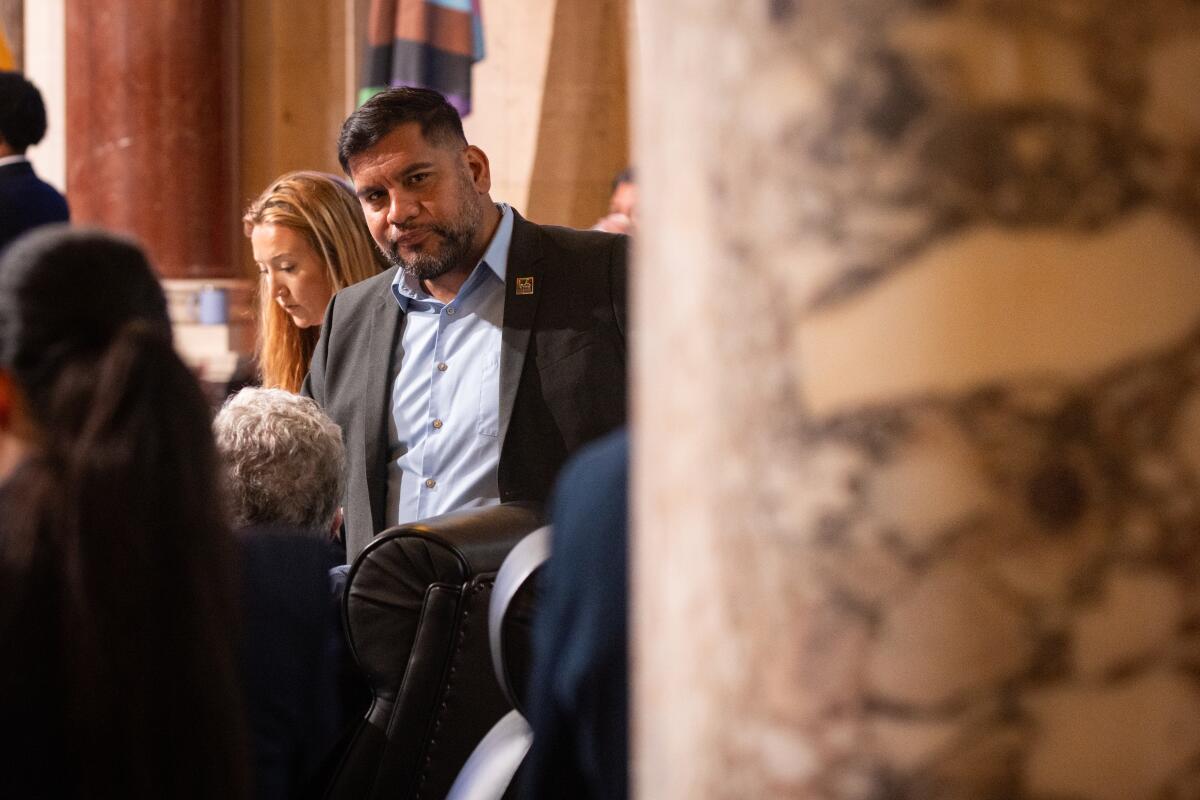
The situation in Southern California became tense when federal immigration agents started detaining undocumented workers at various locations, including car washes, garment factories, and parking lots. Angelica Salas, a key figure in immigrant rights in Los Angeles, frequently collaborated with City Councilmember Hugo Soto-Martínez—son of Mexican immigrants—to address the lack of political representation for noncitizens.
Salas highlighted the dilemma, stating, “A lot of this is happening because immigrants don’t have the right to vote.” These discussions laid the groundwork for Soto-Martínez’s initiative to propose noncitizen voting rights in city and school district elections. By mid-June, two-thirds of the council supported drafting a measure for the November ballot.
However, the plan encountered obstacles as the council redirected the proposal for further study. Soto-Martínez admitted to insufficient outreach, particularly with Black community leaders. Concerns arose about whether undocumented immigrants would be included and whether they would become targets for the federal administration.
Rev. K.W. Tulloss, representing clergy and civil rights advocates, called for a delay, citing potential threats to Black voting representation. The shrinking percentage of Black voters in Los Angeles could diminish further with an influx of noncitizen voters.
Tulloss emphasized the need for dialogue, remarking, “At the end of the day, we don’t want any type of deal that will be divisive in the community.” At present, Black residents constitute about 8% of registered voters, and the number of Black representatives on the City Council may further decline.
Soto-Martínez argued that noncitizen voting was consistent with historical expansions of voting rights in the U.S. He pointed to similar initiatives in places like San Francisco where noncitizen parents can vote in school board elections.
Concerns about the proposal centered on worries that federal immigration authorities might target newly registered voters. Former Mayor Antonio Villaraigosa opposed noncitizen voting in city elections but supported it for parents in the school system. He warned of risks given the Trump administration’s stance.
Soto-Martínez dismissed these concerns, labeling them as “fear mongering.” Salas, supporting the notion, asserted that immigrants are already targets and that voting would not worsen their situation.
Additional hurdles included determining how ballots would be issued and calculating the costs of providing them. Twenty-two local jurisdictions nationwide have implemented noncitizen voting, according to Megan Dias, who co-authored a report on immigrant voting efforts.
Council President Marqueece Harris-Dawson expressed optimism for a thorough review, eyeing the 2028 ballot. He stressed the importance of clarity in the proposal to ensure that Black voting districts remain protected.
Further deliberations must clarify which noncitizen categories would qualify, such as green card holders and DACA recipients. Harris-Dawson emphasized, “When something goes to the ballot, we need the details to be figured out.” Establishing specifics on implementation and financial implications remains crucial.