
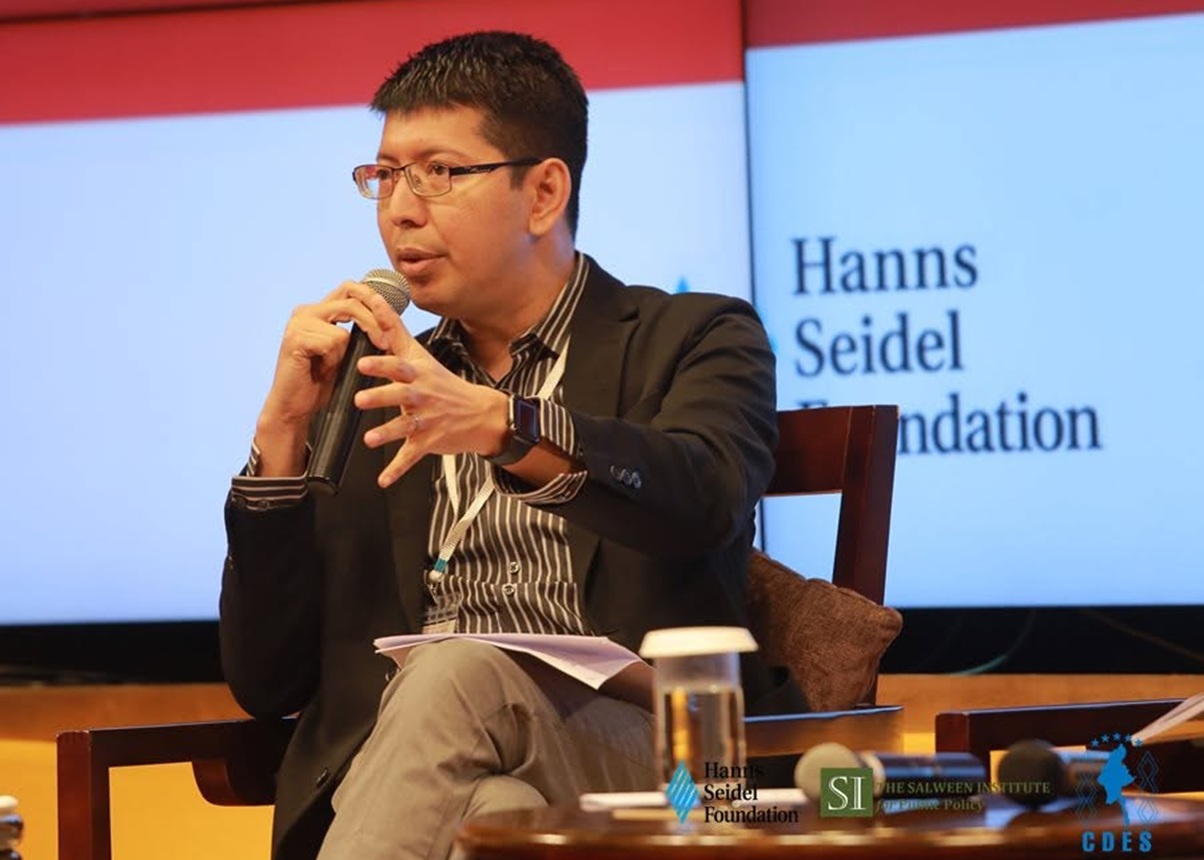
An American citizen named Min Zin, arrested by Chinese authorities in June, has triggered global attention. Detained on suspicion of espionage, Min Zin’s arrest is linked to his effective exposure of China’s expanding interests and interference in Myanmar.
Min Zin disappeared on June 3 after attending a China state-sponsored conference in Kunming. This event sparked concerns over the safety of foreign scholars traveling to China for professional purposes. The U.S. State Department has been urged to intervene for his release. Min Zin, the Executive Director of Thailand-based Institute for Strategy and Policy-Myanmar (ISP-Myanmar), provides in-depth analyses of Myanmar, drawing comparisons to the conflicts in Syria.
June 3 marked the beginning of Min Zin’s detention, and under Chinese law, formal charges might be imminent. The situation remains uncertain, with no comments from the Chinese embassy in Washington D.C.
“The question everybody should be asking is why him, why now?” remarked Laura Harth from the human rights group Safeguard Defenders, which is actively advocating for Min Zin’s release.
Min Zin has posed considerable challenges to China’s strategic maneuvers in Myanmar. His arrest came shortly before Myanmar President Min Aung Hlaing’s state visit to Beijing. This was his first visit since seizing power in 2021, highlighting Myanmar’s ongoing strategic ties with China.
An analysis by ISP documented the increased reliance of Myanmar’s government on India and China, reflected in numerous agreements during state visits. Approximately 70 business-to-business memorandums and 18 state-level accords were concluded, underscoring Beijing’s focus on Myanmar’s collaboration with its political initiatives.
China’s geopolitical influence in Myanmar remains dominant, and Joshua Kurlantzick from the Council on Foreign Relations noted that China’s role as the principal external power is unlikely to diminish. Min Zin’s arrest is viewed as a test of the U.S. response, highlighting the limited actions taken so far.
Efforts to designate Min Zin as a “wrongfully detained” individual have not progressed. Randall G. Schriver criticized China’s actions and implored the U.S. to officially recognize the wrongful detention and advocate for Min Zin’s release. The arrest contravenes prior agreements made during President Trump’s visit to Beijing, Schriver highlighted.
The U.S. State Department acknowledged the importance of American citizens’ security, noting consular officials have visited Min Zin and are providing appropriate assistance.
China’s Belt and Road Initiative includes a crucial Myanmar section with significant investments directed towards the China-Myanmar Economic Corridor. This initiative seeks access to Myanmar’s Kyaukpyu port, bypassing strategic maritime chokepoints.
The situation remains complex as local conflicts pose risks to China’s strategic interests. Differing views on Min Zin’s arrest suggest deeper issues between U.S. and China, with Myanmar’s role possibly secondary.
Yun Sun from the Stimson Center postulated that the arrest is more reflective of broader U.S.–China tensions, possibly involving reciprocations over prior U.S. actions against Chinese scholars.