
The outbreak of Ebola caused by the Bundibugyo virus has raised alarm among health officials. This particular strain spreads through bodily fluids and has no approved vaccine or treatment. The World Health Organization (WHO) reports that the virus is highly contagious and can be fatal, with a mortality rate of 30% to 50%. Symptoms include fever, rash, and vomiting.
The outbreak’s late detection concerns experts, as it has spread from its origin in eastern Ituri province in Congo to the capital, Kinshasa, and into neighboring Uganda. This broad geographic reach complicates efforts to understand its full spread. In a move to control the outbreak, Congo closed its border with Rwanda on Sunday, according to the State Department.
“There are significant uncertainties to the true number of infected persons and geographic spread associated with this event at the present time,” said the WHO.
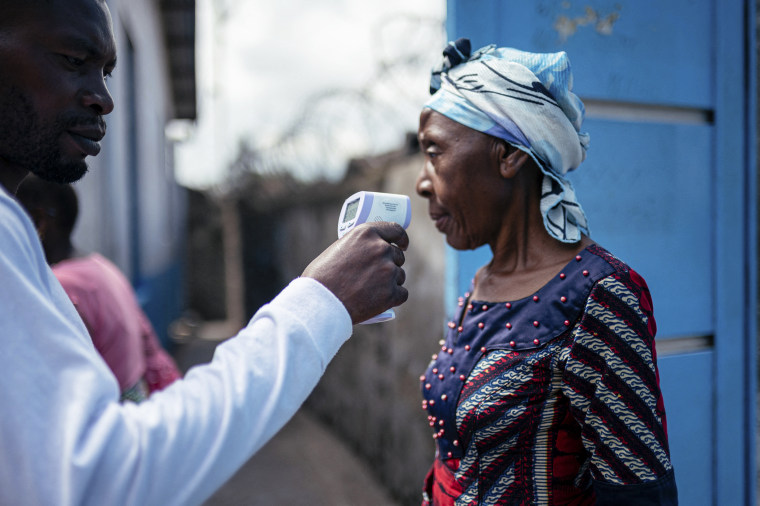
Conflict between the Congolese government and the M23 rebel group, especially in the city of Goma, poses additional challenges in the fight against the virus. The city’s administration confirmed one case of Ebola there, adding to concerns over the region’s stability. Health workers are actively screening individuals at hospital entrances, as seen on Sunday in Goma.
Jean Kaseya, director-general of the Africa CDC, expressed urgency in addressing the outbreak. He noted a lack of vaccines and medicines while deaths continue to rise. The WHO’s emergency declaration is catalyzing a coordinated response by governments and agencies to curb the spread. A team of 35 experts accompanied 7 tons of medical supplies to Bunia, the capital of Ituri province, to aid local efforts.
The U.S. CDC is collaborating with Congo and Uganda by providing support in surveillance, laboratory diagnostics, infection control, and other outbreak management activities. The CDC’s Ebola response manager Satish Pillai, however, did not provide details about affected Americans.
The charity organization Doctors Without Borders, known as Medicines Sans Frontiers, is preparing to scale up its medical response rapidly. Trish Newport, MSF emergency program manager, highlighted the urgency due to the quick spread and increasing number of cases and deaths.
Jeremy Konyndyk, president of Refugees International, voiced his concerns on social media platforms. He reflected on the Ebola outbreak from 2014-16 and noted that previous responses led by USAID and CDC were supported by the U.S. military. He pointed out that current international response efforts may be hindered by recent cuts under the Department of Government Efficiency, referred to as DOGE, suggesting diminished capacities in handling the outbreak.
The State Department expressed commitment to working with Congo and Uganda to contain the virus swiftly. They are mobilizing support for key partners to address this health emergency.