
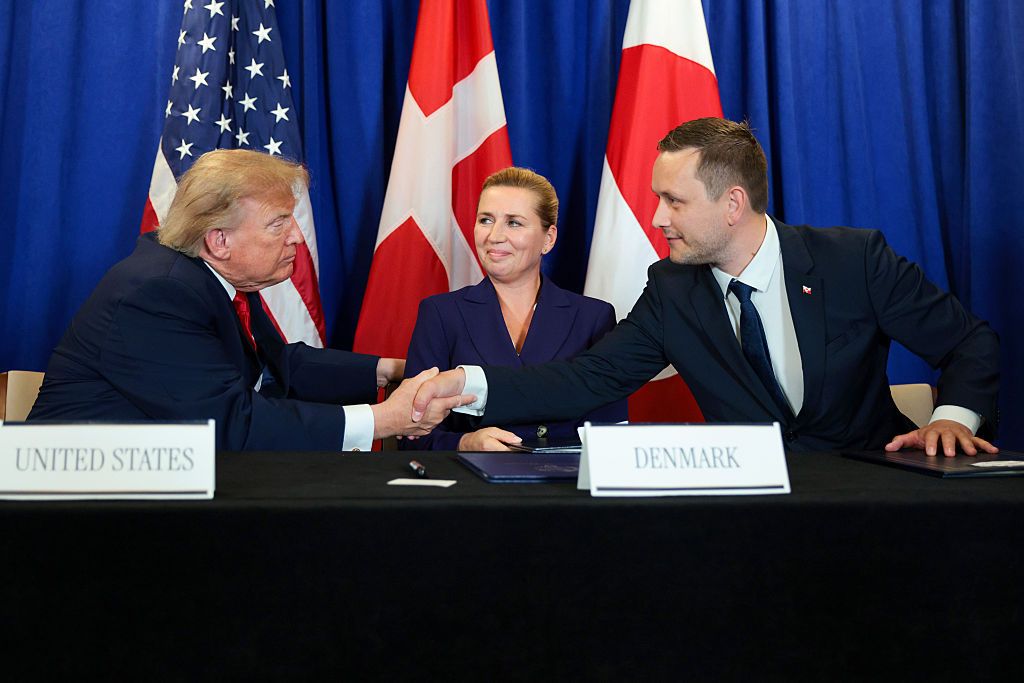
Denmark’s parliament has overwhelmingly approved the landmark security agreement involving Greenland, which was championed by former President Donald Trump. The vote in the Folketing, Denmark’s parliament, clears the way for a significant expansion of America’s military presence in this Arctic region.
Details of the Agreement
The agreement, signed in September by Trump, Danish Prime Minister Mette Frederiksen, and Greenland’s Prime Minister Jens-Frederik Nielsen, allows the United States to establish new military facilities at Narsarsuaq in southern Greenland and Mestersvig in the northeast. The U.S. will also expand operations at its existing Pituffik Space Base.
Importantly, the deal enhances U.S. influence over Greenland’s security arrangements but does not transfer sovereignty over the territory. Greenland remains a self-governing region within the Kingdom of Denmark. The agreement acknowledges Greenlanders’ right to self-determination but requires any future independent state of Greenland to remain in NATO and uphold existing defense commitments.
Key Conditions
- The agreement has no expiration date and can only be amended by mutual consent.
- The U.S. gains a voice over sensitive foreign investments in Greenland.
- Non-NATO countries cannot establish military bases in Greenland without approval from Denmark, Greenland, and the U.S.
Reactions and Implications
Trump had argued for the strategic importance of American control over Greenland for U.S. national security, which previously led to diplomatic tensions with Denmark. The signing of this agreement serves as a way to maintain Arctic security while respecting Danish sovereignty.
Danish Prime Minister Mette Frederiksen stated that the agreement respects the sovereignty of Denmark and the right of Greenlanders to self-determination. Greenland’s Prime Minister, Jens-Frederik Nielsen, echoed this sentiment, emphasizing the recognition of Greenland as a people with the right to self-determination.
Greenland’s parliament ratified the deal with 16 votes in favor. However, seven members abstained due to concerns about potential long-term economic and political impacts. Greenlandic Foreign Minister Múte Egede stressed the necessity of accepting that peace and stability cannot be taken for granted. Opposition leader Pele Broberg criticized the agreement for offering insufficient benefits to a potential future independent state.
Procedural Steps
In Denmark, Foreign Minister Lars Løkke Rasmussen brought the agreement to the parliament on October 22. It received broad support in its first reading on November 12. Following its examination by the foreign affairs and defense committee, the Danish parliament’s approval allows the agreement to come into effect once Denmark formally informs Washington that all necessary procedures have been completed.
This agreement represents a significant shift in the geopolitical landscape of the Arctic region, especially in terms of U.S. interests and strategic military positioning.