
Sophie Cunningham’s recent comments advocating for a change in the WNBA’s leadership have ignited protests outside a Brooklyn game. Political commentator Tomi Lahren and her panel have been analyzing the controversy surrounding WNBA Commissioner Cathy Engelbert, particularly regarding transgender participation in women’s sports.
Former WNBA player Sue Bird recently stated on her podcast that players would have preferred to focus solely on basketball, saying, “We would have loved to shut up and dribble.” Bird, engaged to Megan Rapinoe for over five years before their split earlier this year, has been vocal about progressive politics. She now claims they were compelled to speak out due to various intersections of identity and social issues.
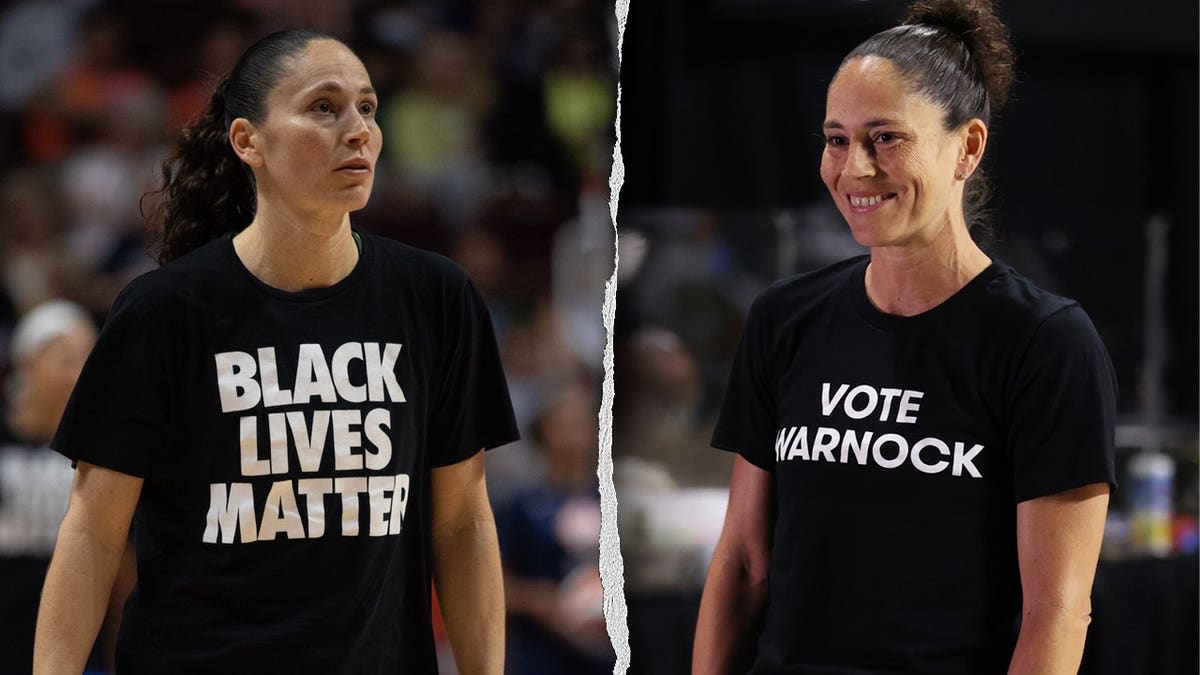
During Bird’s vice presidency at the WNBPA in 2020, the league was deeply involved in political advocacy. The season prominently featured Black Lives Matter, launching the Justice Movement and a Social Justice Council. Players and the league addressed issues like voting rights, LGBTQ advocacy, and gun control, which was not limited to online expressions but integrated into the season’s structure.
Players wore “Vote Warnock” shirts in support of Democratic Senate candidate Raphael Warnock, against Atlanta Dream’s former co-owner Kelly Loeffler, who criticized the league’s stance on Black Lives Matter. Bird advocated for replacing Loeffler in the Senate race, as reported by Axios, to promote Warnock’s candidacy.
In 2020, Bird supported having social justice as a nonnegotiable focal point for the WNBA, aligning with league-wide efforts. However, Bird’s recent comments suggest a changed perspective, indicating she believes the league cannot be expected to handle all political disputes, especially involving figures like Donald Trump.
ESPN reporter Ramona Shelburne countered Bird’s narrative, observing that the WNBA is an active participant in political discussions, with players and the league choosing to engage with cultural issues. Shelburne noted that such engagement appears deliberate, as indicated by the ongoing choices made by those involved with the WNBA.
Sue Bird’s historical involvement shows a pattern of political engagement, yet she now presents a revised stance of reluctance. This inconsistency highlights the complex role the WNBA plays in blending sports with social justice activism.