
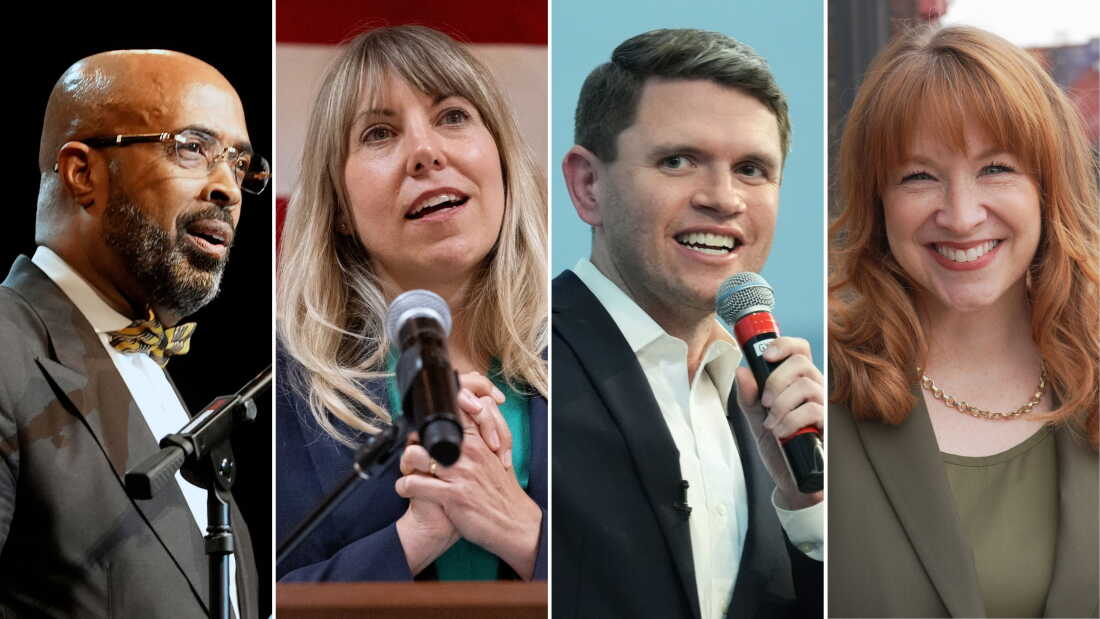
Some Democratic Congressional candidates are emphasizing faith in their campaigns. Notably, candidates like Frederick Haynes, Sarah Trone Garriott, James Talarico, and Lindsay James have made religion a key aspect of their political outreach. While it is uncommon for Democrats to highlight faith in elections, this year several candidates, including ordained clergy, are doing so.
On a Sunday at Brentwood Baptist Church in Houston, James Talarico, state representative and Democratic nominee for U.S. Senate, addressed the congregation. Talarico, with roots in teaching and theological study, expressed, “I want to speak to you this morning, not as a candidate, but as a fellow Christian.” He shared that his grandfather was a Baptist preacher and emphasized that although Christianity is straightforward, it challenges its followers. Talarico suggested that faith could help understand the current political climate, stating, “Sometimes we see the world most clearly through our tears.”
Democrats generally do not center their campaigns around religion, but this election cycle sees many doing so. At least six candidates are clergy or studying to be ministers. These individuals are advocating for policies on health care, veterans, immigrants, and economic opportunity, aiming to attract voters in areas where religion is significant. Meanwhile, Republicans are criticizing Democrats’ religious discourse; for instance, Texas Lt. Gov. Dan Patrick described Talarico’s campaign approach as blasphemous and in stark contrast to genuine Christian values.
Talarico has replied to such attacks by focusing on healthcare issues, declaring, “The real blasphemy is kicking the sick off their healthcare to fund tax cuts for billionaires.” Church member Candice Stroud appreciated Talarico’s approach, noting, “They don’t want to hear that we are Christians. We go to church. We believe in the Bible.”
The Pew Research Center found that only 28% of Democrats regard religion as very important in their lives, underscoring a religious divide with Republicans. At a Democratic event, Talarico reinforced that while faith is central to him, he opposed theocracy, warning about the dangers of governance based on religious missions.
Criticism also extends toward Talarico’s views on Christian nationalism, which opposes the idea that the U.S. should act as a Christian nation. His opponent, Ken Paxton, questions Talarico’s sincerity in faith.
At a Houston town hall, Talarico connected with the crowd, including Brandon Sterling, who said he understands Talarico’s emphasis on faith as a part of reaching Southern voters. Madison Vega shared how Talarico’s faith-based approach resonates with her, despite initially distancing herself from religious institutions due to polarizing messages.
However, not all voters feel comfortable with mixing politics and religion. Kristin Kott, a voter, highlighted priorities like improving schools and floods, distancing from religious discourse in politics. She mentioned, “I don’t think religion should play into government and politics at all.”
Similarly, Frederick Haynes, running for Congress in Dallas, integrates faith into his campaign. With decades of experience as a pastor, Haynes aims to represent marginalized communities. His religious guidance is inspired by biblical teachings, striving to bring church concerns into legislative spheres. Despite criticism from opponents, Haynes remains motivated by his interfaith experiences and community values.
In Iowa, candidates like Sarah Trone Garriott and Lindsay James intertwine their ministerial duties with political endeavors. Trone Garriott, a political figure and Lutheran pastor, addresses social justice themes within her sermons. Despite skepticism from some church members about clergy in politics, she plans to extend her pastoral calling into governance.
Lindsay James, a chaplain, engages with healthcare concerns on her campaign trail, framing her congressional candidacy as an extension of her ministry’s ethical ideals. Highlighting her political inspiration, James recalled instances from her chaplaincy that informed her understanding of leadership as providers of hope and truth.
These Democratic candidates face challenges as their religious stances are often scrutinized by opponents. Questions about religious authenticity arise in criticisms like those from Joe Mitchell concerning transgender rights and interpretations of Christianity. Nonetheless, Democratic candidates argue their pursuit of justice and service align with their faith, extending beyond individual acts to encompass governmental responsibilities. James, reflecting on a known biblical parable, iterated the importance of moral obligations in government to improve society’s systemic flaws.