
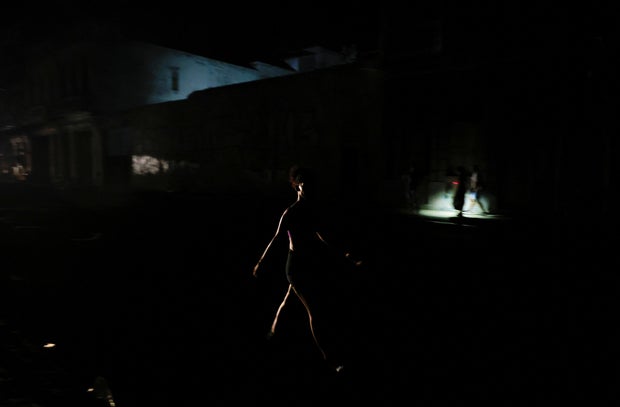
Cubans began regaining power Tuesday following a third nationwide blackout this year, triggered by a U.S. fuel blockade. The energy crisis worsens the island’s existing struggle to maintain electricity, a situation exacerbated when President Trump halted oil supplies in January.
On Monday, Union Electrica (UNE), the state electricity provider, announced an island-wide “total disconnection,” affecting 9.6 million people. Early Tuesday, power was partially restored, covering over 30 percent of the capital, including essential services like medical centers and water distribution installations.
Since late 2024, Cuba has experienced eight major blackouts. Lazaro Guerra from the Ministry of Energy and Mines, speaking on state television, noted the restoration’s challenges due to the fuel shortage. Cuban President Miguel Diaz-Canel accused U.S. sanctions of aiming to incite unrest by restricting fuel access.
“The efforts of electrical workers under a severe energy blockade are heroic,” Diaz-Canel stated.
New power cuts range from over 30 hours in Havana to 70 hours in rural areas, attempting to preserve limited fuel. Meyboll Font, a self-employed social media manager in Havana, shared, “Living like this is agony,” enduring only “three or four hours of power a day.” A programmer echoed issues with work and communication, lacking WiFi and electricity.
Cuba’s power infrastructure, largely comprised of outdated Soviet-era plants, struggles under fuel shortages since the blockade. Washington has restricted oil imports since January, permitting only one Russian tanker, intensifying efforts to end Cuba’s communist regime, similar to Venezuela’s strategy.
Cuba insists on maintaining its political system, resisting regime change. The blockade and sanctions, combined with shortages in food, water, and medicine, lead the United Nations to warn of a potential humanitarian crisis. Transportation faces severe disruptions.
Havana proposed economic reforms to lessen state control, yet the U.S. State Department dismissed them as inadequate. Talks between the two governments have stalled, with no resolution to the ongoing difficulties. Recent U.S. actions prevent a UN debate on the blockade, further complicating diplomatic efforts.