
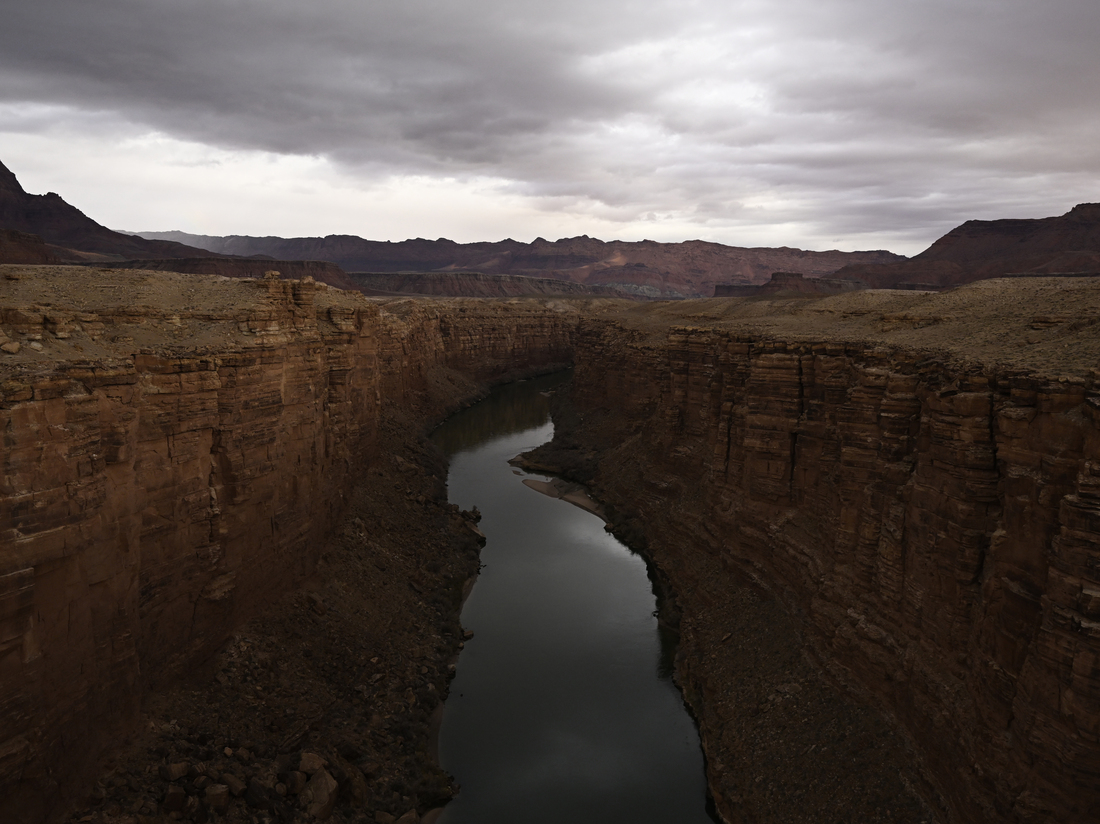
The Colorado River faces a severe threat, significantly affected by droughts linked to climate change. A study from 2017 indicates that water flow may decrease by 30% by 2050 and by 55% by 2100, primarily due to greenhouse gas emissions. The situation reflects similar patterns across other major rivers like the Mississippi.
Significant drops in water levels are evident at Lake Mead, part of the Colorado River system. These declines are visually marked by white chalky bands on surrounding mountains. Similarly, in October of last year, the Mississippi River’s decreased flow led to a huge backlog. Approximately 210,000 container trucks’ worth of corn and soybeans were stuck as thousands of barges faced stalling.
Laurence Smith, a professor at Brown University, states, “We would have had a drought anyhow, but it’s human impact that has pushed it over the edge.” He highlights the necessity for the American West to adapt and utilize water resources more efficiently.
In a discussion with Short Wave co-host Emily Kwong, Laurence emphasizes the importance of adopting fresh approaches to river management. These strategies are vital for maintaining the health of waterways and supporting the communities that rely on them. Addressing these challenges now can pave the way for a future better suited to climate resilience.
For those interested in learning more about water management strategies and river conservation, feel free to share your thoughts with Short Wave. They welcome queries and suggestions at [email protected].
This discussion was part of a Short Wave podcast episode, with contributions from Abe Levine as producer, and Rebecca Ramirez and Gisele Grayson as editors. Fact-checking was conducted by Margaret Cirino and Rebecca, while Robert Rodriguez served as the audio engineer.