
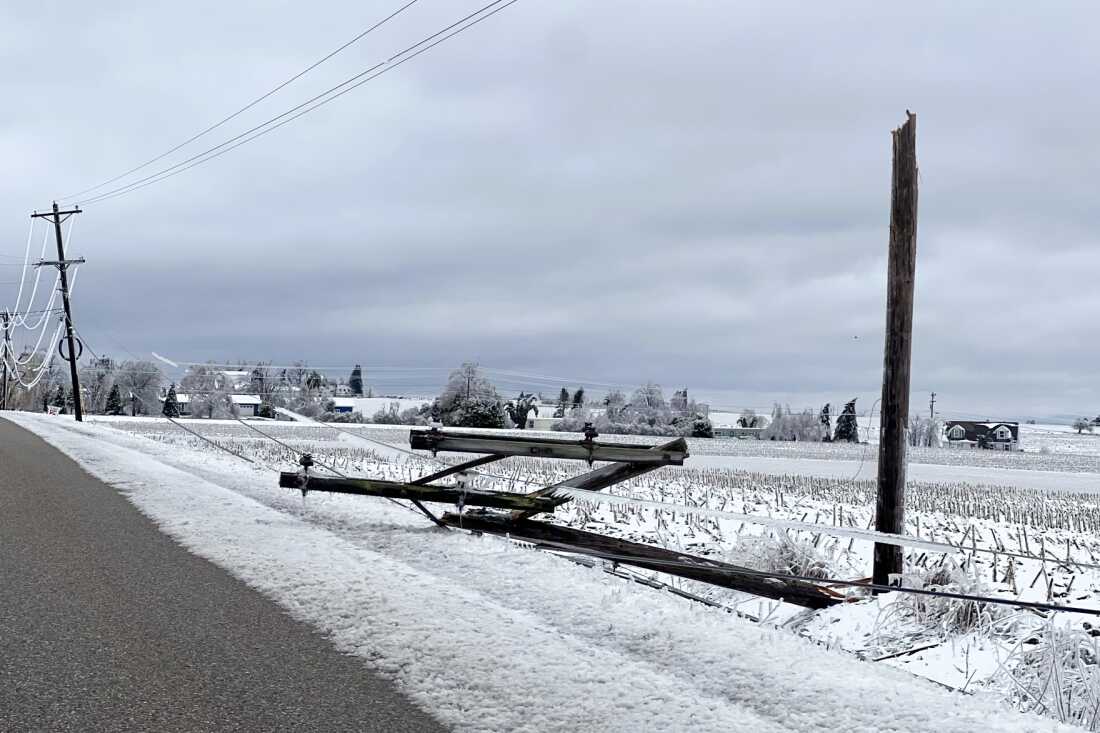
In March 2025, an ice storm struck northern Michigan, toppling trees and power lines and leading to widespread disruptions. Experts indicate that with a warming climate, the region is likely to experience more freezing rain and severe ice storms instead of snow.
Climate Challenges for Power Infrastructure
Power lines across the United States weren’t designed for today’s climate challenges. Storms frequently cause outages, often due to trees falling on above-ground lines. Burying power lines offers greater reliability, especially with more frequent severe weather events. However, only about 20% of U.S. lines are underground, as reported by the U.S. Department of Energy. Some utilities in northern Michigan are aiming to change this.
During the 2025 ice storm, the power outages in Michigan were extensive. Thousands lost power for weeks. Wanda Whiting, a Lewiston resident, had to drive her husband to the hospital amid downed wires and broken poles. The scenario highlighted the vulnerability of the power grid in extreme weather.
“I still can’t get over how astonished I was, how much we rely on street lights,” Whiting said.
According to research, northern Michigan may see increased freezing rain, suggesting more disruptive ice storms in the future. Richard B. Rood, a professor emeritus at the University of Michigan, emphasized the need for communities to plan for these changes in climate conditions.
Utilities Implement New Strategies
The state’s largest electric cooperative plans to bury all new power lines underground moving forward. This decision follows the March 2025 storm, which damaged poles and caused serious outages. Burying lines can be more reliable but comes with significant costs.
Consumers Energy, a prominent Michigan utility, reports frequent customer inquiries about underground lines. However, they estimate costs of $400,000 per mile for underground installations. In urban areas, costs can range from $2-3 million per mile, as per Michigan Public Service Commission estimates. Overhead line installations are significantly cheaper.
Tony Chartrand from Traverse City Light & Power notes the balance utilities must strike. “Part of that solution is undergrounding lines,” he says, but that doesn’t mean every line should go underground. It involves weighing costs against reliability benefits.
Great Lakes Energy, serving 26 counties, plans to bury all new lines after experiencing $150 million in damage from last year’s storm. Though burying lines is costly, Shari Culver, COO of Great Lakes Energy, believes in long-term reliability benefits.
Culver stated, “You could bury all the electric lines if you had the financial resources to do so.” However, existing overhead line replacements remain financially challenging due to construction costs.
Tony Chartrand adds that while buried lines are more reliable, they come with maintenance challenges when issues arise, often requiring excavation.
National Outlook on Underground Power Lines
Utility efforts towards underground power lines extend beyond Michigan. Nationally, the frequency of outages due to severe weather is increasing. Andrew Phillips from the Electric Power Research Institute explains that more utilities aim to bury lines, but cost is a significant factor. Electricity bills could rise as utilities enhance grids to meet growing demand.
Tao Sun of Stanford University suggests that utilities must plan ahead, prioritize areas most benefiting from undergrounding, and engage with communities over rate increases. Historically, such changes occur post-disaster.
For example, PG&E in California is in the midst of the largest undergrounding project nationwide, spurred by wildfire threats.
One year after Michigan’s catastrophic ice storm, residents like Wanda Whiting see new infrastructure but remain concerned. As Whiting questions the resilience of current power lines, she contemplates the potential benefits of burying lines underground.
“If it means going underground,” she says, “Then by God, go underground!”