
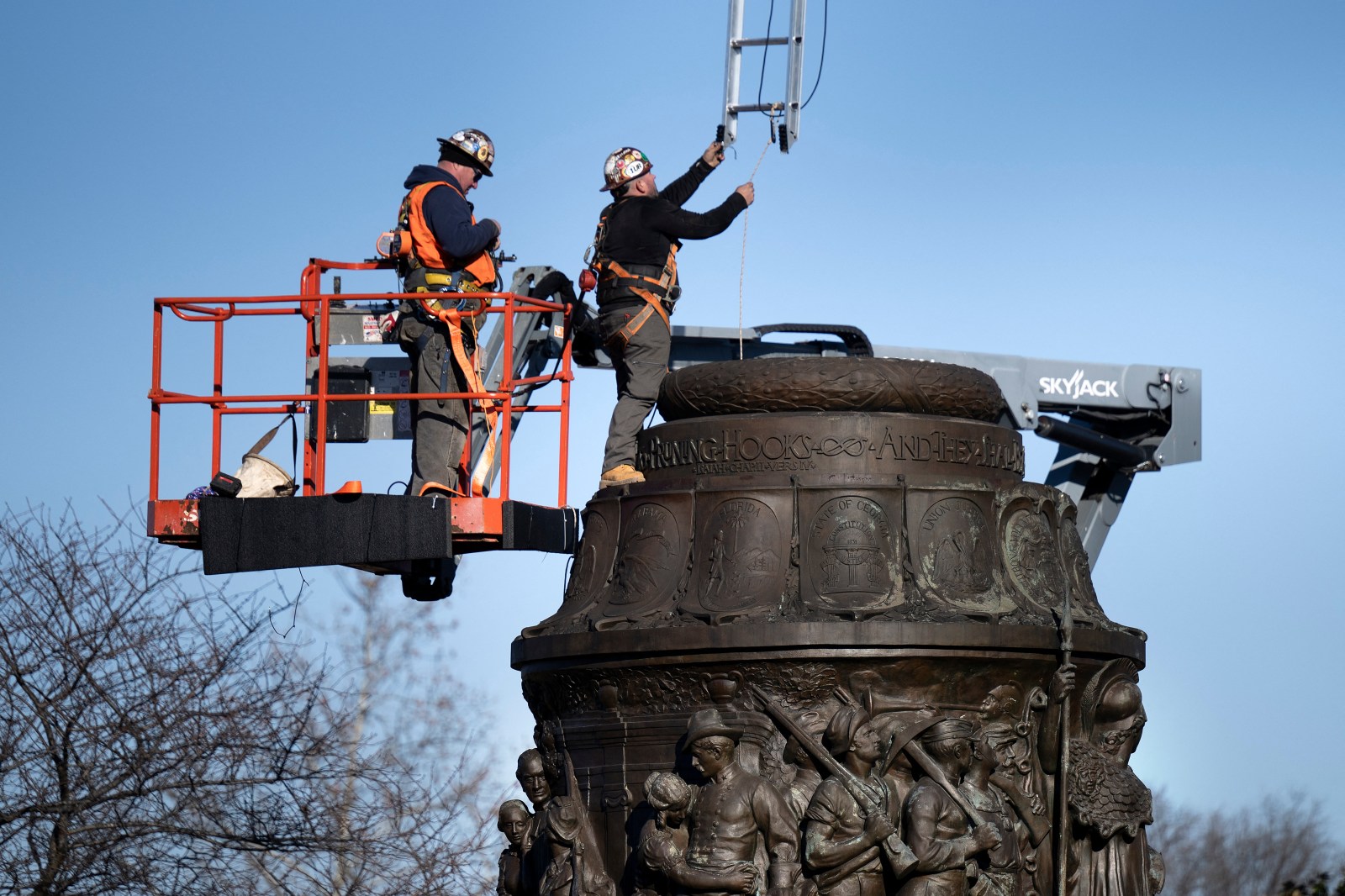
The Trump administration revised the portrayal of the dismantled Confederate Memorial at Arlington National Cemetery. This revision removed descriptions of the monument that highlighted a “nostalgic, mythologized vision of the Confederacy” and “highly sanitized depictions of slavery.” Both the cemetery marker and a Department of Defense webpage saw these changes, which removed references to the “Lost Cause” narrative. This narrative suggested that Confederate soldiers fought mainly for states’ rights, not slavery, and romanticized the antebellum South. The revision comes as plans push forward to return the Confederate Memorial to Arlington by 2027, following its removal in 2023 under a congressional mandate addressing Confederate symbols on military property. Secretary of Defense Pete Hegseth expressed on social media, “It never should have been taken down by woke lemmings. Unlike the left, we don’t believe in erasing American history—we honor it.” Newsweek sought comments from the White House and Arlington National Cemetery.
What Is the Confederate Memorial?
The Confederate Memorial is a 32-foot monument that stood in Arlington National Cemetery until its removal in 2023. Unveiled in 1914, it included a bronze statue on a granite base, honoring Confederate soldiers of the American Civil War. Besides soldiers’ figures, it featured Black servants seemingly supporting the Confederate cause. The United Daughters of the Confederacy commissioned the monument from sculptor Moses Jacob Ezekiel, a former Confederate soldier. Ezekiel contended that his monument corrected Northern “lies” about the South. In 2020, a plaque noting the memorial’s “highly sanitized depictions of slavery” was added.
Why Is the Confederate Memorial No Longer at Arlington Cemetery?
A bipartisan commission was formed in 2021 in response to nationwide protests following George Floyd’s murder. The commission reviewed military honorings of the Confederacy and recommended removals or renamings. The Department of Defense accepted these recommendations under the Biden administration, leading to the memorial’s removal in December 2023. Although the Sons of Confederate Veterans opposed the move and filed lawsuits, the monument now resides in a secure facility in Virginia. The Trump administration announced in 2025 plans to reinstate the monument at Arlington by 2027.
What Language Has the Trump Administration Removed?
Removed language included two paragraphs explaining the monument’s controversy. Archived Department of Defense pages once described the monument as presenting a “nostalgic, mythologized vision of the Confederacy,” featuring “highly sanitized depictions of slavery.” It detailed the monument’s design, including a classical female figure representing the American South. The statue stood on a pedestal with Southern soldiers, civilians, and mythical gods. It included two figures portraying African Americans as sympathetic participants in the Confederate cause, reinforcing the “Lost Cause” narrative. The narrative denied slavery’s horrors and supported white backlash against Reconstruction. These paragraphs were excised in favor of a brief description of the sculptor’s role and the monument’s historical context.
What Language Has Remained?
A brief explanation about sculptor Moses Jacob Ezekiel remains. It notes Ezekiel’s status as a Confederate veteran and the first Jewish graduate of Virginia Military Institute. Ezekiel’s burial at the memorial’s base in 1921 is noted, alongside the burial of three other Confederate soldiers. The site continues to invite reflection on the Civil War, slavery, and race in America. A marker at the memorial’s former site has the same changes.
Other Race, Slavery References Removed by the Trump Administration
Since President Trump’s return, several federal sites have seen edits to remove references to slavery, racism, and immigration. Examples include the Bunker Hill Monument, where quotes on slavery and immigration were removed following visitor complaints. The President’s House Site Slavery Exhibit in Philadelphia also saw the removal of exhibits detailing the lives of nine enslaved people, although a court order later restored the panels. At the Francis G. Newlands Memorial Fountain in Washington, D.C., a sign explaining the senator’s support for white supremacist policies was removed. Changes at Fort Sumter National Historical Park involved signs discussing climate threats. At Fort Pulaski National Monument, a display flagged for removal features a Civil War-era photograph highlighting slavery’s brutality. The Selma-to-Montgomery National Historic Trail identified signs for potential removal or revision, which critics argue removes significant historical context. The administration defends these steps as efforts to present a balanced American history.