
U.S. envoy Steve Witkoff and Jared Kushner are in Moscow for discussions with Russian President Vladimir Putin. Their visit follows two days of negotiations between Russian and Ukrainian delegations in Abu Dhabi that ended without significant breakthroughs. Kirill Dmitriev, Putin’s special representative, welcomed the envoys and shared footage of their arrival.
During the meeting, Putin expressed gratitude to the U.S. representatives for President Donald Trump’s efforts in facilitating interactions between Russia and Ukraine. Kushner, also present, stated that the meeting would revolve around the outcomes of the Abu Dhabi discussions. Although another prisoner exchange was planned, no decisive steps were agreed upon to end the conflict.
Kushner told reporters, “We see some openings and opportunities.” He emphasized that conveying these insights to President Putin and his team had been crucial. After their meeting in Moscow, Witkoff and Kushner plan to travel to Dublin to update Ukrainian President Volodymyr Zelensky on developments.
Zelensky remains optimistic about future negotiations and described a “window of opportunity” for a peace deal with Russia by early 2027. Speaking alongside Irish Taoiseach Micheál Martin, Zelensky acknowledged some progress at the Abu Dhabi talks but also noted substantial differences, especially regarding territory. Kyiv has rejected Putin’s demand for control over the eastern Donbas.
U.S. mediators are now focusing discussions on post-war security guarantees and reconstruction rather than territorial disputes. Involving European representatives in talks may be difficult. Kremlin aide Vladimir Medinsky criticized potential European participation, arguing that it amounts to financing a party in the conflict, which exacerbates civilian casualties.
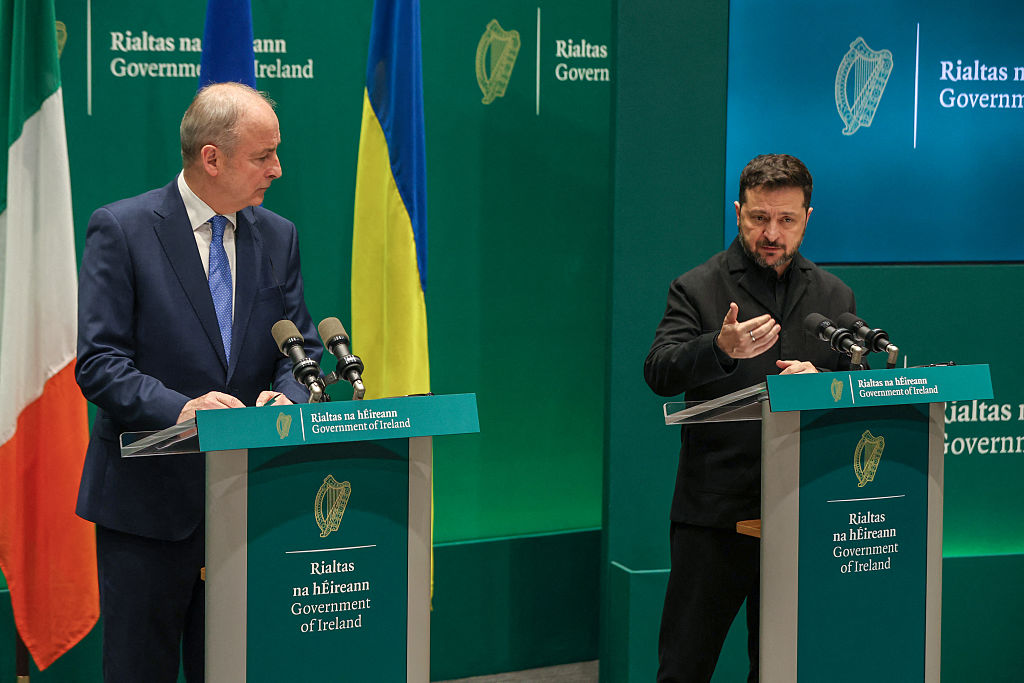
Despite these issues, Trump remains hopeful about ending the war and reiterated his commitment during a recent press conference. Meanwhile, Ireland hosted a press conference with Prime Minister Micheál Martin and President Zelensky, stressing ongoing diplomatic efforts.
While Witkoff and Kushner engaged with Russian officials, Zelensky raised concerns about Starshield’s speed restrictions. This military-grade version of Elon Musk’s Starlink service aids Ukrainian military operations. Zelensky criticized what he described as “systematic” restrictions on Starshield, which hinder Ukraine’s defense against Russian drones.
TIME reached out to the White House and SpaceX for comment. Starlink provides internet via satellites in low-Earth orbit, and its military counterpart Starshield operates under the Pentagon’s direction. Starshield supports Ukraine’s drone missions and air defenses, yet recent speed limits have compromised several missions. Conflicting reports suggest the White House imposed these restrictions, but officials denied such directives.
SpaceX founder Elon Musk clarified that while Starshield is under U.S. government control, Starlink, owned by SpaceX, is restricted to civilian or defensive uses only. Musk accused Ukraine of violating Starlink’s terms, however, Kyiv denied these claims, arguing that they cannot operate Starlink for deep strikes due to coverage limitations.
Ukrainian presidential adviser Serhiy Beskrestnov highlighted that Starlink does not cover Russian territory, dismissing the idea of employing it for offensive actions. The situation remains complex as both U.S. and Ukrainian officials seek resolution.