
China’s latest artificial intelligence model, Kimi K3, is shaking up the U.S. tech industry. Released by Beijing-based startup Moonshot, Kimi K3 is drawing comparisons to top AI models like Anthropic’s Claude and OpenAI’s ChatGPT.
Anastasios Angelopoulos, CEO of Arena, praised Kimi K3 as potentially the most significant AI release of the year. He noted its high ranking in ‘front-end coding capability’, a key performance metric for AI language models. Angelopoulos expects further data to confirm Kimi K3’s leading status.
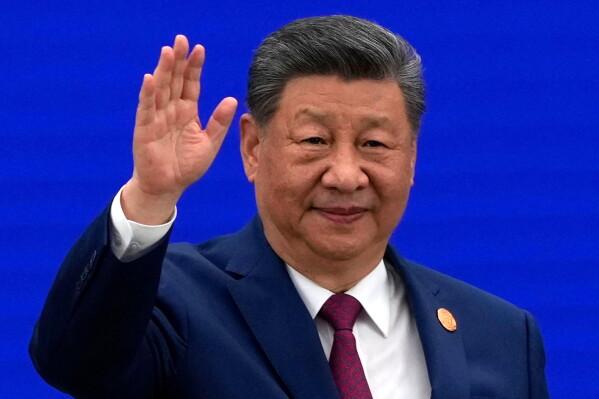
The model’s debut coincided with Chinese President Xi Jinping’s speech at the World Artificial Intelligence Conference in Shanghai. Xi stressed the importance of global cooperation in AI development despite U.S. technology restrictions.
Chinese AI models are gaining ground, with Zhipu’s GLM-5.2 model already popular among software developers due to its competitive performance and cost-effectiveness compared to U.S. models. Some analysts view reactions to Kimi K3 as an overreaction akin to last year’s response to DeepSeek’s release.
As the conference continues, Huawei has showcased the Atlas 950 SuperPoD AI computing system, highlighting China’s progress in developing necessary hardware amid U.S. import restrictions.
While Moonshot hasn’t disclosed the hardware used for Kimi K3, it partners with Huawei. Despite K3’s price, it remains cheaper than OpenAI’s GPT-5.6 Sol model, according to Bank of America analysts.
Industry tensions are evident, with U.S. AI companies accusing Chinese models of illicitly distilling technologies from their models. Anthropic claims DeepSeek, Moonshot, and MiniMax have extracted Claude’s capabilities through distillation, a technique used to train AI systems more efficiently.
Yet, such practices are common. Anysphere acknowledged influences from Moonshot’s K2.5 model in its product, Cursor. SpaceX plans to purchase Cursor for $60 billion later this year.
Moonshot co-founder Yang Zhilin, a Carnegie Mellon University Ph.D. graduate, has made significant contributions to machine learning and is known for his musical interests. His success is celebrated by colleagues and represents a win for the open-source AI community.
Open-source AI models allow examination and modification, fostering innovation. Nevertheless, critics caution against risks of public access to powerful AI technologies.