
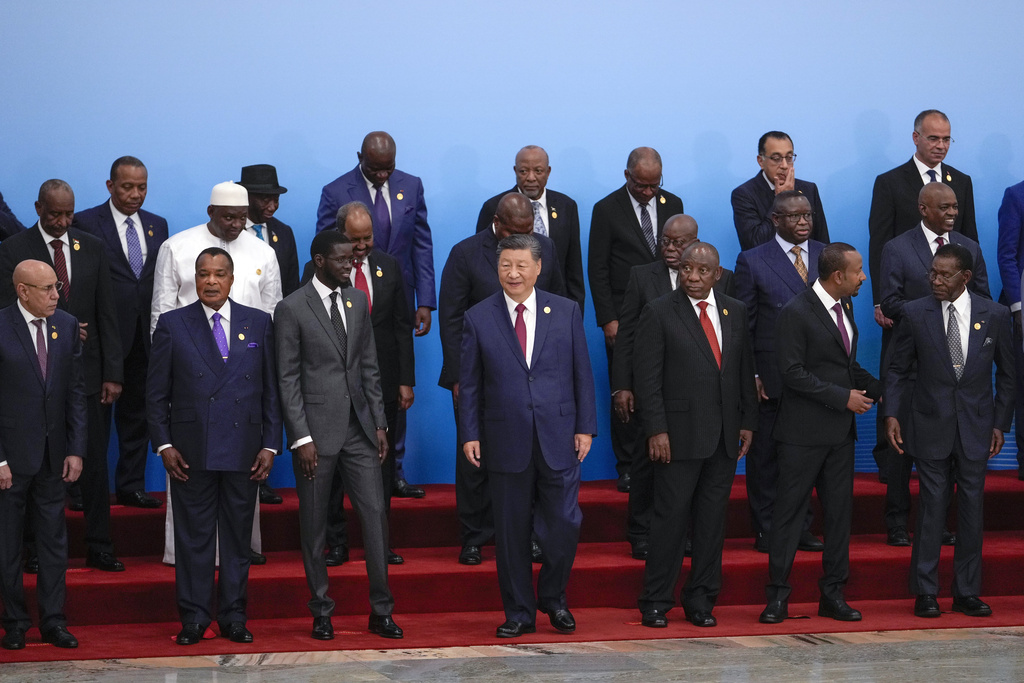
China’s growing influence in Africa presents challenges and opportunities for both the continent and the United States. This economic shift carries significant implications for Africa’s industrial growth and America’s economic interests.
China’s Impact on African Markets
China’s integration into the global economy began in 2001 with its entry into the World Trade Organization. This led to an influx of affordable Chinese goods, impacting manufacturing in regions like the United States and now extending to Africa. Chinese goods, often priced below production costs, are rapidly capturing market shares in key African markets such as Egypt, Kenya, Nigeria, and South Africa. The influx affects industries like textiles, steel, automobiles, machinery, and electronics. As a result, manufacturing sectors across Sub-Saharan Africa have been unable to grow, with their GDP share stagnant at below 13%.
This dynamic differs from the impact observed in America. In Africa, Chinese exports are hindering the development of local manufacturing industries, crucial for job creation as the continent’s working-age population is expected to surpass those of India and China by 2040.
Constraints on African Economies
Africa’s ability to defend against this economic wave is limited. The continent lacks a significant industrial base to protect, and its debt dependency on China restricts economic maneuvers like subsidies or tariffs. Major economic actions are constrained due to potential repercussions from a country that is a vital creditor and infrastructure financier.
The African Continental Free Trade Area presents an opportunity to counterbalance this influence. By uniting as a single economic bloc, African nations could institute harmonized tariffs and protections for nascent industries, creating a viable regional market to challenge China’s dominance.
American Involvement and Strategy
Chinese economic dominance in Africa also poses a problem for U.S. interests. The U.S. must actively engage with African free trade negotiations to ensure American exporters and interests remain competitive. Washington’s involvement is vital, as China has already positioned itself as a technical advisor to Africa on crucial trade rule matters.
The U.S. State Department needs to deploy resources swiftly under the U.S.-Africa Strategic Investment Program. The decoupling of African debt structuring from opaque Chinese financing is necessary. African finance ministers require alternative funding sources that do not tie them to Chinese contractors or equipment.
Financial Solutions and American Investment
The U.S. International Development Finance Corporation should expand its focus beyond critical minerals to include broader economic engagements in Africa. The corporation could tap into U.S. mutual funds and exchange-traded funds, which hold close to $45 trillion in assets, to support Africa’s infrastructure needs.
By redirecting expertise and financial resources towards Africa, the U.S. administration can help shape the economic future of the continent while safeguarding its own long-term security interests.
The impact from China’s first economic ripple through America was profound. Its ongoing aftershocks could profoundly shape Africa’s economic landscape.
Daniel Swift is a senior research analyst on economic matters at the Center on Economic and Financial Power. Former U.S. diplomat, he was recently the Acting Coordinator for Prosper Africa.