
Every day, traditional wooden boats called shikaras glide across Dal Lake, surrounded by the majestic Himalayas. While beautiful, this scene hides ecological challenges. Dal Lake, along with many others in Indian-controlled Kashmir, faces threats from pollution and invasive species. The rising temperatures, a result of climate change, also pose a risk to these vital water bodies.
Efforts to maintain Dal Lake involve constant labor by local government workers. These workers, tasked with managing weeds, must be cautious of skin irritation from polluted waters. Despite these efforts, the problem persists, particularly in Srinagar’s populated areas. Dal Lake benefits from ongoing restoration projects, unlike many lakes in the region.
“We are afraid to touch the water with bare hands,”said Ghulam Rasool, a local government-employed weed cleaner.
Pollution from direct sewage drains and mountain streams carrying waste degrades the lakes. Climate change, unpredictable rainfall, and urban development contribute to the deterioration. Research indicates a significant loss of lakes in Jammu and Kashmir over the past sixty years.
A government report notes that out of 697 natural lakes, 315 have vanished and 203 have reduced in size since 1967. In earlier decades, many lakes have turned into marshes, wetlands, or been converted into farmland.
Shrinking lake boundaries affect local activities, such as Dal Lake’s floating markets. Increased sediment, encroaching farms, and housing developments are now common. Flood risks in the Kashmir valley are exacerbated by this encroachment.
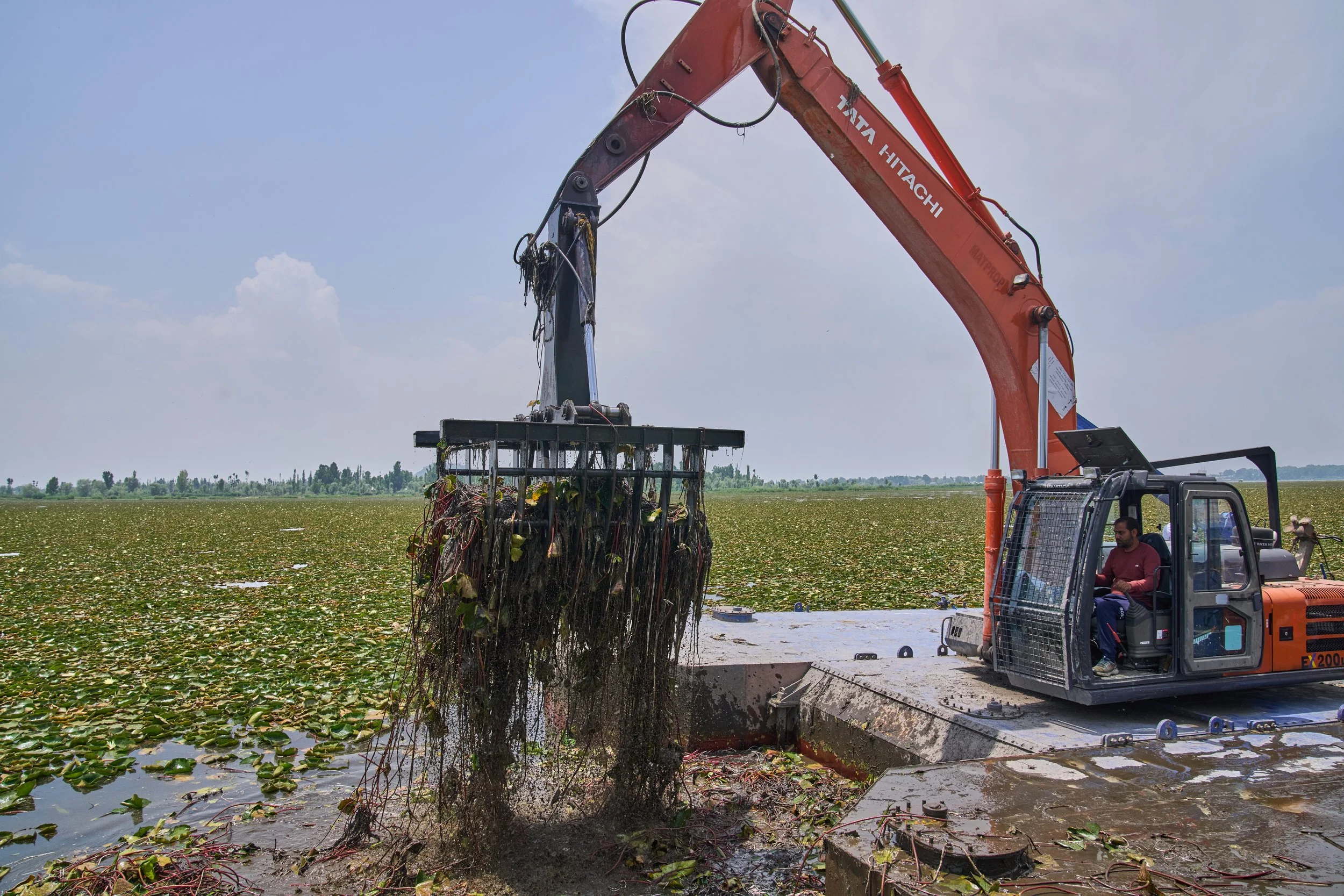
Untreated sewage and garbage lead to weed growth, impacting fish habitats and the tourism industry. Workers use machines to clear these weeds, but more work and funding are required. The Lake Conservation and Management Authority, formed in 1997, seeks to address these issues.
Muzamil Ahmad Rafiqui from LCMA highlights efforts to connect houses to sewage treatment systems, but challenges remain with unconnected residences. Climate change worsens the situation, accelerating lake depletion. A warming Himalayan region sees earlier snowmelt and intense rain, impacting water supply from rivers and lakes.
As glaciers melt, they initially increase water flow but eventually diminish natural water storage. This change impacts hydropower, tourism, and agriculture in Kashmir. Fishing communities suffer as lakes shrink and water quality worsens.
At Wular Lake, fishers face depleted stocks and difficult navigation due to increased vegetation. Fisher Abdul Rasheed recounts the drastic reduction in fish catch over the years, impacting his income. Bashir Ahmed, another fisher, echoes his concerns about the future of fishing in Kashmir.
Efforts to preserve Kashmir’s lakes remain crucial in maintaining local ecosystems and communities reliant on these water bodies. The challenges are significant, requiring comprehensive and sustained actions for remediation.