
The most ambitious World Cup ever started in Mexico City, though it has sparked more concern than excitement. Returning to North America after over 30 years, the tournament now includes 48 teams and 104 matches, spanning 39 days in 16 cities across the U.S., Mexico, and Canada. Planning took eight years.
Even before Mexico faced South Africa at Estadio Azteca, controversies emerged, threatening to overshadow the tournament. According to Jules Boykoff, a political science professor, this World Cup is the most politically charged in recent years.
We’re in uncharted territory in many ways,
Boykoff said.
Political Tensions and Travel Issues
Relations among the host countries have been strained by U.S. tariff policies and border security disputes. Travel bans have prevented some visitors and officials from entering the U.S., causing anxiety over possible immigration enforcement.
The U.S. is also at odds with Iran, a tournament participant. Iran has attacked several other participant nations. Iranian journalists were denied visas, and Iran’s support staff faced entry issues, causing a relocation from Tucson to Tijuana for training. Their group games in Inglewood and Seattle will have limited U.S. presence.
Players and journalists from Senegal, Uzbekistan, and Iraq experienced lengthy detentions at U.S. airports. Omar Artan, a Somali referee, was turned away in Miami.
Ticket Controversies and Public Disinterest
Ticket prices have been high, and the lottery system opaque, leading to investigations by New York and New Jersey attorneys general. California has also questioned FIFA practices. This has contributed to lukewarm public interest. A Yougov.com poll found 54% of Americans uninterested and nearly 60% planning not to watch.
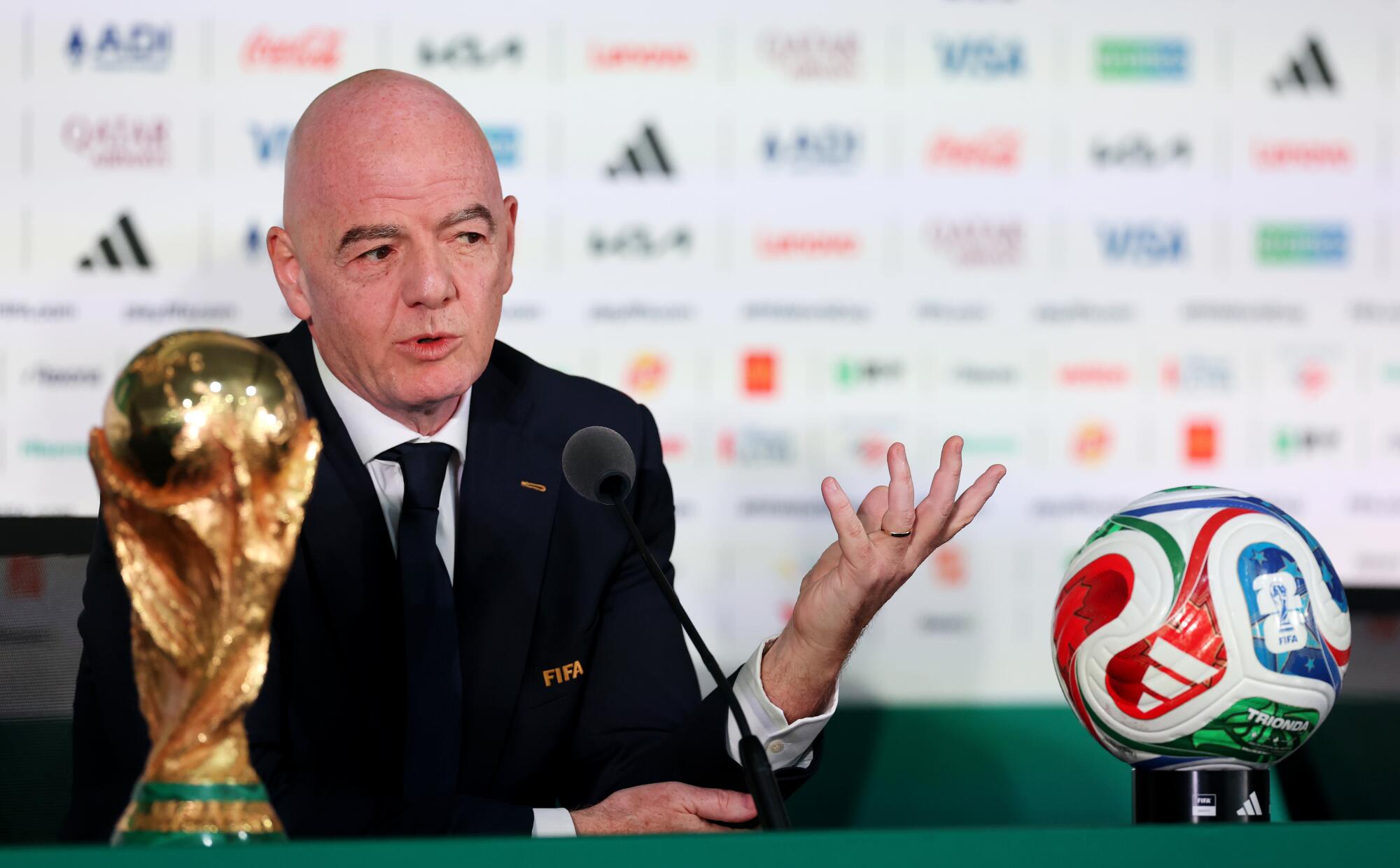
FIFA president Gianni Infantino maintains confidence, calling it the biggest, the most inclusive, the greatest FIFA World Cup ever,
as he did for previous tournaments.
Steve Georgakis, a sports lecturer, stated that the World Cup’s combination of global celebration and commerce boosts its profile. Projected to generate $9 billion for FIFA, it remains a global event due to the participation of 48 nations.
Historical Context and Expectations
This is not the first World Cup overshadowed by controversy. Past events faced geopolitical, cost, and human rights issues. When the tournament starts, soccer brilliance often overshadows such concerns. Jonathan Wilson, a Guardian columnist, believes the sport will captivate fans as usual.
The football will, for the vast majority, take over. It’s just sort of a natural cycle,
Wilson remarked.
Star Players and Newcomers
Argentina’s Lionel Messi and Portugal’s Cristiano Ronaldo are among stars playing their final World Cups. Young talents like France’s Kylian Mbappe, Norway’s Erling Haaland, and Spain’s Lamine Yamal will seek to make their mark. Additionally, Jordan, Curacao, Cape Verde, and Uzbekistan are newcomers to the tournament.
Georgakis suggests the focus will shift to the field. How the Trump administration’s actions affect this shift is uncertain. Travel restrictions partially bar citizens from 39 countries; ICE agents will be present at venues, raising security concerns.
Logistics and Climate Concerns
Visa issues and immigration fears have reduced expected tourism. Host city hotels report low bookings. Some nations issued travel warnings. Ticket and parking prices further deter fans.
FIFA defends its ticket pricing, stating premiums fund global soccer development. The organization lifted a ban on water bottles, allowing fans to bring plastic ones into games. However, 40 games will occur during peak heat to suit European TV schedules, despite scientists’ warnings.
Georgakis maintains that on-field action will determine this World Cup’s success. If it proves exciting and memorable, the tournament will be positively remembered. Otherwise, off-field issues could dominate its legacy.