
The theft of cultural artifacts from Cambodia represents one of the most significant art heists in history. This looting, initiated during French colonization, escalated in the 1970s to 1990s amidst genocide and civil war. A British man, Douglas Latchford, led operations to steal and sell these treasures worldwide.
Angkor Wat’s Symbolism
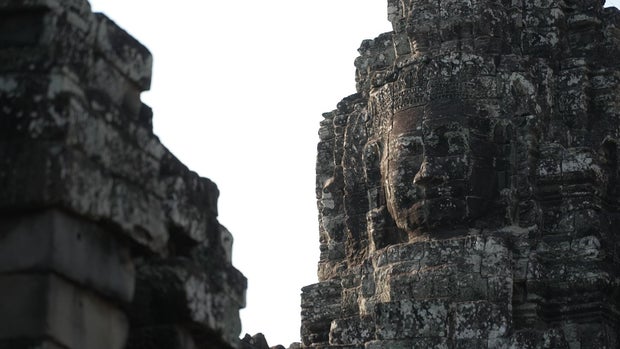
Angkor Wat stands as a testament to Cambodia’s rich history. Built nearly a thousand years ago, this vast religious complex was first dedicated to Vishnu, transforming into a Buddhist temple over time. However, the wounds of plunder remain visible, with looted statues and desecrated pedestals scattered throughout.
Across Cambodia’s 4,000 temples, Sandak is among those heavily affected. Brad Gordon, an American lawyer, has worked tirelessly for 14 years with the Cambodian government to track down these stolen relics. His team endeavors to reclaim Cambodia’s heritage, visiting sites like Sandak to piece together a history stolen by looters.
Brad Gordon
Brad Gordon described the temples as “pedestal graveyards,” highlighting the devastation left behind by looters.
The Significance of Statues
For Cambodians, these artifacts are more than art; they are spiritual embodiments of ancestors, providing guidance and comfort. Phoeurng Sackona, Cambodia’s Minister of Culture, leads the effort to locate and return the stolen statues. Her personal loss during Cambodia’s genocidal past fuels her mission, reflecting a national desire for healing.
Douglas Latchford, known for his charm, contributed significantly to the looting. He sold many of these artifacts under the guise of scholarly work, with his books acting as sales catalogs. These volumes have become crucial tools in identifying missing artifacts.
Unraveling Latchford’s Network
In 2012, Brad Gordon’s breakthrough came when he met Toek Tik, a former looter who had supplied Latchford. Tik, known as ‘Lion’ to protect his identity, revealed detailed information on numerous stolen pieces. His admission paved the way for Gordon’s team to document and locate hundreds of artifacts.
These revelations, coupled with evidence from auction catalogs, led law enforcement to Latchford. His indictment by U.S. authorities in 2019 for various crimes came just before his death. However, efforts to return artifacts continued, with significant pieces making their way back to Cambodia.
Challenges in Repatriation
The struggle to reclaim Cambodia’s treasures remains. Many pieces still reside in prestigious institutions like the Metropolitan Museum of Art. The challenge lies in overturning decades of silence and complicity among collectors and institutions that hold stolen artifacts.
Despite slow progress, there is a growing acknowledgment of the need for museums to scrutinize the provenance of their collections. The Met has returned some items, but many remain unreturned.
The Role of Museums
Questions about ethical acquisition practices linger. The Met’s response highlights a reckoning within the cultural sector as new protocols are adopted to address past oversights.
Continuing the Quest
The story continues as investigators, former looters, and international authorities work together to restore Cambodia’s legacy. As artifacts return, including those once in private American collections, Cambodia’s cultural renewal gathers momentum.
As more treasures are identified and reclaimed, the journey towards recovering Cambodia’s stolen soul continues, driven by the shared commitment to right historical wrongs.