
Independence Day doesn’t significantly resonate in Britain’s public consciousness. Despite this, cultural institutions acknowledged the day, and King Charles III made a formal statement.
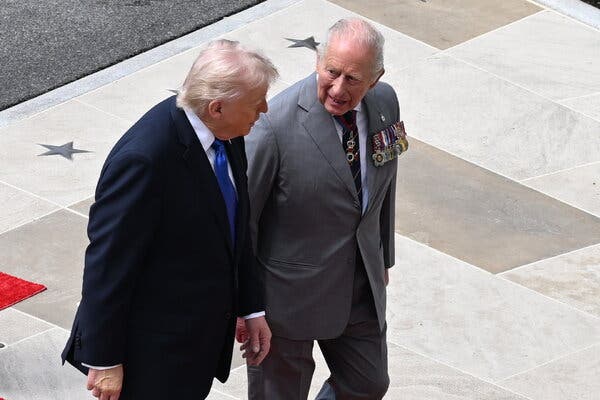
King Charles III sent a congratulatory message to President Trump for the 250th anniversary of American Independence from Britain. This acknowledgment came with reflections on the historic milestone and the evolution of relations between the two nations.
There were festivities in the United States with fireworks and celebrations on this monumental occasion. In Britain, however, the day was relatively ordinary but wasn’t entirely overlooked. Museums and art galleries offered special tours and exhibitions. A war museum in England added a Fourth of July theme to its summer air show.
The American Embassy in London hosted an early celebration, lighting its building in red, white, and blue. Some pubs and venues organized Independence Day events aimed at Americans residing in Britain. Despite these efforts, the day didn’t stand out remarkably among other summer weekends and was less significant than the upcoming English soccer team’s World Cup match.
In London, streets were being prepared for the Pride parade, attracting more public attention.
King Charles III, a descendant of King George III, the monarch rejected by the American founders, congratulated the United States. He highlighted the “extraordinary evolution” of the relationship with America’s former colonies, transitioning from conflict to a strong and productive alliance. He spoke about the “enduring bond” built on “friendship, trust, and a belief in liberty, the rule of law, and the dignity of all people.”
The British Embassy in Washington took a light-hearted approach. The embassy humorously reimagined the events of 1776 as a text message exchange, with lines from the Declaration of Independence retorted with, “Are you breaking up with us?” They playfully declared America as “the greatest ex we ever had.”