
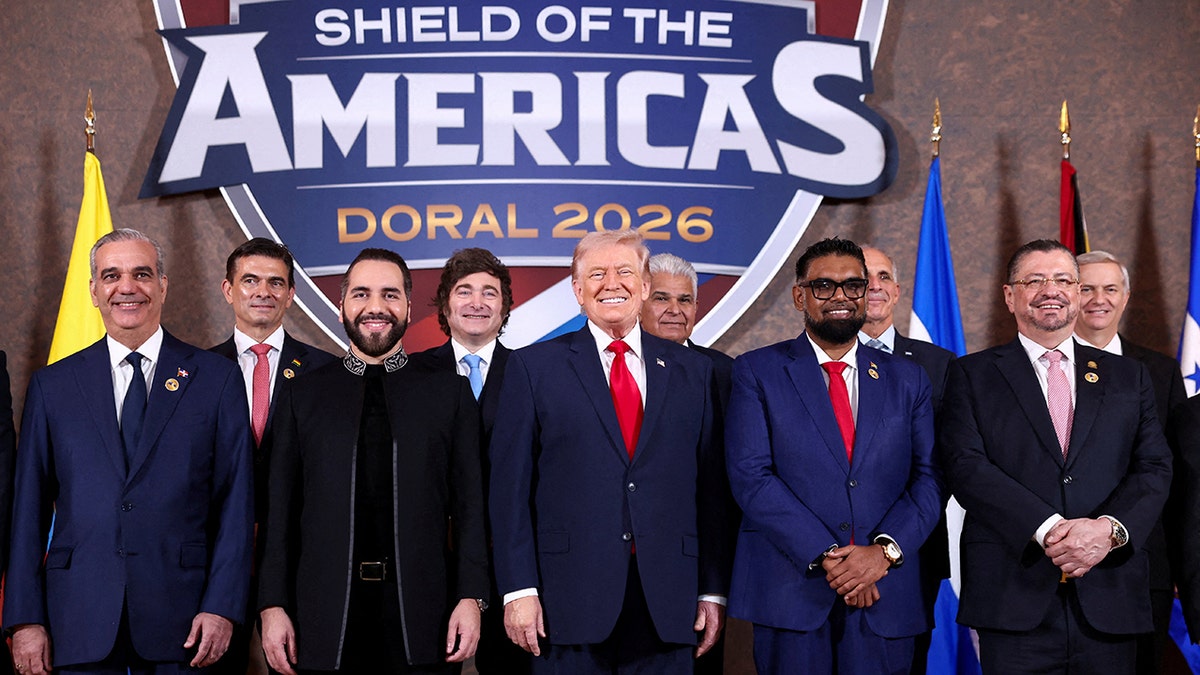
Bolivia is confronting significant security challenges, posing one of the first practical tests of President Donald Trump’s Shield of the Americas initiative. This situation has led the country to deploy security forces to strategic areas in preparation for possible unrest. Bolivian Defense Minister Ernesto Justiniano shared these insights in a recent interview, emphasizing the importance of turning declarations into results.
Justiniano clarified that Bolivia has not declared any coup attempt in progress. He stated, “I am not saying today that we have proven evidence of a specific operation currently underway to overthrow the President. What we do have are very serious precedents and warning signs that justify preventive action.” The Shield of the Americas, launched by Trump at a summit in Florida, seeks to enhance economic and security cooperation across the Western Hemisphere, focusing on combating transnational crime.
Recently, President Rodrigo Paz’s government aimed to prevent a recurrence of extended road blockades earlier this year. These blockades led to shortages of essentials such as food and medicine, exacerbating Bolivia’s economic difficulties. On September 17, Bolivia’s Assembly agreed to extend the state of emergency by 90 days, despite opposition criticism that the measure did not address the root causes of unrest.
A U.S. official reaffirmed the country’s unwavering support for Bolivia’s democracy and President Paz’s administration, which seeks to stabilize and rebuild following what they term as 20 years of failed socialist policies. The official stated, “The United States is unwavering in its commitment to support Bolivia’s democracy and the Paz Administration as it rebuilds the country after 20 years of failed socialist policies.”
The current threat in Bolivia necessitates preventive measures, though the government remains stable. “We are preparing for a risk, not declaring that a coup is underway,” Justiniano stated.
Police and military forces have been positioned preventively across the nation, especially along key routes and access points to cities. However, details on deployment specifics remain undisclosed as they vary with threat levels.
This deployment coincides with a recent gathering of leaders involved in Shield of the Americas, hosted by Trump during the UN General Assembly. This initiative is described as enhancing economic and national security cooperation in the Western Hemisphere.
The U.S. further demonstrated its support by announcing visa restrictions on certain Bolivian nationals accused of undermining progress made by President Paz and his administration. The Trump administration revoked visas for 27 officials and relatives in Bolivia and neighboring countries due to alleged corruption and drug-related activities.
Defense Minister Justiniano acknowledged the severity of the allegations against Bolivia’s Prosecutor General Roger Mariaca, though he warned against conclusively linking those affected by visa restrictions to ongoing unrest.
The defense minister highlighted Bolivia’s desire for closer U.S. cooperation in areas such as intelligence sharing, financial intelligence, and combating organized crime. This pursuit was reiterated by Bolivian Minister of the Presidency Fernando Aramayo during the recent UN General Assembly. Aramayo expressed his hope for stronger ties, stating, “The White House has supported us and other countries in this fight against these dark forces.”
Shield of the Americas faces the complex challenge of operating in a region where domestic political unrest intersects with transnational crime networks. Nonetheless, Bolivia remains committed to addressing its security issues while respecting democratic processes.