
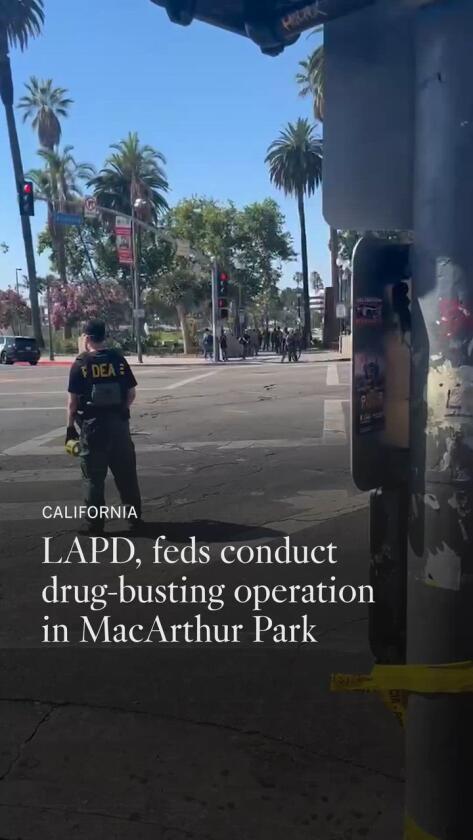
On Thursday afternoon, federal agents and Los Angeles police mobilized at MacArthur Park. Military vehicles and loudspeakers announced searches and detentions for narcotics use. Within an hour, authorities cleared the park, arresting 13 individuals. L.A. Police Department Captain Benedict Fernandes stated that these arrests were for offenses like public drug influence, drinking, and illegal encampments.
Officials highlighted this operation as part of a larger, ongoing mission. They aim to eradicate the drugs, crime, and gang activity affecting MacArthur Park and its community for years. Anthony Chrysanthis, heading the Drug Enforcement Administration’s L.A. office, reinforced that the operation was part of sustained change, not immediate transformation. “Change is coming,” he declared at a news briefing, emphasizing ongoing enforcement in the park.
MacArthur Park, once a Los Angeles highlight, has struggled with gang violence and drug activity, worsened during the pandemic. It became central to the city’s overdose crisis, openly facilitating fentanyl trade and use. Although public figures, including Mayor Karen Bass, vowed to improve park conditions, fentanyl overdoses have persisted. L.A. County District Attorney Nathan Hochman pointed out the fire department’s frequent overdose interventions in the area over regular firefighting duties.
Officials from the U.S. attorney’s office, DEA, LAPD, and the district attorney’s office present on Thursday emphasized their commitment to change. Hochman promised that by Labor Day 2026, MacArthur Park would be safe for family picnics, urging public officials to prepare for it.
This operation followed another raid a month earlier, where authorities arrested 18 people in the park. According to the U.S. attorney’s office in Los Angeles, this included two significant drug suppliers. First Assistant U.S. Attorney Bill Essayli explained that the efforts to reclaim the park are unfolding in three phases.
The first phase targeted the leadership of the 18th Street gang, which authorities claimed turned the neighborhood into a drug marketplace. In March, 12 gang affiliates faced federal charges, including murder, extortion, and drug trafficking in the park area. The second phase focused on local drug dealers and suppliers, reflected in recent arrests. The third and ongoing phase emphasizes law enforcement’s presence to uphold state laws prohibiting narcotics influence and drug possession with intent.
“That is critical,” Essayli stated. “We have to address the demand if we want to clean up the park.”